
Treatment Overview
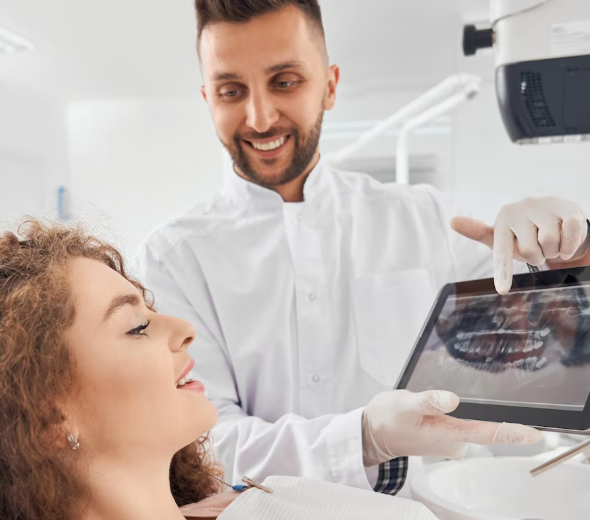
Computer-Guided Implant Bridge in Korea represents the pinnacle of precision implant dentistry — a fully digital system that combines 3D planning, AI navigation, and robotic-assisted placement to deliver perfectly aligned implant-supported bridges.
This cutting-edge method replaces multiple missing teeth with a fixed bridge supported by implants placed using computer-guided surgical templates, ensuring accuracy, safety, and ideal aesthetics.
Korean dental specialists are world leaders in digital implantology, using 3D CBCT imaging, CAD/CAM fabrication, and AI simulation to map bone structure and guide implant placement down to the millimeter.
The result is a natural-looking, perfectly fitted, and long-lasting bridge, achieved with minimal invasiveness and maximum patient comfort.
This treatment showcases Korea’s mastery in digital precision, biologic integration, and aesthetic restorative implant design.
Purpose & Benefits
The Computer-Guided Implant Bridge System is designed to replace missing teeth with exceptional precision, ensuring flawless implant placement and a seamless prosthetic outcome.
Purpose
- Replace multiple missing teeth using AI-planned, guided implant placement.
- Ensure perfect implant positioning for balanced bite and symmetry.
- Minimize surgical error and tissue trauma.
- Achieve high functional stability and long-lasting comfort.
- Provide predictable, aesthetic results using digital workflows.
Benefits
- AI-Guided Accuracy: Ensures ideal implant angulation, spacing, and depth.
- 3D Visualization: Real-time mapping of bone and sinus anatomy.
- Flapless, Minimally Invasive Surgery: Reduced pain and recovery time.
- CAD/CAM Precision Bridge: Digitally milled for perfect fit and aesthetics.
- Immediate Function Option: Temporary bridge often placed the same day.
- PRF Healing Enhancement: Accelerates bone and soft tissue recovery.
- Long-Term Durability: Over 99% success rate in Korean clinics.
Ideal Candidates
Computer-Guided Implant Bridges are ideal for patients seeking a fast, safe, and digitally precise full or partial restoration.
Ideal Candidates Include
- Individuals missing several consecutive teeth.
- Patients desiring minimally invasive implant surgery.
- Those seeking perfect alignment and aesthetic integration.
- Individuals with limited bone structure requiring accurate placement.
- Patients seeking premium, high-tech dental care in Korea.
Possible Risks & Complications
While Computer-Guided Implant Bridge Surgery is exceptionally safe and precise, mild short-term effects may include:
- Temporary gum tenderness or swelling (1–2 days).
- Slight speech or bite adjustment during final fitting.
- Rare implant integration delay (monitored digitally).
Korean specialists minimize these risks using AI surgical planning, 3D-printed guides, and PRF-enhanced biologic healing, ensuring optimal patient safety and results.
Surgical Techniques Used
Korea’s Computer-Guided Implant Bridge Technique integrates advanced digital systems and biologic science to achieve flawless surgical and prosthetic outcomes.
Common Techniques Include
- 3D CBCT Bone Mapping: High-resolution scan of bone and sinus structure.
- AI-Driven Virtual Planning: Pre-surgical simulation of implant positions.
- CAD/CAM Surgical Guide Fabrication: Custom 3D-printed guide ensures accuracy.
- Flapless Guided Surgery: Minimal incision with digital navigation.
- PRF (Platelet-Rich Fibrin) Regeneration: Enhances bone and soft tissue healing.
- Digital Impression & Bridge Design: Intraoral scanner captures perfect contours.
- Laser-Assisted Sterilization: Promotes clean, bloodless surgery.
Recovery & Aftercare
Recovery after a Computer-Guided Implant Bridge in Korea is smooth and comfortable due to its minimally invasive, flapless nature and biologic healing enhancement.
Aftercare Guidelines
- Eat soft foods for 2–3 days post-surgery.
- Maintain gentle brushing around the implant sites.
- Use antibacterial mouthwash daily.
- Avoid smoking and alcohol during early healing.
- Attend scheduled digital follow-ups for 3D healing verification.
Most patients return to normal activity within 24–48 hours, with complete osseointegration in 2–3 months.
Results & Longevity
Expected Results
- Perfectly positioned, natural-looking implant-supported bridge.
- Enhanced comfort, function, and smile symmetry.
- Faster recovery and minimal swelling.
- Long-term stability and easy maintenance.
Longevity
- Implant lifespan: 25–30+ years with proper care.
- Bridge lifespan: 10–15 years depending on hygiene and material.
- Success rate: 98–99% in top Korean dental hospitals.
Korea’s digital precision ensures permanent comfort, natural aesthetics, and lifelong implant success.
Treatment Process in Korea
Korea’s Computer-Guided Implant Workflow integrates digital planning, biologic healing, and advanced manufacturing for world-class results.
Step-by-Step Process
- Consultation & CBCT Scan: 3D evaluation of jawbone and anatomy.
- AI Virtual Planning: Simulates implant angles and bridge placement.
- CAD/CAM Guide Creation: Custom surgical guide 3D-printed for precision.
- Guided Implant Placement: Flapless surgery under computer navigation.
- Temporary Bridge (Optional): Same-day restoration for immediate function.
- Healing & Osseointegration (2–3 months): Bone integrates naturally with implants.
- Permanent Bridge Fabrication: Custom CAD/CAM prosthetic finalized.
- Digital Verification: Final check using 3D imaging for accuracy.
Why Korea Is a Top Destination
Korea is a world leader in digital implantology, biologic healing, and CAD/CAM precision, offering globally trusted implant care at affordable rates.
- AI & Robotic Implant Navigation: Perfect accuracy and safety.
- Full Digital Workflow: From 3D planning to final restoration.
- PRF Biologic Regeneration: Natural healing and bone strengthening.
- Minimally Invasive Surgery: Quick recovery with minimal trauma.
- World-Class Brands: Straumann®, Osstem®, Dentium®, Nobel Biocare®.
- Multilingual Support: English, Japanese, and Chinese patient coordinators.
- Affordable Excellence: 40–60% lower cost than Western clinics.
Korea’s fusion of innovation, precision, and biologic science makes it the top destination for computer-guided implant bridge procedures.
Unique Korean Methods & Technology
- AI-Guided 3D Surgical Navigation.
- CAD/CAM Surgical Guide & Prosthetic Fabrication.
- PRF (Platelet-Rich Fibrin) Healing Acceleration.
- Digital Smile Design (DSD) Integration.
- Real-Time CBCT Surgical Monitoring.
- Piezoelectric Ultrasonic Bone Surgery.
- Laser-Assisted Tissue Sterilization & Healing.
These cutting-edge technologies ensure Computer-Guided Implant Bridges in Korea deliver unmatched precision, aesthetics, and long-term comfort.
Cost Range
| Type of Computer-Guided Implant Bridge Treatment | Cost (KRW) | Approx. USD |
|---|---|---|
| Standard Computer-Guided Implant Bridge | ₩5,000,000 – ₩7,000,000 | $3,700 – $5,180 |
| PRF-Enhanced Digital Bridge | ₩7,000,000 – ₩9,000,000 | $5,180 – $6,670 |
| Full CAD/CAM Computer-Guided Bridge Package | ₩9,000,000 – ₩11,000,000 | $6,670 – $8,150 |
| Premium Robotic-Guided Bridge System | ₩11,000,000 – ₩14,000,000 | $8,150 – $10,370 |
Packages typically include: consultation, 3D CBCT scan, AI simulation, CAD/CAM surgical guide, guided surgery, PRF membrane application, bridge fabrication, and digital follow-up care.
Popular Clinics
- Seoul National University Dental Hospital: Global leader in guided surgery and 3D digital implant planning.
- Yonsei University Dental Hospital: Specialists in PRF-enhanced, digitally guided bridge restoration.
- Asan Medical Center Dental Clinic: Experts in robotic-assisted, biologically driven implant systems.
- Samsung Medical Dental Center: Pioneers in CAD/CAM and computer-guided prosthodontics.
- JK Dental Implant Center (Gangnam): Luxury international clinic for aesthetic, full-arch guided implant bridges.


