
Treatment Overview
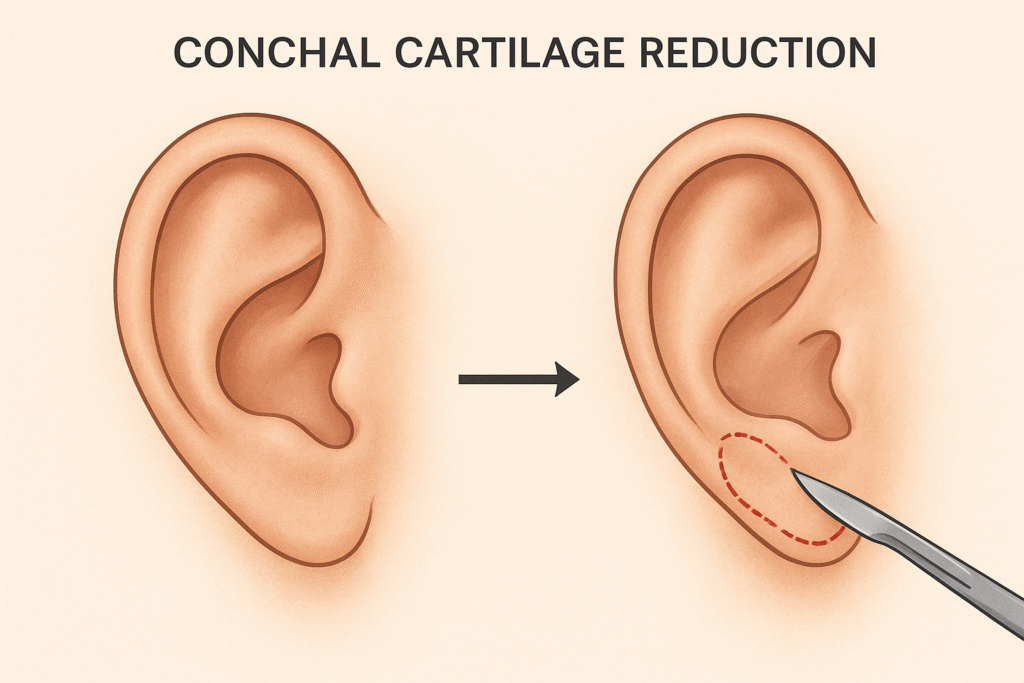
Conchal cartilage reduction is a surgical technique designed to correct protruding ears by reducing the size or projection of the conchal bowl—the deep concave part of the external ear. When this cartilage is excessively large, it pushes the ear outward, creating a prominent appearance. By carefully removing or reshaping part of the cartilage, surgeons can reposition the ear closer to the head and achieve better facial balance.
In Korea, conchal cartilage reduction is performed using refined and minimally invasive techniques that prioritize natural results, symmetry, and minimal scarring. Korean surgeons are internationally known for their precision and artistry in ear contouring procedures, making Korea one of the most trusted destinations for patients seeking ear reshaping.
Purpose & Benefits
The primary purpose of conchal cartilage reduction is to address ear prominence caused by an oversized conchal bowl. Unlike other otoplasty methods that rely solely on sutures, this approach directly reduces the structural cause of the prominence.
Benefits include:
- Permanent correction of ears that stick out too far.
- Improved facial harmony and balance.
- More natural results compared to suture-only methods in cases of severe conchal hypertrophy.
- Reduced risk of relapse since excess cartilage is physically removed.
- Enhanced confidence and self-esteem, especially for patients who have been self-conscious about their ears.
Ideal Candidates
Conchal cartilage reduction is suitable for:
- Patients with large conchal bowls pushing the ears outward.
- Individuals dissatisfied with previous suture-only otoplasty results.
- Adults or children (typically over 6 years old, when ear growth is nearly complete).
- Patients seeking permanent, structural correction rather than temporary reshaping.
Possible Risks & Complications
As with any ear surgery, there are potential risks, though complications are rare when performed by experienced Korean surgeons. These include:
- Swelling and bruising in the treated area.
- Temporary numbness around the ear.
- Over- or under-correction if not carefully planned.
- Scar visibility (though Korean surgeons usually hide incisions in natural folds).
- Rare cases of asymmetry between ears.
Advanced Korean surgical techniques significantly reduce these risks, ensuring precise and stable results.
Surgical Techniques Used
In conchal cartilage reduction, surgeons make a discreet incision, usually hidden behind the ear, to access the cartilage. Depending on the patient’s anatomy and goals, techniques may include:
- Conchal Bowl Resection: Removing a wedge or segment of excess cartilage to reduce ear projection.
- Conchal Setback Sutures (Furnas Technique): Anchoring the conchal cartilage closer to the mastoid bone behind the ear.
- Combination Approaches: Reducing cartilage and applying sutures for optimal stability and symmetry.
Korean surgeons are known for refined cartilage handling, ensuring smooth contours and natural ear folds after surgery.
Recovery & Aftercare
Recovery after conchal cartilage reduction is typically straightforward:
- First 1–2 weeks: Ears are bandaged or supported with a headband to protect healing tissues. Mild swelling and bruising may occur.
- 2–3 weeks: Most patients can resume work and social activities.
- 1–3 months: Final shape stabilizes as swelling subsides and cartilage heals in its new position.
Korean clinics provide specialized post-operative care, including scar management, anti-swelling treatments, and regular follow-ups to ensure optimal healing.
Results & Longevity
The results of conchal cartilage reduction are permanent, as the underlying cause of ear prominence is physically corrected. Patients can expect:
- Ears that sit closer to the head with natural curvature.
- Balanced symmetry between both sides.
- Long-lasting improvement without relapse.
- Natural-looking results that complement overall facial proportions.
Treatment Process in Korea
Korea is renowned for its aesthetic precision and advanced otoplasty methods, making it a global leader in ear reshaping surgeries. The treatment process includes:
- Comprehensive consultation with 3D imaging to plan results.
- Tailored surgical techniques based on individual anatomy.
- Minimally invasive incisions hidden behind the ear.
- World-class aftercare with English-speaking coordinators and recovery programs for international patients.
Korean surgeons are also highly skilled in revision otoplasty, often correcting unsatisfactory results from surgeries performed abroad.
Cost Range
The cost of conchal cartilage reduction in Korea varies depending on whether it is performed as a standalone procedure or as part of full otoplasty:
- Conchal cartilage reduction only: USD $3,000 – $5,000
- Full otoplasty with cartilage reduction and suturing: USD $5,000 – $8,000
- Revision otoplasty with advanced correction: USD $7,000 – $12,000
These prices are competitive compared to Western countries, while offering access to Korea’s world-class surgical expertise.
Popular Clinics in Korea
Some of the leading clinics for conchal cartilage reduction include:
- ID Hospital – experts in ear contouring and revision surgeries.
- Banobagi Plastic Surgery – known for natural ear correction with minimal scarring.
- JW Plastic Surgery – highly experienced in both adult and pediatric otoplasty.
- View Plastic Surgery – popular among international patients seeking ear reshaping


