
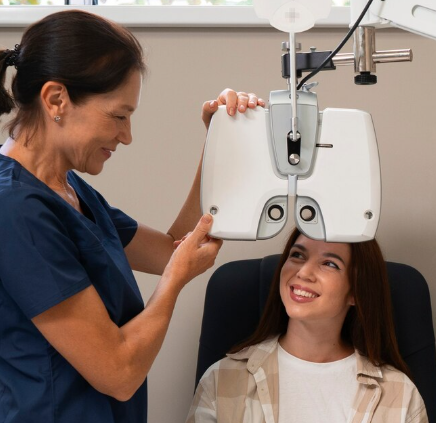
Treatment Overview
The Continuous IOP Monitoring Program in Korea is an advanced glaucoma management system designed to track intraocular pressure (IOP) fluctuations in real time or at high frequency throughout the day and night. Because glaucoma progression is strongly influenced by pressure variability—not only average IOP—continuous monitoring provides critical information often missed during standard clinic visits.
Korean glaucoma centers lead in this field by integrating:
- 24-hour IOP monitoring devices
- Smart contact lens sensors (triggerfish-type systems)
- AI-based pressure trend analysis
- Nocturnal IOP pattern evaluation
- Telemetric home monitoring platforms
- Integrated alerts for pressure spikes and instability
This data-driven program allows clinicians to precisely tailor treatment plans, optimize medication timing, and determine the correct moment for laser therapy or MIGS.
Purpose & Benefits
Purpose
- Detect IOP spikes that occur outside clinic hours
- Identify nighttime or early-morning high-pressure episodes
- Analyze pressure fluctuations that drive glaucoma progression
- Provide individualized treatment adjustments based on pressure patterns
- Assist in determining the need for medication modification, laser therapy, or MIGS
- Enhance long-term optic nerve protection through real-time data analysis
Benefits
- Highly accurate IOP detection beyond standard daytime exams
- Early identification of harmful pressure spikes
- Better control of glaucoma progression, especially in NTG
- AI-enhanced trend prediction for long-term planning
- Customization of medication timing for optimal pressure reduction
- Improved surgical decision-making using continuous data
- Convenience and comfort with home-based monitoring options
Ideal Candidates
The Continuous IOP Monitoring Program in Korea is ideal for:
- Patients with normal-tension glaucoma (NTG) needing nocturnal analysis
- Individuals with progressive glaucoma despite seemingly normal clinic IOP
- Patients experiencing unexplained visual field loss
- Individuals with highly variable IOP or suspected pressure spikes
- Patients being evaluated for MIGS or filtration surgery
- Individuals requiring medication optimization
- Patients with structural progression shown on OCT despite therapy
Possible Risks & Complications
Monitoring is safe and non-invasive, though mild and temporary effects may include:
- Eye irritation from contact lens sensors
- Slight redness after device wear
- Device-related discomfort in sensitive eyes
- Allergic sensitivity to monitoring adhesives (rare)
- Overinterpretation of minor fluctuations without clinical context
Korean specialists ensure safety through:
- Device calibration and fitting
- Regular ocular surface evaluations
- AI-assisted interpretation to filter out false signals
- Immediate follow-up if significant pressure instability is detected
Surgical Techniques
(These are the procedures typically recommended when continuous monitoring reveals persistent IOP instability.)
1. Selective Laser Trabeculoplasty (SLT)
Used when pressure spikes arise from trabecular outflow resistance.
2. MicroPulse Laser Therapy
Ideal for pressure peaks without visible angle obstruction.
3. MIGS (Minimally Invasive Glaucoma Surgery)
Recommended for consistent fluctuations:
- iStent Inject
- Hydrus Microstent
- KDB goniotomy
- Canaloplasty
- GATT
- Trabecular micro-bypass devices
4. Filtration Surgery
For advanced cases with extreme pressure variability:
- Trabeculectomy
- PreserFlo MicroShunt
- Glaucoma drainage implants
5. Medication Optimization Based on Circadian Rhythms
Adjusting dosing times to manage sunrise, nocturnal, or midday spikes.
Treatment Process in Korea
Step 1 – Baseline IOP Assessment
Clinic-based pressure measurement, OCT analysis, and visual field testing.
Step 2 – Continuous Monitoring Setup
Patients are fitted with a smart contact lens sensor or telemetric home device.
Step 3 – 24-Hour or Multi-Day Monitoring
The device records thousands of data points across real-life activities and sleep.
Step 4 – AI-Based Data Interpretation
Advanced software analyzes patterns, spikes, circadian variations, and risk indicators.
Step 5 – Personalized Treatment Adjustment
Medication changes, laser planning, or MIGS recommendations based on findings.
Monitoring Duration: 24 hours to 7 days depending on device
Setting: Outpatient setup with home-based monitoring capability
Recovery & After-Care
After-Care Guidelines
- Remove the contact sensor as instructed
- Use lubricating drops if dryness occurs
- Avoid rubbing the eyes after device removal
- Report symptoms such as persistent discomfort or blurred vision
- Follow scheduled consultation to review monitoring data
Recovery Timeline
Immediately: Resume normal activities after device removal
Days 1–3: Any minor irritation subsides
Week 1: Data interpretation leads to treatment adjustments
1–3 Months: IOP patterns stabilize with optimized treatment
Results & Longevity
Expected Results
- Clear detection of harmful pressure fluctuations
- Precise tailoring of glaucoma therapy
- Improved protection of optic nerve function
- Reduced risk of undetected nocturnal pressure peaks
- Enhanced long-term disease stability
Longevity
- Continuous or periodic monitoring provides lifelong benefits
- Treatment plans evolve with new data
- AI improvements enhance predictive accuracy over time
- Long-term outcomes significantly improve with ongoing pressure pattern evaluation
Why Korea Is a Top Destination
- Leading-edge IOP monitoring technology
- Integration of smart sensors and AI analytics
- Highly experienced glaucoma specialists
- Advanced nocturnal and circadian rhythm pressure evaluation
- Seamless treatment transition from monitoring to MIGS or laser
- Exceptional long-term visual preservation rates
Unique Korean Innovations
- AI-driven circadian IOP modeling
- 4D pressure fluctuation mapping
- Telemetric home-based IOP trend tracking
- Nocturnal optic nerve risk scoring
- Smart medication scheduling based on pressure rhythms
- IOP variability prediction integrated into MIGS planning
These innovations make Korea’s Continuous IOP Monitoring Program one of the most advanced pressure-analysis systems available worldwide.
Cost Range (Indicative Estimate)
| Program Package | Price (KRW) | Approx. USD | Inclusions |
|---|---|---|---|
| Basic 24-Hour Monitoring Package | ₩300,000 – ₩500,000 | ~$230 – $380 | 24h monitoring + basic report |
| Advanced Circadian IOP Pattern Program | ₩600,000 – ₩1,100,000 | ~$450 – $830 | Multi-day monitoring + AI analysis |
| Comprehensive Monitoring + Treatment Optimization Program | ₩1,200,000 – ₩2,500,000+ | ~$900 – $1,900+ | Full diagnostics + MIGS/laser planning |
Popular Clinics in Korea
- B&VIIT Eye Center (Seoul)
- Dream Eye Center (Seoul)
- BGN Eye Clinic (Seoul & Busan)
- Glory Seoul Eye Clinic
- K-Cure Vision Center (Gangnam)


