
Treatment Overview
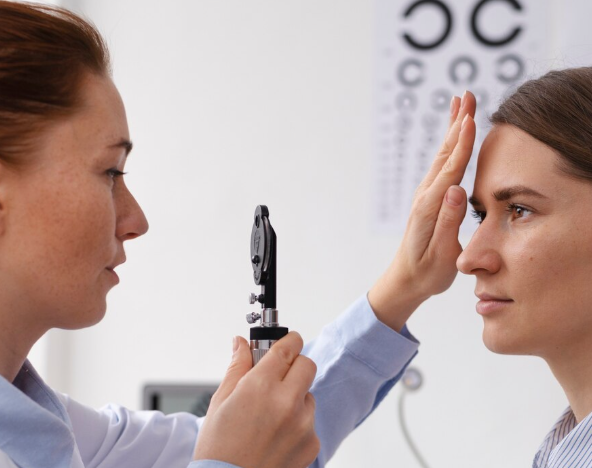
The Corneal Thickness Risk Evaluation Program in Korea is an advanced diagnostic system designed to assess corneal thickness (central and regional) and its impact on glaucoma diagnosis, risk prediction, and IOP interpretation. Corneal thickness plays a critical role in determining true intraocular pressure and can significantly influence the accuracy of glaucoma evaluation.
Korean ophthalmology clinics use state-of-the-art technology for corneal biomechanics and thickness assessment, including:
- Pachymetry (Ultrasound & Optical)
- Corneal Tomography (Pentacam / Scheimpflug imaging)
- Ocular Response Analyzer (ORA) for corneal hysteresis
- AI-assisted IOP correction modeling
- Corneal biomechanics analysis for glaucoma risk forecasting
This program ensures that glaucoma diagnosis and treatment decisions are based on accurate, personalized data rather than raw IOP numbers alone.
Purpose & Benefits
Purpose
- Accurately measure corneal thickness (CCT) to correct IOP readings
- Identify patients at higher risk of developing glaucoma
- Determine glaucoma severity more accurately
- Evaluate corneal biomechanical properties influencing optic nerve susceptibility
- Guide treatment decisions, medication choices, and surgical planning
- Monitor corneal changes over time to detect disease progression
Benefits
- Accurate IOP Interpretation: Prevents misdiagnosis caused by thick or thin corneas
- Better Risk Prediction: Thinner corneas are strongly associated with higher glaucoma risk
- Improved Treatment Precision: Personalized IOP targets based on corneal biomechanics
- Enhanced Monitoring: Detects changes in corneal properties that may influence disease management
- Optimized Surgical Decisions: Helps determine candidacy for MIGS or filtration surgery
- Critical for NTG: Essential for Korean patients, where normal-tension glaucoma is common
Ideal Candidates
This program is ideal for:
- Patients newly diagnosed with glaucoma
- Individuals with suspicious optic nerve appearance or borderline IOP
- Patients with thin or thick corneas affecting IOP accuracy
- Individuals being evaluated for LASIK, SMILE, or cataract surgery
- Those with normal-tension glaucoma (NTG)
- Patients requiring accurate risk assessment for future glaucoma
- Anyone experiencing unexplained IOP fluctuations
Possible Risks & Complications
The evaluation is painless and completely safe. However, the underlying risks identified may include:
- Underestimated IOP due to thin cornea
- Overestimated IOP due to thick cornea
- Increased risk of glaucoma progression in thin-corneal patients
- Higher susceptibility to optic nerve damage
- Difficulty evaluating true pressure without biomechanical data
Korean clinics minimize these risks through:
- AI-based IOP correction algorithms
- Corneal hysteresis measurements
- Longitudinal thickness tracking
- Personalized glaucoma risk modeling
Surgical Techniques
(These procedures are used when corneal thickness findings influence glaucoma treatment.)
1. IOP Target Adjustment Surgery
MIGS or laser therapy may be recommended for patients with thin corneas at higher risk.
2. Selective Laser Trabeculoplasty (SLT)
Often preferred when medication interpretation is affected by corneal thickness.
3. MIGS Planning Based on Corneal Biomechanics
Options include:
- iStent Inject
- Hydrus
- KDB goniotomy
- Canaloplasty
- PreserFlo MicroShunt (for high-risk thin-corneal patients)
4. Filtration Surgery Consideration
Recommended when thin corneas and low hysteresis increase optic nerve vulnerability.
5. Lens-Based IOP Reduction
Phacoemulsification may be used to lower IOP while minimizing corneal stress.
Treatment Process in Korea
Step 1 – Corneal Thickness Measurement
Using pachymetry and tomography to evaluate central and peripheral corneal thickness.
Step 2 – Corneal Biomechanics Evaluation
Includes corneal hysteresis, elasticity, resistance factor, and ocular pulse.
Step 3 – AI-Based IOP Recalculation
Corrects IOP values using personalized biomechanical data.
Step 4 – Glaucoma Risk Categorization
Determines if the patient is low-, medium-, or high-risk based on corneal metrics.
Step 5 – Treatment & Monitoring Plan
Customized medication, laser, or MIGS plan if indicated.
Evaluation Duration: 10–20 minutes
Setting: Outpatient diagnostic center
Recovery & After-Care
After-Care Guidelines
- No downtime; patients continue normal activities immediately
- Maintain regular glaucoma evaluations
- Report symptoms such as eye pain or sudden IOP spikes
- Follow individualized monitoring schedules
- Avoid rubbing the eyes before pachymetry or imaging sessions
Recovery Timeline
Immediately: Results available; IOP recalculated
Days 1–3: Treatment adjustments made if necessary
Weeks 1–4: Monitoring of IOP stability
1–3 Months: Long-term baseline established
Results & Longevity
Expected Results
- Accurate IOP readings adjusted for corneal thickness
- Better understanding of glaucoma risk
- Improved treatment precision
- Reduced rates of misdiagnosis and delayed interventions
- Enhanced long-term visual protection
Longevity
- Corneal thickness is stable throughout life but must be rechecked regularly
- Helps determine long-term IOP targets
- Contributes to lifelong glaucoma risk management
- Supports better surgical and laser planning
Why Korea Is a Top Destination
- World-class corneal and glaucoma diagnostic systems
- Advanced pachymetry and tomography imaging
- AI-powered IOP interpretation and risk prediction tools
- High accuracy in NTG patient evaluation
- Personalized treatment pathways based on corneal biomechanics
- Integrated care combining cornea and glaucoma specialists
Unique Korean Innovations
- AI-driven corneal thickness correction algorithms
- Corneal biomechanics integrated into glaucoma staging
- 4D corneal elasticity analysis
- Pressure-adjusted optic nerve vulnerability scoring
- Customized MIGS selection based on corneal thickness and hysteresis
These innovations make Korea’s Corneal Thickness Risk Evaluation Program one of the most advanced diagnostic tools for precise glaucoma risk assessment worldwide.
Cost Range (Indicative Estimate)
| Program Package | Price (KRW) | Approx. USD | Inclusions |
|---|---|---|---|
| Basic Corneal Thickness Evaluation | ₩80,000 – ₩150,000 | ~$60 – $110 | Pachymetry + IOP correction |
| Advanced Corneal Biomechanics Package | ₩200,000 – ₩400,000 | ~$150 – $300 | ORA + tomography + AI recalculation |
| Comprehensive Corneal–Glaucoma Risk Program | ₩500,000 – ₩1,200,000+ | ~$380 – $900+ | Full corneal metrics + glaucoma planning |
Popular Clinics in Korea
- B&VIIT Eye Center (Seoul)
- Dream Eye Center (Seoul)
- BGN Eye Clinic (Seoul & Busan)
- Glory Seoul Eye Clinic
- K-Cure Vision Center (Gangnam)


