
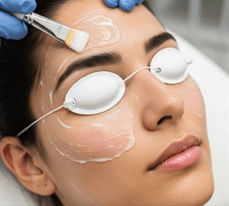
Treatment Overview
The Cosmelan Peel is a medical-grade depigmentation program developed in Spain and widely used in Korean dermatology clinics for stubborn pigmentation issues. It combines a professional in-clinic peel with an at-home maintenance cream to suppress melanin production and accelerate pigment fading.
Unlike superficial AHA or BHA peels, the Cosmelan system specifically targets melasma, PIH (post-inflammatory hyperpigmentation), freckles, sunspots, and uneven skin tone by regulating tyrosinase enzyme activity, which controls melanin formation. In Korea, it is often used for patients with resistant pigmentation who have not fully responded to lasers or lighter peels.
Purpose & Benefits
- Powerful Pigment Control: Specifically formulated to treat melasma, sunspots, and PIH.
- Melanin Regulation: Reduces excess pigment production at the source.
- Skin Brightening: Creates a more luminous, even complexion.
- Works on All Skin Types: Safe for Asian and darker skin when protocols are followed.
- Long-Term Maintenance: Paired with at-home cream for sustained results.
Ideal Candidates
Cosmelan Peel in Korea is recommended for:
- Adults with melasma that is resistant to laser or topical treatments.
- Patients with PIH from acne, trauma, or previous procedures.
- Individuals with sun damage, freckles, or solar lentigines.
- Those with dull, uneven skin tone seeking overall clarity.
- Patients seeking non-laser pigment correction or complementary therapy.
Possible Risks & Complications
- Redness & Peeling: Common in the first week, as skin sheds.
- Dryness & Tightness: Temporary, managed with hydrating creams.
- Mild Itching or Sensitivity: May occur during the first days.
- Rare Risks: PIH rebound if sun protection is neglected.
- Downtime: More noticeable peeling compared to standard chemical peels.
Surgical Techniques Used
- Step 1: In-Clinic Cosmelan Peel Mask
- A thick depigmenting mask is applied and left on for 6–12 hours, depending on skin type.
- Step 2: At-Home Maintenance Program
- Daily use of Cosmelan 2 cream (maintenance) for several months to suppress melanin production.
- Step 3: Supportive Treatments
- Hydrating serums, sunscreens, and post-peel care to protect barrier function.
- Combination Therapy: Sometimes paired with Pico or fractional lasers for stubborn pigment.
- Protocol: Usually a single in-clinic peel, followed by 3–6 months of home treatment.
Recovery & Aftercare
- Immediately (First Week): Redness, peeling, tightness; pigmentation may darken before shedding.
- 1–2 Weeks: Flaking continues; brighter skin starts to emerge.
- 1 Month: Clearer, more even skin tone; melasma and PIH begin fading significantly.
- 3–6 Months: Best results achieved with consistent at-home maintenance.
Aftercare Tips:
- Apply SPF 50+ sunscreen daily; strict sun avoidance is essential.
- Use only dermatologist-recommended hydrating and soothing creams.
- Avoid harsh actives (retinoids, acids) during recovery.
- Do not pick at peeling skin.
- Maintain daily Cosmelan 2 cream application as instructed.
Results & Longevity
- After 1 Peel: Visible improvement in pigmentation within 2–4 weeks.
- After 1–3 Months: Significant fading of melasma, PIH, and sunspots.
- After 6 Months: Long-lasting clarity and evenness when paired with maintenance cream.
- Long-Term: Maintenance treatments or repeat peel yearly may be needed for persistent melasma.
Treatment Process in Korea
1. Consultation & Skin Analysis
- Dermatologist determines if melasma or PIH is suitable for Cosmelan.
- Medical history reviewed, especially past pigment rebound.
2. In-Clinic Peel Application
- Step 1: Face cleansed and prepped.
- Step 2: Thick Cosmelan mask applied.
- Step 3: Patient leaves clinic with mask on (6–12 hours).
- Step 4: At home, mask is washed off as instructed.
3. At-Home Maintenance
- Cosmelan 2 cream applied daily to maintain and extend results.
- Hydration and sun protection strictly followed.
4. Follow-Up
- Regular dermatologist check-ins to monitor progress.
- Adjustments to protocol depending on sensitivity and pigmentation response.
Unique Korean Advantages
- Tailored Protocols: Korean dermatologists adapt Cosmelan treatment to Asian skin for safer results.
- Combination-Oriented: Often paired with lasers or whitening drips for faster pigment clearance.
- Holistic Care: Includes barrier repair serums, sunscreens, and supportive boosters.
- Medical Supervision: Strict monitoring reduces risk of PIH rebound.
Cost Range (Estimated)
- Single Cosmelan Peel (includes mask + initial follow-up): USD 600 – 900
- Full Program (Peel + Cosmelan 2 cream + 3–6 months maintenance): USD 900 – 1,500
- Premium Program (Cosmelan + Laser + Whitening Drips): USD 1,500 – 2,500
Additional Costs:
- Consultation: USD 20 – 50
- Add-ons (Whitening drips, Vitamin C, TXA infusions): USD 100 – 200
- Regenerative Boosters (PRP, Rejuran, Exosomes): USD 200 – 600
- LED or Cooling Mask Therapy: USD 30 – 80
Popular Clinics in Seoul
- Oracle Dermatology: Cosmelan for resistant melasma and PIH.
- Banobagi Dermatology: Cosmelan with laser protocols for severe pigmentation.
- Renewme Skin Clinic: Cosmelan + whitening drips for brightening.
- View Plastic & Dermatology: Cosmelan for sun damage and melasma.
- Chaum Anti-Aging Center: Premium Cosmelan programs with regenerative boosters.


