
Treatment Overview
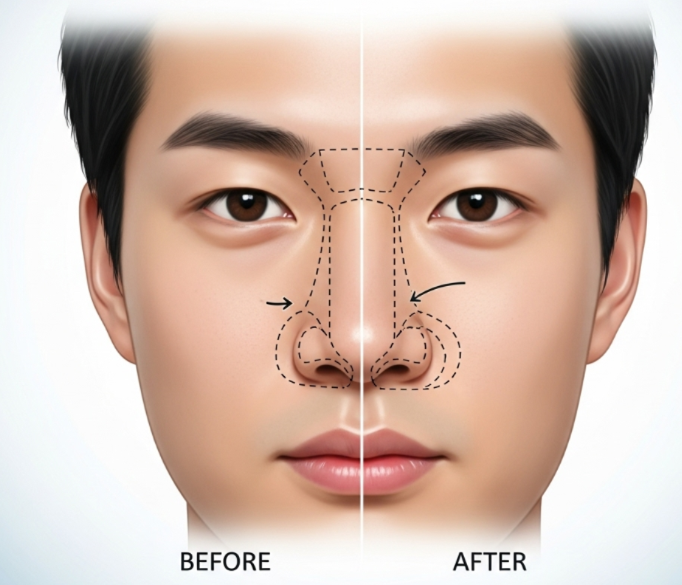
Crooked Nose Correction for Men in Korea is a specialized form of male rhinoplasty designed to straighten a deviated or asymmetrical nose caused by genetics, trauma, or previous surgery. The procedure focuses on restoring a balanced nasal bridge, tip, and overall facial symmetry while preserving masculine features. Korean surgeons are globally recognized for their precision in correcting nasal deviations using advanced techniques that provide both aesthetic and functional improvements.
Purpose & Benefits
- Straightens a deviated nasal bridge and aligns the tip for improved symmetry.
- Enhances facial harmony while maintaining masculine nasal characteristics.
- Improves nasal airflow and breathing in cases of functional deviation.
- Corrects previous rhinoplasty failures or post-traumatic asymmetry.
- Boosts confidence by improving appearance and function simultaneously.
Ideal Candidates
- Men with a visibly crooked or deviated nose.
- Patients experiencing breathing difficulties due to a deviated septum.
- Those seeking correction after trauma or a previous rhinoplasty.
- Men in good health with realistic expectations.
- Individuals desiring a masculine, straight nasal profile without over-refinement.
Possible Risks & Complications
Though uncommon in Korea due to advanced surgical standards, potential risks include:
- Temporary swelling and bruising
- Mild asymmetry or minor irregularities post-surgery
- Infection (rare with proper hygiene and care)
- Minor scarring in case of open surgical approach
- Temporary nasal stiffness or numbness
Surgical Techniques Used
Korean surgeons use highly refined techniques for crooked nose correction:
- Septoplasty: Straightening the deviated septum to improve both appearance and breathing.
- Osteotomy: Precision breaking and realignment of nasal bones to straighten the bridge.
- Cartilage Grafting: Autologous cartilage from the septum, ear, or rib may be used to support the tip and bridge.
- Open Rhinoplasty Approach: Preferred for complex cases, providing direct visualization for precise correction.
- Korean Male-Specific Design: Ensures the nose remains strong and masculine, avoiding an over-feminized shape.
Recovery & Aftercare
- Downtime: 7–10 days for initial healing; swelling and bruising resolve over 2–3 weeks.
- Stitch Removal: Usually after 5–7 days.
- Aftercare: Avoid trauma to the nose, strenuous activity, and smoking for several weeks.
- Clinics in Korea provide structured aftercare programs including:
- Swelling reduction therapy
- Gentle massage for proper contour
- Laser therapy for minimal scarring
- Regular follow-ups to monitor alignment and healing
Results & Longevity
- Long-lasting straightening of the nasal bridge and tip.
- Restoration of facial symmetry with a natural masculine appearance.
- Functional improvements such as enhanced breathing.
- Full results typically visible after 2–3 months once swelling subsides.
- High satisfaction rates when surgery is performed by experienced Korean surgeons.
Treatment Process in Korea
Korea is considered a global hub for male rhinoplasty and crooked nose correction due to its advanced technology and skilled surgeons:
- 3D Imaging & Pre-Surgery Simulation: Patients can preview expected outcomes.
- Precision Osteotomy & Grafting Techniques: Achieves both functional and aesthetic results.
- Male-Focused Approach: Maintains strong, natural, masculine contours.
- Post-Operative Care: Comprehensive aftercare including swelling therapy, massage, and follow-ups ensures optimal healing.
Why Korea is a Top Destination:
- Highly trained surgeons specializing in male rhinoplasty and nasal reconstruction.
- Advanced surgical techniques for both aesthetic and functional outcomes.
- Minimally visible scars with precise, natural-looking results.
- Cost-effective medical tourism packages with translation, accommodation, and personalized support.
Cost Range
The cost of Crooked Nose Correction for Men in Korea depends on surgical complexity:
- Mild Deviation (Septoplasty + Minor Tip Adjustment): ₩3,000,000 – ₩5,500,000 KRW ($2,300 – $4,200 USD)
- Moderate Deviation (Osteotomy + Cartilage Grafting): ₩5,500,000 – ₩8,000,000 KRW ($4,200 – $6,200 USD)
- Severe Deviation or Revision Cases: ₩8,000,000 – ₩12,000,000 KRW ($6,200 – $9,300 USD)
Inclusions:
- Surgeon’s fee and anesthesia
- Hospital/clinic facilities
- Post-operative care and follow-ups
- Optional medical tourism packages including accommodation and translation
Popular Clinics in Korea
- ID Hospital (Gangnam, Seoul): Specialized in male rhinoplasty and post-traumatic nose correction.
- Banobagi Plastic Surgery (Seoul): Renowned for precise crooked nose corrections with natural male results.
- View Plastic Surgery (Seoul): Uses 3D imaging and advanced osteotomy techniques for accurate realignment.
- DA Plastic Surgery (Seoul): Focuses on functional and aesthetic outcomes in male patients.
- JK Plastic Surgery (Seoul): JCI-accredited clinic with high international patient satisfaction rates.


