
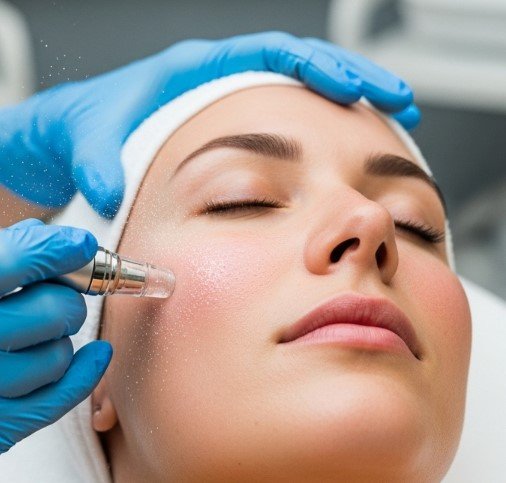
Treatment Overview
Crystal Peel is a microdermabrasion-based exfoliation therapy widely offered in Korean dermatology and aesthetic clinics for post-inflammatory hyperpigmentation (PIH), acne pigmentation, dullness, rough texture, and uneven tone.
This treatment uses fine aluminum oxide (crystal) micro-particles delivered via a controlled device to mechanically exfoliate the outermost skin layer, unclog pores, remove dead cells, and improve skin renewal. In Korea, Crystal Peel is often used as a gentle PIH-supportive therapy, commonly paired with lasers, Aqua Peel, chemical peels, or Vitamin C Iontophoresis for stronger pigment clearance.
Purpose & Benefits
- PIH Support: Accelerates turnover of pigmented surface skin, helping fade acne marks.
- Acne Pigmentation Control: Clears clogged pores, reducing new breakouts and secondary pigmentation.
- Brightening & Glow: Improves tone, radiance, and smoothness.
- Texture Refinement: Softens roughness, fine lines, and shallow scars.
- Preparation for Lasers: Enhances absorption of brightening agents and laser effectiveness.
Ideal Candidates
Crystal Peel in Korea is recommended for:
- Patients with mild to moderate PIH from acne or skin inflammation.
- Individuals with dull skin, clogged pores, or rough texture.
- Adults who prefer a gentle, non-chemical exfoliation.
- Patients combining Crystal Peel with Nd:YAG, Pico, or whitening drips for PIH.
Possible Risks & Complications
Crystal Peel is considered safe with minimal risks when performed in clinics. Mild effects may include:
- Redness & Warmth: Temporary, subsides in a few hours.
- Mild Sensitivity: Skin may feel tight or slightly dry.
- Rare Risks: Over-exfoliation or irritation if performed too aggressively.
Techniques Used
- Microdermabrasion with Crystals: Device sprays fine crystal particles over skin while simultaneously suctioning debris.
- Customized Intensity: Korean dermatologists adjust pressure depending on PIH severity and skin sensitivity.
- Combination Programs: Crystal Peel often paired with Vitamin C serums, iontophoresis, or whitening drips.
Protocol: Usually 3–6 sessions, spaced 2–4 weeks apart. Maintenance suggested every 1–2 months for acne-prone skin.
Recovery & Aftercare
Immediately: Skin feels smoother, fresher, and more radiant.
1–2 Days: Mild sensitivity or dryness possible.
1 Week: Brighter tone, lightening of PIH and clearer pores.
Aftercare Tips:
- Apply SPF 50+ sunscreen daily.
- Use hydrating creams or barrier serums.
- Avoid harsh exfoliants, acids, and retinoids for 3–5 days.
- Keep skin moisturized to support renewal.
Results & Longevity
- After 1 Session: Smoother, more glowing skin.
- After 2–3 Sessions: Visible reduction in acne pigmentation and clearer texture.
- After 3–6 Sessions: Significant PIH fading, healthier and brighter skin.
- Long-Term: Maintenance peels every 1–2 months recommended for acne-prone patients.
Treatment Process in Korea
Consultation & Skin Analysis
- Dermatologist assesses acne history, PIH depth, and skin sensitivity.
- Crystal Peel chosen for gentle resurfacing and PIH support.
Preparation
- Gentle cleansing and pre-treatment toner.
- Eye protection applied before device use.
Crystal Peel Session
- Step 1: Microcrystals exfoliate and polish skin.
- Step 2: Suction removes debris and impurities.
- Step 3: Hydrating or whitening serums applied for brightening.
- Duration: 20–30 minutes.
Post-Treatment Care
- Soothing mask or Vitamin C serum applied.
- Sunscreen before discharge.
Follow-Up
- 3–6 sessions recommended for acne pigmentation.
- Often combined with Nd:YAG, Pico, PRP, or whitening drips.
Unique Korean Advantages
- Gentle Asian Protocols: Korean dermatologists use lower pressure to prevent PIH rebound.
- Combination Treatments: Crystal Peel often bundled with Aqua Peel, Vitamin C iontophoresis, or lasers.
- Safe Maintenance Therapy: Popular as part of monthly skin-care regimens.
- Affordable Access: Widely available in Seoul dermatology clinics.
Cost Range (Estimated)
- Single Session: USD 70 – 150
- 3–6 Session Package: USD 300 – 600
- Premium PIH Program (Crystal Peel + Lasers/Boosters): USD 1,000 – 2,000
Additional Costs:
- Consultation: USD 20 – 50
- Whitening drips (Glutathione/Vitamin C): USD 100 – 200
- Skin boosters (Rejuran, exosomes): USD 200 – 500
Example Korean Packages:
- Basic Crystal Peel Program (3 sessions): USD 250–400
- Brightening Combo (Crystal Peel + Whitening Drips): USD 600–900
- Premium PIH Package (Crystal Peel + Pico/Nd:YAG + Boosters): USD 1,500–2,000
Popular Clinics in Seoul
- Oracle Dermatology: Crystal Peel + Nd:YAG for acne PIH.
- Banobagi Dermatology: Crystal Peel + Pico for pigmentation and brightening.
- Renewme Skin Clinic: Crystal Peel + antioxidant infusions.
- View Plastic & Dermatology: Crystal Peel + Fraxel for PIH + scars.
- Chaum Anti-Aging Center: Premium Crystal Peel programs with boosters.


