
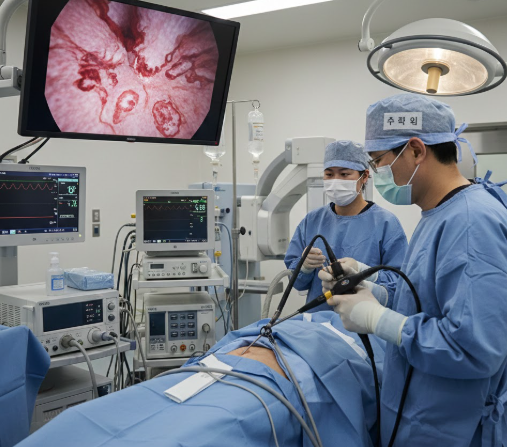
Treatment Overview
Cystoscopy combined with biopsy is a minimally invasive procedure that allows urologists to examine the bladder and urethra while simultaneously obtaining tissue samples for analysis. This procedure is essential for diagnosing bladder tumors, suspicious lesions, or chronic inflammation. In Korea, hospitals offer advanced cystoscopy and biopsy services using high-definition flexible and rigid scopes, ensuring precise diagnosis and safe treatment for both domestic and international patients.
Purpose & Benefits
The main purposes of combining cystoscopy with biopsy are:
- Detecting and diagnosing bladder cancer or pre-cancerous lesions.
- Evaluating abnormal tissue observed during routine cystoscopy or bladder health check-ups.
- Guiding treatment decisions based on histopathology results.
Benefits include:
- Accurate diagnosis through direct visualization and tissue sampling.
- Minimally invasive procedure with short recovery time.
- Ability to perform both diagnostic and minor therapeutic interventions during the same session.
- Supports personalized treatment planning for long-term bladder health.
Ideal Candidates
Cystoscopy combined with biopsy is recommended for patients who:
- Have hematuria (blood in urine) without a clear cause.
- Exhibit bladder lesions or abnormal tissue detected on imaging.
- Require evaluation for bladder cancer or precancerous conditions.
- Have chronic bladder inflammation or interstitial cystitis.
- Need follow-up evaluation after previous bladder surgery or treatment.
Korean urologists carefully assess patients to determine suitability and identify any risks prior to the procedure.
Possible Risks & Complications
Although generally safe, cystoscopy with biopsy carries potential risks:
- Mild discomfort or burning sensation during urination.
- Temporary blood in urine or minor bleeding at the biopsy site.
- Urinary tract infections, usually treatable with antibiotics.
- Rare complications such as urethral injury or bladder perforation.
Strict sterilization protocols and careful procedural techniques in Korean hospitals minimize these risks.
Techniques & Technology Used
Korean hospitals use advanced techniques to enhance safety and accuracy:
- Flexible Cystoscopy: Comfortable for the patient while allowing detailed inspection.
- Rigid Cystoscopy: Provides high-definition imaging for precise visualization.
- Biopsy Forceps and Laser-Assisted Tools: Allow safe and accurate tissue sampling or minor interventions.
- High-Resolution Camera Systems: Ensure clear visualization of lesions and surrounding tissue.
- Narrow Band Imaging (NBI): Enhances detection of abnormal tissue to guide biopsy.
These technologies ensure accurate diagnosis, safety, and minimal patient discomfort.
Treatment Process in Korea
The process typically includes:
- Pre-procedure Assessment: Blood tests, urine analysis, and imaging studies to evaluate bladder health.
- Preparation: Local anesthesia or sedation to ensure patient comfort.
- Cystoscopy with Biopsy: The scope is inserted through the urethra to examine the bladder. Suspicious tissue is carefully sampled using biopsy forceps, sometimes with laser assistance for precision.
- Post-procedure Monitoring: Patients are observed for a short period and usually discharged the same day.
International patients receive assistance with language translation, scheduling, and coordination for a smooth experience.
Recovery & After-Care
Recovery after cystoscopy with biopsy is generally quick, with recommendations including:
- Drinking plenty of fluids to flush the urinary tract.
- Monitoring for persistent bleeding, pain, or signs of infection.
- Taking prescribed antibiotics or medications as directed.
- Avoiding heavy physical activity for several days.
- Attending follow-up appointments to review biopsy results and plan treatment.
Results & Longevity
Cystoscopy combined with biopsy provides definitive diagnostic information for bladder conditions. Histopathology results guide personalized treatment, including surgery, medications, or ongoing monitoring. Patients following post-procedure care instructions typically experience a safe recovery and improved long-term bladder health outcomes.
Why Korea Is a Top Destination
Korea is a preferred destination for cystoscopy combined with biopsy due to:
- Advanced Technology: High-definition flexible and rigid cystoscopes, laser-assisted biopsy tools, and NBI imaging.
- Expert Specialists: Board-certified urologists experienced in minimally invasive procedures and bladder cancer diagnosis.
- Medical Tourism Support: Language assistance, patient coordinators, and streamlined scheduling for international patients.
- High Safety Standards: Strict sterilization and monitoring protocols to minimize procedural risks.
- Efficient Healthcare System: Short waiting times and organized care for domestic and international patients.
Cost Range
Costs for cystoscopy combined with biopsy in Korea vary depending on hospital and procedure complexity:
- Diagnostic cystoscopy with biopsy: $600 – $1,200 USD
- Cystoscopy with biopsy and minor intervention: $1,000 – $1,500 USD
International patient packages may include hospital coordination, translation services, accommodation, and follow-up care.
Popular Clinics in Korea
Top hospitals offering cystoscopy combined with biopsy include:
- Severance Hospital, Seoul
- Asan Medical Center, Seoul
- Samsung Medical Center, Seoul
- Bundang CHA Hospital, Seongnam
- Hanyang University Hospital, Seoul
These hospitals are renowned for advanced technology, high-quality care, and comprehensive support for international patients.


