
Treatment Overview
Delayed Transfer Embryo Freezing in Korea is an advanced fertility preservation method that allows embryos created during in vitro fertilization (IVF) to be frozen and stored for transfer at a later, more optimal time. This approach enables fertility specialists to carefully synchronize the embryo transfer with the patient’s hormonal balance, uterine health, and personal schedule — significantly improving implantation success and overall pregnancy outcomes.
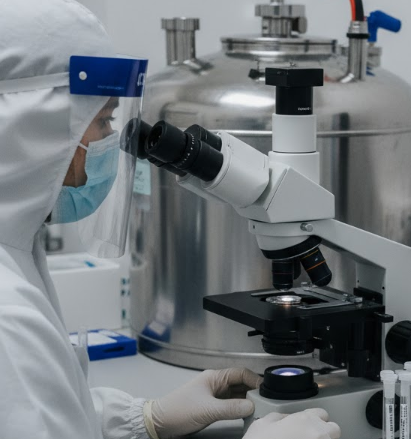
Korean fertility centers specialize in precision-timed embryo freezing and thawing protocols using next-generation vitrification technology, AI-assisted cycle monitoring, and biobank-grade cryogenic systems. The result is a highly personalized treatment process that enhances the likelihood of conception while maintaining patient comfort and flexibility.
By combining world-class embryology, hormonal precision, and cutting-edge cryopreservation, Korea’s fertility clinics lead the world in delayed embryo transfer techniques.
Purpose & Benefits
The primary goal of Delayed Transfer Embryo Freezing is to preserve embryos for future transfer when the uterus is in the best possible condition for implantation. It also provides scheduling flexibility for patients and prevents potential complications associated with fresh transfer cycles.
Key benefits include:
- Optimized uterine environment: Transfer occurs when endometrial lining is hormonally and physically ideal.
- Reduced hormonal stress: Allows recovery after ovarian stimulation before transfer.
- Higher pregnancy success: Studies show improved implantation rates with frozen embryo transfer (FET).
- Lower risk of ovarian hyperstimulation syndrome (OHSS): Avoids transferring during high estrogen cycles.
- Flexible timing: Enables embryo transfer at a time best suited to the patient’s health and lifestyle.
- Safe long-term storage: Embryos remain viable for 15–20 years using advanced cryogenic systems.
- Enhanced embryo quality preservation: Maintains full cellular integrity through vitrification.
Korean fertility centers combine medical precision with individualized planning to make delayed transfer one of the safest and most effective reproductive strategies available.
Ideal Candidates
Delayed Transfer Embryo Freezing in Korea is ideal for patients seeking to improve implantation outcomes or balance fertility treatment with other life or medical circumstances.
Ideal candidates include:
- Women with elevated estrogen or progesterone levels during stimulation cycles.
- Patients diagnosed with ovarian hyperstimulation syndrome (OHSS) risk.
- Couples undergoing genetic testing (PGT-A or PGT-M) before embryo transfer.
- Women with uterine lining issues or hormonal imbalances.
- Couples wishing to delay pregnancy for medical, personal, or professional reasons.
- Patients planning multiple IVF cycles for embryo banking before transfer.
This approach allows flexibility, safety, and improved success through science-driven fertility management.
Possible Risks & Complications
Although delayed embryo transfer is highly safe, mild risks may include:
- Emotional stress from the extended IVF timeline.
- Rare embryo loss during freezing or thawing (typically less than 2%).
- Scheduling complexity for patients traveling internationally.
Korean fertility clinics minimize these risks through real-time hormone tracking, AI cycle synchronization, and precision vitrification systems, ensuring near-perfect embryo preservation and reliable timing accuracy.
Surgical & Laboratory Techniques Used
The Delayed Transfer Embryo Freezing process in Korea integrates advanced laboratory and clinical techniques that ensure both embryo safety and patient success.
Core methods include:
- Controlled Ovarian Stimulation (COS): Optimized hormone dosing to produce mature, high-quality eggs.
- IVF or ICSI Fertilization: Fertilization occurs in the laboratory using the patient’s or donor gametes.
- Embryo Culture & Grading: Embryos are grown for 3–5 days and assessed using AI-based imaging for developmental quality.
- Vitrification (Rapid-Freezing): Embryos are flash-frozen at −196°C using ultra-rapid cooling to prevent ice formation.
- Smart Biobank Cryostorage: Embryos stored in advanced cryogenic tanks with 24-hour monitoring, dual backup nitrogen systems, and automated temperature control.
- Cycle Monitoring & Synchronization: AI and hormonal mapping identify the patient’s optimal uterine readiness for thaw and transfer.
- Precision Thawing & Transfer: Embryos are thawed under controlled lab conditions and transferred during a hormonally ideal cycle.
Korean fertility laboratories operate under GLP and ISO-certified standards, guaranteeing precision, sterility, and consistency across all embryo freezing and transfer processes.
Recovery & Aftercare
The embryo freezing process requires minimal recovery since it occurs in the laboratory after fertilization. Patients focus on hormonal balance and uterine health in preparation for the future transfer.
Aftercare recommendations include:
- Rest for 24 hours after egg retrieval.
- Maintain a healthy, hormone-supportive diet.
- Avoid strenuous exercise for several days.
- Follow prescribed medications to stabilize hormones post-stimulation.
- Attend follow-up visits for endometrial assessment before embryo transfer.
Korean fertility centers provide comprehensive aftercare programs, including acupuncture, nutrition counseling, and psychological support, ensuring full readiness for embryo implantation.
Results & Longevity
The Delayed Transfer Embryo Freezing approach in Korea yields some of the highest pregnancy and live birth rates in modern IVF practice due to precise timing and embryo quality management.
Typical outcomes include:
- Embryo survival rate post-thaw: 98–99%.
- Pregnancy rate per frozen embryo transfer (FET): 60–70% in women under 35.
- Lower miscarriage rates: Improved uterine receptivity leads to higher implantation stability.
- Storage duration: Embryos remain viable for up to 20 years.
- Comparable or superior success rates compared to fresh embryo transfers.
Korean fertility specialists emphasize personalized cycle timing and data-driven monitoring, making delayed transfer a cornerstone of their IVF success protocols.
Treatment Process in Korea
The process for Delayed Transfer Embryo Freezing in Korea is systematic, patient-focused, and technologically advanced.
Step 1: Consultation & Fertility Assessment
Comprehensive hormone testing, ovarian reserve evaluation, and fertility planning consultation.
Step 2: Ovarian Stimulation & Egg Retrieval
Controlled stimulation promotes the development of multiple mature eggs, which are collected through ultrasound-guided retrieval.
Step 3: Fertilization & Embryo Culture
Eggs are fertilized via IVF or ICSI and cultured for several days to reach the blastocyst stage.
Step 4: Embryo Freezing (Vitrification)
High-quality embryos are flash-frozen at −196°C for preservation.
Step 5: Recovery & Hormone Regulation
Patients rest and undergo hormonal balancing before preparing for embryo transfer in a future cycle.
Step 6: Embryo Thawing & Transfer
When the patient’s uterine environment is optimal, embryos are thawed and transferred to the uterus for implantation.
Why Korea Excels in Delayed Transfer Embryo Freezing
Korea’s reputation in reproductive medicine is driven by:
- AI-enhanced hormonal mapping and cycle prediction.
- State-of-the-art cryogenic vitrification systems.
- Highly trained embryologists and reproductive endocrinologists.
- Advanced biobank infrastructure with 24/7 monitoring.
- Ethical and patient-focused fertility care.
This comprehensive approach ensures both scientific precision and emotional support throughout the fertility journey.
Cost Range
The cost of Delayed Transfer Embryo Freezing in Korea depends on clinic type, number of embryos, and storage duration.
- Basic Delayed Transfer Cycle: USD 4,000 – 5,500
- AI-Monitored Embryo Freezing & Storage: USD 5,500 – 7,000
- Annual Storage Fee: USD 300 – 600
- Comprehensive Multi-Year Storage Package (3–5 years): USD 6,000 – 9,000
Packages typically include consultation, embryo vitrification, biobank cryostorage, and transfer preparation, with optional add-ons for extended monitoring or genetic screening.
Popular Clinics
Korea is home to internationally recognized fertility centers specializing in Delayed Transfer Embryo Freezing and other advanced reproductive techniques.
CHA Fertility Center (Seoul & Bundang)
Globally renowned for precision cryopreservation, hormonal synchronization, and AI-based embryo timing systems.
Asan Medical Center – Department of Reproductive Medicine
Offers comprehensive delayed embryo transfer programs with advanced cryostorage and cycle management.
MizMedi Women’s Hospital (Seoul)
Known for patient-centered care and advanced embryo vitrification technologies.
Hamchoon Women’s Clinic
Specializes in personalized IVF cycles with optimized hormone and endometrial tracking.
G Clinic (Seoul)
Provides affordable yet high-tech embryo freezing and delayed transfer services.


