
Dual Toning Laser in Korea
Treatment Overview Dual Toning Laser is a signature Korean dermatology treatment that combines two laser wavelengths—most commonly Q-Switched and Long-Pulsed Nd:YAG modes—to treat pigmentation, melasma,

Treatment Overview Dual Toning Laser is a signature Korean dermatology treatment that combines two laser wavelengths—most commonly Q-Switched and Long-Pulsed Nd:YAG modes—to treat pigmentation, melasma,
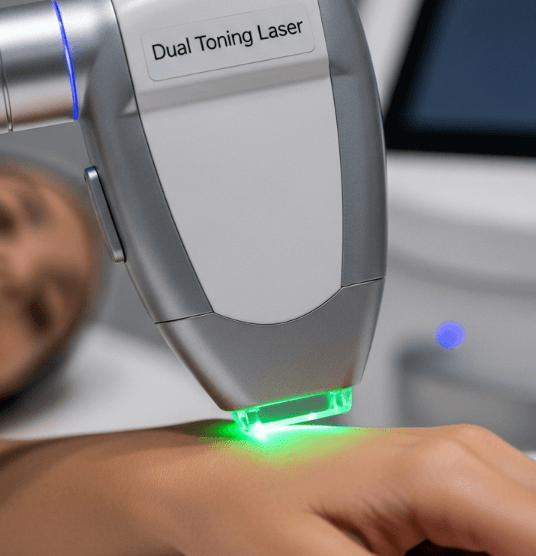
Treatment Overview The Dual Toning Laser is a specialized pigmentation treatment that combines two laser modes, typically Q-Switched Nd:YAG (1064 nm + 532 nm wavelengths),
Treatment Overview The Dual Toning Laser is a specialized Q-Switched Nd:YAG-based protocol that combines two different wavelengths (1064 nm + 532 nm) to address pigmentation
Treatment Overview Dual Toning Laser is a signature Korean dermatology treatment that combines two laser wavelengths—most commonly Q-Switched and Long-Pulsed Nd:YAG modes—to treat pigmentation, melasma,
Treatment Overview The Dual Toning Laser is a specialized pigmentation treatment that combines two laser modes, typically Q-Switched Nd:YAG (1064 nm + 532 nm wavelengths),
Treatment Overview The Dual Toning Laser is a specialized Q-Switched Nd:YAG-based protocol that combines two different wavelengths (1064 nm + 532 nm) to address pigmentation