
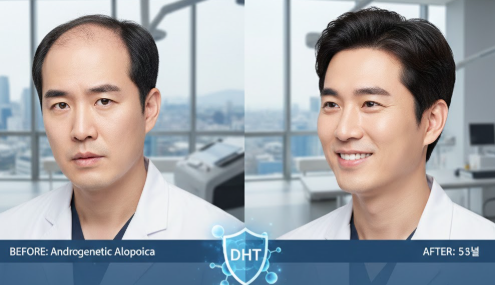
Treatment Overview
DHT blocker programs target hair loss caused by dihydrotestosterone (DHT), particularly in receding hairlines. In Korea, these programs are designed to restore the natural hairline by combining oral and topical DHT inhibitors, scalp therapies, and adjunct treatments. Clinics provide personalized plans to address male and female pattern baldness, focusing on hairline reconstruction and overall scalp health.
Purpose & Benefits
The primary purpose of hairline restoration using DHT blockers is to slow hairline recession and promote regrowth in thinning areas. Key benefits include:
- Improved hairline definition and density.
- Prevention of further hairline recession.
- Healthier scalp environment supporting follicle function.
- Non-surgical alternative to hair transplant for early-stage hairline loss.
- Long-term maintenance and sustainable results when followed consistently.
Ideal Candidates
Ideal candidates for hairline restoration using DHT blockers in Korea are:
- Adults experiencing early to moderate hairline recession.
- Individuals with androgenetic alopecia affecting the frontal hairline.
- Patients who prefer non-surgical solutions for hairline improvement.
- Those committed to a structured, long-term treatment plan.
Korean specialists perform scalp assessments and DHT level evaluations to determine eligibility and design a personalized regimen.
Possible Risks & Complications
While generally safe, DHT blocker programs for hairline restoration may involve:
- Mild side effects such as headaches, dizziness, or digestive issues.
- Temporary hair shedding during the initial months of therapy.
- Rare hormonal effects from oral DHT inhibitors.
- Minor irritation from topical applications.
Regular monitoring in Korean clinics helps minimize risks and adjust treatment plans when necessary.
Techniques & Technology Used
Advanced techniques used in Korea for hairline restoration include:
- Oral DHT inhibitors like finasteride and dutasteride.
- Topical DHT blockers with minoxidil or other active compounds.
- Scalp stimulation therapies such as PRP (Platelet-Rich Plasma) injections.
- Microneedling and laser therapy (LLLT) to enhance circulation and follicle stimulation.
- AI-assisted scalp analysis to personalize treatment and monitor progress.
These combined approaches help restore a natural hairline effectively.
Treatment Process in Korea
The treatment process typically includes:
- Initial consultation with scalp analysis, hairline assessment, and DHT testing.
- Personalized DHT blocker regimen including oral, topical, and supplementary therapies.
- Regular follow-up sessions to monitor hairline improvement and adjust treatment.
- Integration of adjunct therapies like PRP, microneedling, or laser therapy to accelerate hairline restoration.
Clinics often document progress with before-and-after photos to track visible improvements in hairline density.
Recovery & After-Care
Recovery is minimal as treatments are non-surgical. Recommended after-care includes:
- Strict adherence to oral and topical medications.
- Gentle hair and scalp care, avoiding harsh chemicals or excessive heat.
- Regular follow-ups for treatment adjustments.
- Healthy lifestyle and nutrition to support follicle growth.
Initial shedding may occur as part of the natural hair cycle before new growth appears.
Results & Longevity
Hairline restoration results in Korea show:
- Slowed hairline recession.
- Increased hair density along the frontal hairline.
- Improved follicle health and scalp condition.
- Long-term sustainability when combined with maintenance therapy and lifestyle management.
Consistent treatment and follow-up are key for maintaining a restored hairline.
Why Korea Is a Top Destination
Korea is a leading destination for hairline restoration due to:
- Cutting-edge DHT blocker programs with personalized care.
- Integration of advanced techniques like PRP, microneedling, and laser therapy.
- Experienced dermatologists and hair specialists.
- Competitive pricing for high-quality care.
- Exceptional support for international patients, including language assistance and medical tourism facilitation.
These factors ensure safe, effective, and visible hairline restoration results.
Cost Range
The cost of DHT blocker hairline restoration programs in Korea:
- Basic oral and topical programs: $600–$1,200 per year.
- Combination therapies including PRP or laser treatment: $1,500–$3,000 per year.
Many clinics offer packages that include consultation, medications, and follow-ups, especially for international patients.
Popular Clinics in Korea
Top clinics for hairline restoration include:
- Bana Hair Clinic, Seoul – Non-surgical hairline restoration experts.
- Regen Hair Clinic, Gangnam – Integrates DHT blockers with PRP and laser therapy.
- MediHair Clinic, Seoul – Personalized hairline restoration plans.
- Grand Plastic & Hair Clinic, Seoul – Combination therapies for effective hairline recovery.
These clinics provide professional care, transparent pricing, and comprehensive support for medical tourists seeking hairline restoration.


