
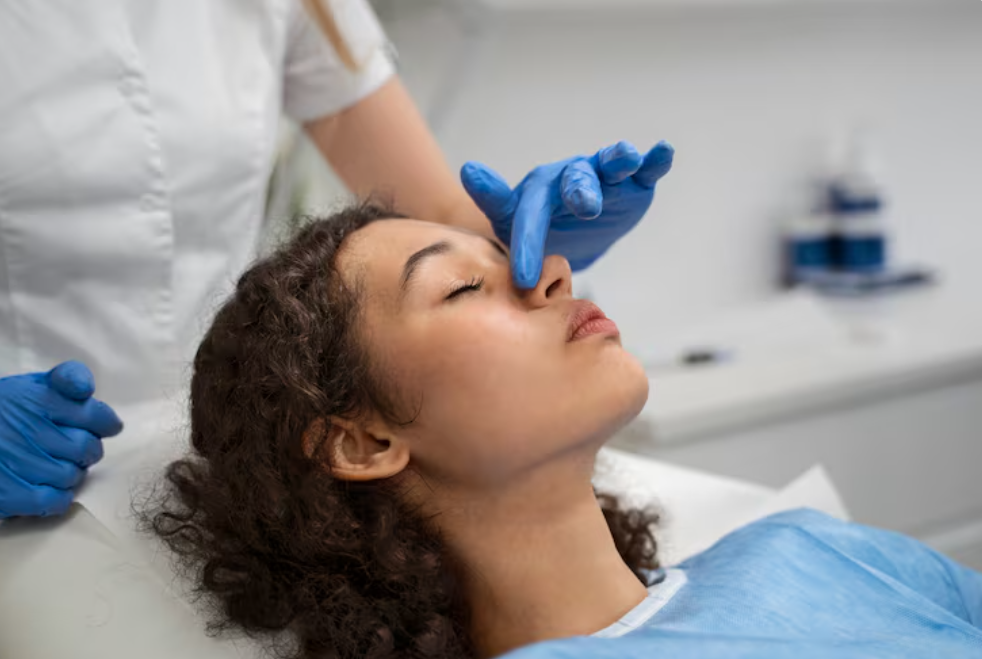
Treatment Overview
The Dome Binding Suture technique is a widely used tip refinement method in rhinoplasty. It involves strategically placing sutures across the domes of the lower lateral cartilages to bring them closer together. This results in a sharper, more defined nasal tip without the need for excessive cartilage removal.
Korean plastic surgeons specialize in precision-based suture techniques like Dome Binding, offering patients natural, long-lasting tip refinement while maintaining nasal structure and function.
Purpose & Benefits
- Creates a narrower and more refined nasal tip
- Enhances tip definition and contour
- Reduces bulbous or wide nasal tip appearance
- Avoids unnecessary cartilage removal, preserving nasal strength
- Provides stable, long-lasting results
- Can be combined with other rhinoplasty techniques (columella strut graft, cephalic trim, alar base reduction)
Ideal Candidates
- Patients with a bulbous or round nasal tip
- Those who want more tip definition without drastic size reduction
- Individuals seeking minimally invasive nasal refinement
- Patients with thick nasal skin who want sharper tip projection
- Both primary and revision rhinoplasty patients
Possible Risks & Complications
- Temporary swelling and bruising
- Slight asymmetry if sutures are not evenly placed
- Rare risk of suture loosening over time
- May require additional support grafting in revision cases
Surgical Techniques Used
- Dome Binding Suture Placement – sutures applied to bring domes of the lower lateral cartilages closer together
- Often combined with:
- Columella Strut Graft – for structural tip support
- Cephalic Trim – to refine excess cartilage
- Tip Projection or Shield Graft – for added definition
- Can be performed via open rhinoplasty (preferred for precision) or closed rhinoplasty (for minor refinements)
Recovery & Aftercare
- Downtime: 5–7 days for swelling and bruising to reduce
- Stitch Removal: Around 5–7 days post-op
- Healing Time: Noticeable tip refinement in 2–3 weeks; final refinement in 6–12 months
- Aftercare: Avoid pressure on the nose, follow clinic’s aftercare program, attend follow-up checkups
Results & Longevity
- Provides a slimmer, more elegant nasal tip
- Enhances tip symmetry and definition
- Long-lasting stability due to cartilage preservation
- Results remain natural, even during facial expressions
Treatment Process in Korea
The Korean approach to Dome Binding Suture surgery ensures precision and tailored results:
- Pre-Consultation – Patients share photos and medical history for assessment.
- In-Person Consultation – 3D imaging used to design tip refinement plan.
- Surgical Planning – Decision on additional techniques (e.g., grafting or alar base correction).
- Pre-Surgery Preparation – Health check-ups, anesthesia consultation.
- Surgery – Dome Binding Suture performed under local anesthesia with sedation or general anesthesia (1–2 hours).
- Immediate Recovery – Light nasal splinting/taping applied for support.
- Follow-Up – Stitches removed within a week; continuous aftercare provided.
- Final Results – Patients resume daily life within 7–10 days; tip refinement visible in weeks.
Cost Range in Korea
The price of Dome Binding Suture rhinoplasty in Korea varies based on complexity, surgeon’s expertise, and whether additional techniques are required.
- Basic Dome Binding Suture (Minor Refinement):
₩3,500,000 – ₩5,000,000 KRW ($2,700 – $3,900 USD) - Dome Binding + Support Graft (Moderate Case):
₩5,000,000 – ₩7,500,000 KRW ($3,900 – $5,800 USD) - Dome Binding with Full Tip Reconstruction (Complex/Revision):
₩7,500,000 – ₩10,000,000 KRW ($5,800 – $7,700 USD)
💡 Average International Patient Package:
₩5,000,000 – ₩8,000,000 KRW ($3,900 – $6,200 USD), often includes airport pickup, translator, and accommodation options.
Popular Clinics for Dome Binding Suture in Korea
- ID Hospital (Gangnam, Seoul) – leaders in advanced suture techniques.
- Banobagi Plastic Surgery – renowned for natural tip refinement.
- View Plastic Surgery – popular with international patients seeking subtle definition.
- JW Plastic Surgery – experts in revision rhinoplasty and fine suture techniques.
- April31 Plastic Surgery – highly regarded for elegant, sharp nasal tip results.
- DA Plastic Surgery – offers comprehensive medical tourism packages.


