
Treatment Overview
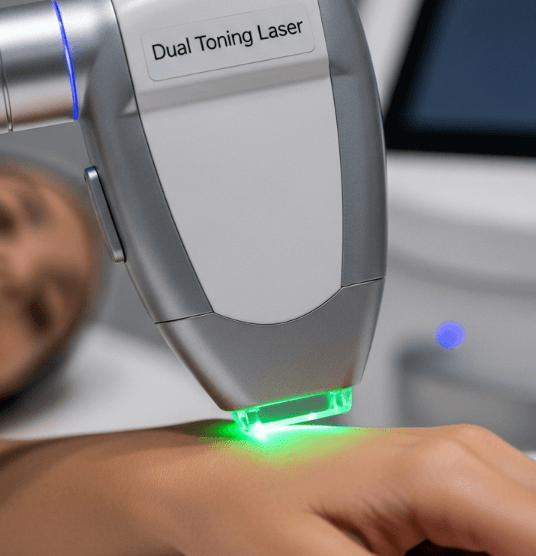
The Dual Toning Laser is a specialized pigmentation treatment that combines two laser modes, typically Q-Switched Nd:YAG (1064 nm + 532 nm wavelengths), to target both superficial and deep pigmentation simultaneously. By alternating or combining these two settings, dermatologists can safely and effectively treat melasma, freckles, sunspots, and uneven skin tone while minimizing the risk of damage to surrounding tissue.
In Korea, the Dual Toning Laser is highly popular because it offers a gentle yet effective approach to pigmentation management, especially for Asian skin types prone to post-inflammatory hyperpigmentation (PIH). It is often used in multi-session treatment plans to achieve progressive brightening, melasma control, and overall tone improvement.
It belongs to the Pigmentation Treatment family (Dual Toning, Pico Toning, Laser Toning, Carbon Peel, IPL, CO₂ Fractional):
- Dual Toning: Best for melasma + mixed superficial & deep pigmentation.
- Pico Toning: Best for stubborn pigmentation + acne scars.
- Laser Toning (single-mode Q-Switched): Best for gentle melasma control.
- Carbon Laser Peel: Best for acne + pores + surface pigment.
- IPL Photofacial: Best for redness + sun damage.
- CO₂ Fractional: Best for deep scars + severe pigmentation.
Purpose & Benefits
- Dual-Pigment Clearance: Treats both superficial freckles and deeper melasma.
- Skin Brightening: Improves dullness and uneven tone.
- Gentle & Safe: Lower risk of rebound pigmentation in Asian skin.
- Collagen Stimulation: Promotes elasticity and smoother skin.
- Minimal Downtime: Patients resume daily life quickly.
- Synergy with Boosters: Often combined with Rejuran, PN, or exosomes for enhanced healing.
Ideal Candidates
Dual Toning Laser in Korea is recommended for:
- Adults with melasma, freckles, or sunspots.
- Patients with dull skin or uneven tone.
- Individuals needing safe pigmentation correction with minimal downtime.
- Men and women comparing treatments:
- Dual Toning: Best for melasma + multi-layer pigmentation.
- Pico Toning: Best for stubborn pigment + acne scars.
- Laser Toning (single-mode): Best for gentle melasma maintenance.
- Carbon Peel: Best for acne + oily skin.
- IPL: Best for redness + photo damage.
- CO₂ Fractional: Best for severe pigmentation + texture.
Possible Risks & Complications
Dual Toning is safe and widely used in Korea, but some temporary effects may include:
- Redness or Warmth: Mild, fades within hours to 1 day.
- Dryness or Flaking: Short-term as skin renews.
- Rare Risks: Temporary hyperpigmentation or hypopigmentation (minimized with expert care).
Surgical Techniques Used
Dual Toning Laser uses dual Q-Switched Nd:YAG settings:
- 1064 nm Wavelength: Targets deeper dermal pigmentation (melasma, deeper spots).
- 532 nm Wavelength: Targets superficial pigmentation (freckles, sunspots).
- Fractional Delivery: Sometimes used for collagen remodeling.
- Protocol: 5–10 sessions spaced 2–4 weeks apart; maintenance every 6–12 months.
Recovery & Aftercare
- Immediately: Mild redness, warmth, or tingling.
- 1–2 Days: Skin appears clearer and fresher.
- 2–4 Weeks: Gradual fading of pigmentation with each session.
Aftercare Tips:
- Apply SPF 50+ daily to protect results.
- Use hydrating serums and barrier-strengthening creams.
- Avoid harsh exfoliants, scrubs, or retinoids for 3–5 days.
- Limit direct sun exposure during treatment cycles.
Results & Longevity
- After First Session: Brighter tone and mild pigment reduction.
- Short-Term (3–5 Sessions): Visible fading of melasma and freckles.
- Medium-Term (6–10 Sessions): Significant improvement in pigmentation + collagen boost.
- Long-Term: Results last 6–12 months with maintenance.
Treatment Process in Korea
- Consultation & Skin Analysis – Doctor evaluates pigmentation depth and type.
- Preparation – Cleansing, numbing cream if needed, protective eyewear.
- Dual Toning Session – Sequential or combined laser pulses applied.
- Post-Care: Cooling mask, hydrating serum, or antioxidant infusion.
- Follow-Up: Multi-session plan for cumulative tone brightening.
Why Korea is a Top Destination
- Korea uses latest Q-Switched and advanced Dual Toning platforms.
- Dermatologists are highly experienced in melasma management for Asian skin.
- More affordable compared to Western pigmentation packages.
- Clinics offer combination therapy (Dual Toning + skin boosters) for enhanced results.
- Seoul is internationally known for “glass skin” brightening programs.
Cost Range (Detailed Breakdown)
Pricing for Dual Toning Laser in Korea:
- Single Session (full face): USD 150 – 300
- 5–10 Session Package: USD 600 – 2,000
- Premium Brightening Package (Dual Toning + Rejuran/Exosome Booster): USD 1,500 – 3,500
Additional Costs in Korea:
- Consultation: USD 20 – 50
- Add-ons (PN boosters, Vitamin drips, Exosomes): USD 100 – 500
💡 The Dual Toning Laser is often called “the melasma control laser” in Korea, as it safely addresses both superficial and deep pigmentation while maintaining a natural, radiant glow.
Popular Clinics
- Banobagi Dermatology (Seoul): Dual Toning + PN boosters for melasma.
- Oracle Dermatology (Seoul): Specialized Dual Toning protocols for freckles + tone correction.
- Renewme Skin Clinic (Seoul): Dual Toning for melasma + acne-related pigmentation.
- View Plastic & Dermatology (Seoul): Dual Toning + Rejuran for tone + texture.
- Chaum Anti-Aging Center (Seoul): Premium Dual Toning + regenerative therapy add-ons.


