
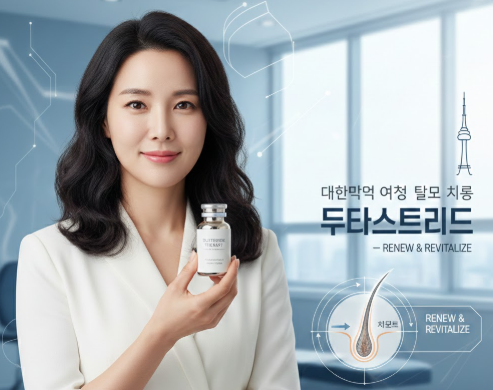
Treatment Overview
Dutasteride, a potent dual 5‑alpha reductase inhibitor, is more commonly used for male-pattern androgenetic alopecia (AGA). In Korea, dermatologists are very experienced with Dutasteride—but its use for women’s hair loss is more cautious and less common due to hormonal considerations. While the drug is not officially approved for women’s AGA in many countries, some dermatologists may consider off‑label prescribing in specific cases under strict medical supervision.
In Korean clinics, when Dutasteride is used for women, it’s often paired with other hair-loss treatments (such as minoxidil or low-level laser) to reduce risk and maximize benefits.
Purpose & Benefits
Using Dutasteride for women’s hair loss aims to:
- Suppress DHT (dihydrotestosterone) in the scalp to slow or stop follicular miniaturization
- Promote stabilization of hair loss, especially in hormonally driven cases
- Improve hair thickness and density over time
- Serve as an adjunct to other therapies when monotherapy isn’t sufficient
Some studies suggest that low-dose Dutasteride can effectively increase hair thickness over long-term use. However, in the Korean context, its use is more cautious because of safety concerns and regulatory limitations.
Ideal Candidates
Women who might be considered for Dutasteride therapy in Korea typically include:
- Post-menopausal women with AGA and no risk of pregnancy
- Women who have hormonally mediated hair loss (e.g., androgen-sensitive follicles)
- Patients who have not responded sufficiently to first-line treatments like minoxidil or low-dose spironolactone
- Those willing to be closely monitored by a Korean dermatologist for side effects
Because of Dutasteride’s potency, pregnant women or women planning to conceive should not use it, and doctors will generally avoid prescribing it to women of childbearing age.
Possible Risks & Complications
Dutasteride has well-known systemic effects, so when it’s used in women, the risk‑benefit balance must be carefully considered:
- Hormonal side effects (because DHT is suppressed)
- Potential sexual side effects
- Long half-life means the drug stays in the body for a long time
- Unknown or under‑researched long-term safety in women (especially reproductive concerns)
Korean dermatologists typically prescribe the lowest effective dose and schedule very regular follow-ups.
Techniques & Technology Used
In Korean clinics, Dutasteride use in women is often layered into a comprehensive hair-loss treatment strategy:
- Low-dose oral Dutasteride, to minimize systemic exposure
- Scalp diagnostics (trichoscopy, high-resolution imaging) to monitor effect and detect miniaturization
- Combination therapies: Dutasteride + topical minoxidil or laser therapy is common
- Hormone monitoring: Regular hormonal blood tests and check-ins to ensure safety
- AI or digital scalp analysis: Some advanced clinics use imaging to track progress and adjust treatment plans
These methods help dermatologists tailor the therapy more precisely for women, increasing efficacy while reducing risk.
Treatment Process in Korea
- Consultation & Diagnosis: A board-certified Korean dermatologist will assess hair loss pattern, do scalp imaging, and review medical and reproductive history.
- Risk Assessment: For women, the doctor evaluates hormone levels, seeks to rule out pregnancy risk, and discusses side effects in detail.
- Prescription Planning: If approved, a low-dose Dutasteride regimen is designed. The dermatologist may combine it with other therapies like minoxidil.
- Treatment Monitoring: Patients return regularly for scalp scans and check-ups; hormonal blood tests may be done to monitor safety.
- Adjustment & Maintenance: Depending on response, doctors may adjust the dose or add/subtract therapies. Long-term maintenance is organized carefully.
Recovery & After‑Care
Because Dutasteride is taken orally, there is no “recovery” in the traditional sense like after a procedure. But after starting therapy:
- Patients need to stay consistent with dosing
- They should attend periodic check-ups and blood tests
- Use dermatologist-recommended scalp care (mild shampoo, scalp nourishment)
- Report any side effects early (e.g., mood changes, sexual symptoms)
- Avoid pregnancy while on therapy and possibly for some time after stopping
Results & Longevity
- It may take 3–6 months before any visible improvement in shedding or density is seen.
- Long-term use (1+ years) can lead to significant stabilization and thickening in carefully selected women.
- Because Dutasteride has a long half-life, stopping treatment may lead to a more gradual “reversal” of benefits compared to other medications.
Why Korea Is a Top Destination for This Therapy
- Experienced Dermatologists: Korean doctors are very familiar with hair-loss drugs and often apply a conservative, data-driven approach for women.
- Advanced Diagnostic Tools: Clinics use modern equipment to monitor scalp health and adjust therapy precisely.
- Comprehensive Treatment: Many clinics offer integrated plans combining medication, topical therapies, and scalp care.
- Safety Culture: Strong follow-up systems and hormone monitoring help minimize risks.
- Medical Tourism Support: Korean clinics are used to international patients and often provide detailed counseling, translation, and follow-up services.
Cost Range
Costs in Korea for women considering Dutasteride therapy are similar to those for men, depending on the clinic and dose:
- Initial Consultation & Scalp Diagnosis: ~ ₩50,000–₩150,000
- Oral Dutasteride (1-month supply, generic): ~ ₩25,000–₩60,000
- Ongoing Monitoring Visits: additional consultation or blood test costs may apply
- Combination Therapy (if added): additional cost depending on minoxidil, laser, or other treatments
These are typically out-of-pocket, as Dutasteride for hair loss may not be covered under Korea’s national health insurance for off-label female use.
Popular Clinics in Korea
- Dr. FORHAIR Clinic — Known for detailed diagnostics and personalized treatment plans
- Wonjin Dermatology Center — Large network, experienced with hormonal and pattern hair loss
- MODE A Hair Loss Clinic — Advanced imaging and combination therapies
- Seoul Skin & Hair Clinics — Good international patient support and careful prescribing


