
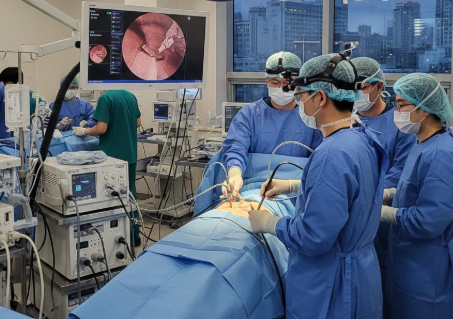
Treatment Overview
Endoscopic bladder stone surgery is a minimally invasive procedure that removes stones from the bladder using a cystoscope inserted through the urethra. This technique avoids open surgery and allows for precise stone removal with minimal trauma. In Korea, hospitals provide advanced laser-assisted and endoscopic equipment, ensuring safe, effective, and quick treatment for patients with bladder stones. Endoscopic surgery is preferred for small to medium-sized stones and is highly suitable for patients seeking fast recovery and minimal complications.
Purpose & Benefits
The main purpose of endoscopic bladder stone surgery is to eliminate bladder stones and restore normal urinary function. Benefits include:
- Complete removal of bladder stones
- Minimally invasive approach with no large incisions
- Short hospital stay and quick recovery
- Reduced risk of infection and complications
- Relief from pain, urinary obstruction, and recurrent infections
- Preserves bladder and urinary tract integrity
Ideal Candidates
Ideal candidates for endoscopic bladder stone surgery include:
- Patients with small to medium bladder stones causing urinary symptoms
- Individuals experiencing pain, infections, or difficulty urinating due to stones
- Those who prefer minimally invasive surgery
- Patients with recurrent bladder stones needing safe removal
- International patients seeking advanced urological care in Korea
Possible Risks & Complications
Although minimally invasive, endoscopic bladder stone surgery carries potential risks:
- Bleeding or hematuria (blood in urine)
- Infection at the surgical site or urinary tract
- Temporary difficulty urinating
- Rare injury to the bladder or urethra
- Retained stone fragments requiring additional procedures
Korean hospitals reduce these risks with preoperative evaluation, precise surgical techniques, and post-operative care.
Techniques & Technology Used
Korea employs advanced technologies for endoscopic bladder stone surgery:
- Cystolitholapaxy: Endoscopic procedure to fragment and remove stones
- Holmium Laser Lithotripsy: High-precision laser to break stones into small pieces
- Flexible and Rigid Cystoscopes: For precise stone visualization and removal
- Ultrasound and X-Ray Imaging: Ensures accurate stone localization
- Minimally Invasive Protocols: Reduce pain, hospital stay, and recovery time
Treatment Process in Korea
The typical process for international patients includes:
- Initial Consultation: Review of medical history, symptoms, and imaging results
- Preoperative Testing: Blood work, urinalysis, and imaging studies
- Surgery: Performed under general or spinal anesthesia using endoscopic techniques
- Hospital Stay: Usually 1–2 days depending on procedure and recovery
- Follow-Up: Imaging and urine tests to confirm complete stone removal and monitor recovery
Recovery & After-Care
Recovery after endoscopic bladder stone surgery includes:
- Minimal postoperative pain and discomfort
- Short hospital stay and rapid return to normal activities
- Increased fluid intake to prevent recurrence
- Monitoring for urinary tract infection or bleeding
- Routine follow-up visits for imaging and urinalysis
- Guidance for international patients regarding diet, hydration, and post-discharge care
Results & Longevity
Patients benefit from:
- Complete removal of bladder stones
- Relief from pain, urinary obstruction, and recurrent infections
- Low complication rates due to minimally invasive procedure
- Short recovery period and minimal disruption to daily life
- Long-term bladder health with preventive care and lifestyle adjustments
Why Korea Is a Top Destination
Korea is a preferred destination for endoscopic bladder stone surgery because:
- Hospitals have highly skilled urologists specializing in minimally invasive procedures
- Advanced laser and endoscopic technologies ensure safe and effective stone removal
- Quick recovery and short hospital stays enhance patient experience
- Comprehensive international patient care, including translation and concierge services
- Competitive and transparent treatment costs compared to Western countries
Cost Range
Approximate costs for endoscopic bladder stone surgery in Korea:
- Endoscopic Cystolitholapaxy: $2,000–$5,000 USD
- Holmium Laser Lithotripsy: $3,000–$6,000 USD
Costs generally include surgery, anesthesia, hospital stay, and preoperative tests; additional consultations may incur extra charges.
Popular Clinics in Korea
Top hospitals for endoscopic bladder stone surgery include:
- Samsung Medical Center, Seoul: Expertise in laser and endoscopic stone removal
- Asan Medical Center, Seoul: Advanced minimally invasive urology care
- Severance Hospital, Seoul: High-precision endoscopic procedures
- Seoul National University Hospital: Comprehensive urological services including stone management
- CHA Bundang Medical Center: State-of-the-art facilities catering to international medical tourists


