
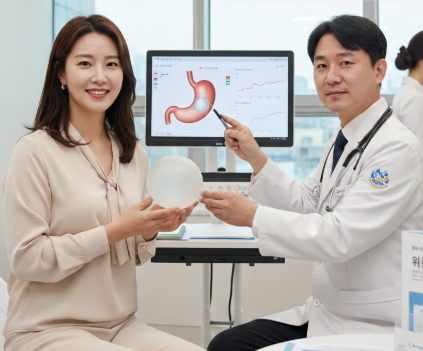
Treatment Overview
The Endoscopic Gastric Balloon Post‑Op Follow-Up is a structured monitoring program performed after balloon placement to ensure safe recovery, optimal weight loss, and prevention of complications. This follow-up includes medical check-ups, dietary guidance, and lifestyle coaching throughout the balloon therapy period.
→ Regular post-procedure monitoring for safety and effectiveness.
→ Integrated with diet, exercise, and behavioral programs.
→ Supports long-term weight management and healthy habits.
Korea is a preferred destination due to expert gastroenterologists, advanced medical monitoring, and structured follow-up protocols for international patients.
Purpose & Benefits
Post-op follow-up provides several advantages:
→ Monitors patient recovery and identifies complications early.
→ Supports sustained weight loss through dietary and lifestyle guidance.
→ Ensures balloon is functioning correctly and safely.
→ Provides psychological and behavioral support for program adherence.
→ Maximizes long-term weight management outcomes.
Follow-up care is essential for achieving optimal results and minimizing risks.
Ideal Candidates
All patients who have undergone endoscopic gastric balloon placement should participate in post-op follow-up, particularly those who:
→ Have BMI ≥25 kg/m² and are overweight or obese.
→ Require structured monitoring to support weight loss.
→ Seek guidance for diet, exercise, and behavioral changes.
→ Want to ensure safe and effective balloon therapy.
Regular follow-up is recommended to track progress and ensure patient safety.
Possible Risks & Complications
Even though post-op follow-up is safe, potential considerations include:
→ Early detection of nausea, vomiting, or abdominal discomfort.
→ Monitoring for balloon deflation or migration.
→ Identification of reflux or gastric irritation.
→ Adjustment of dietary or lifestyle guidance based on patient response.
Korean clinics provide expert monitoring to minimize risks and address any complications promptly.
Techniques & Technology Used
Post-op follow-up programs in Korea utilize:
→ Regular medical check-ups and weight tracking.
→ Dietary and nutritional counseling to support healthy eating habits.
→ Lifestyle and behavioral coaching to reinforce long-term weight management.
→ Digital monitoring tools for remote guidance and progress tracking.
→ Multidisciplinary team support including gastroenterologists, dietitians, and fitness coaches.
Korean clinics combine technology with personalized care to maximize outcomes.
Post-Op Follow-Up Process in Korea
The follow-up process typically includes:
→ Immediate Post-Procedure Monitoring → Observation for initial nausea, vomiting, or discomfort.
→ Short-Term Follow-Up → Weekly or bi-weekly check-ins for the first month.
→ Mid-Term Follow-Up → Monthly assessments to monitor weight loss and balloon status.
→ Diet & Exercise Guidance → Personalized nutrition and exercise plan.
→ Behavioral & Lifestyle Coaching → Support for adherence to long-term healthy habits.
→ Balloon Removal Preparation → Guidance and monitoring as the balloon approaches end-of-therapy (around 6 months).
Korean clinics provide structured programs to ensure safety, optimize weight loss, and maintain healthy habits.
Recovery & After-Care
Post-op follow-up ensures smooth recovery:
→ Manage mild nausea or abdominal discomfort with medical guidance.
→ Follow gradual diet progression: liquids → soft foods → solids.
→ Maintain hydration and nutritional intake.
→ Adhere to exercise and lifestyle recommendations.
→ Regular check-ins to monitor progress and adjust guidance as needed.
Patients typically resume normal activities within 1–2 days, with gradual weight loss observed over weeks.
Results & Longevity
Expected outcomes from structured post-op follow-up include:
→ Average weight loss of 10–20% of total body weight over the balloon therapy period.
→ Improvement in metabolic conditions, such as blood sugar, blood pressure, and cholesterol.
→ Sustained lifestyle and behavioral changes for long-term weight management.
→ Enhanced quality of life, energy, and physical well-being.
Success is heavily influenced by adherence to dietary, exercise, and lifestyle recommendations during follow-up.
Why Korea Is a Top Destination
Korea is a leading destination for endoscopic gastric balloon follow-up due to:
→ Highly experienced gastroenterologists and bariatric specialists.
→ Advanced monitoring technology and structured protocols.
→ Integrated programs combining diet, exercise, and behavioral support.
→ Affordable high-quality care compared to Western countries.
→ Comprehensive international patient support, including language assistance and remote guidance.
Patients benefit from expert care, modern facilities, and continuous multidisciplinary support.
Cost Range
Costs for post-op follow-up depend on the clinic and program:
→ Standard Post-Op Check-Ups: $300 – $600 USD
→ Comprehensive Follow-Up Program with Diet & Lifestyle Support: $600 – $1,200 USD
International packages may include remote monitoring and guidance for ongoing support.
Popular Clinics in Korea
Top clinics providing post-op follow-up for endoscopic gastric balloon therapy include:
→ Seoul National University Hospital, Bariatric & Endoscopy Unit – Structured follow-up and dietary guidance.
→ Asan Medical Center, Obesity & Metabolic Surgery Unit – Comprehensive monitoring and lifestyle support.
→ Samsung Medical Center, Endoscopy Department – Advanced post-op monitoring and digital follow-up tools.
→ JK Plastic & Obesity Clinic, Seoul – Personalized follow-up with multidisciplinary coaching.
→ Medi-Weight Clinic, Seoul – International patient support and structured post-op programs.
These clinics provide high-quality, safe, and structured post-op follow-up for optimal weight loss outcomes.


