
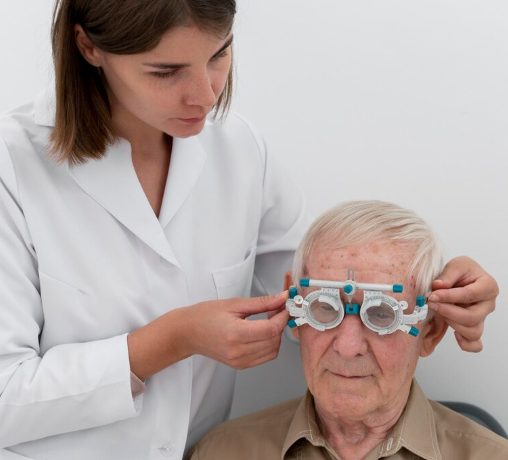
Treatment Overview
Epi-LASIK in Korea is an advanced, flap-free laser vision correction procedure designed to treat nearsightedness (myopia), farsightedness (hyperopia), and astigmatism safely and effectively. It is a refinement of surface-based laser eye surgeries like PRK and LASEK, combining the safety of surface ablation with improved comfort and faster recovery.
In Epi-LASIK, a specialized epikeratome (epithelial separator) gently lifts only the thin epithelial layer of the cornea, without the use of alcohol or blades. An excimer laser then reshapes the underlying corneal tissue to correct refractive errors. The epithelial layer naturally regenerates over a few days.
Korean ophthalmology centers utilize AI-guided excimer laser platforms, wavefront customization, and epithelial regeneration technologies to ensure exceptional precision, comfort, and long-term visual clarity. Epi-LASIK is particularly suitable for patients with thin corneas or those leading active lifestyles where flap-based LASIK may not be ideal.
Purpose & Benefits
Purpose
- Correct myopia, hyperopia, and astigmatism without creating a corneal flap.
- Provide a safer vision correction option for thin or irregular corneas.
- Deliver long-term refractive stability and sharp vision.
- Reduce dependency on glasses or contact lenses.
Benefits
- Flap-Free Safety: No flap creation means zero flap-related risks.
- Gentle Technique: Epikeratome separates the epithelium without alcohol or laser trauma.
- Ideal for Thin Corneas: Safe for patients who cannot undergo traditional LASIK.
- Fast Regeneration: Epithelium naturally heals within a few days.
- Stable Long-Term Results: Durable visual correction with minimal regression.
- High Precision: AI-based laser tracking ensures accurate ablation and optimal visual outcomes.
Ideal Candidates
Epi-LASIK in Korea is ideal for:
- Adults over 18 with a stable vision prescription for at least one year.
- Individuals with thin or irregular corneas not suitable for LASIK.
- People involved in sports, military service, or active professions.
- Patients who prefer flap-free and blade-free procedures.
- Those seeking safe, predictable, and natural vision correction.
Possible Risks & Complications
Epi-LASIK is extremely safe when performed by experienced Korean eye surgeons. However, minor temporary effects may include:
- Mild discomfort or irritation for a few days post-surgery.
- Temporary sensitivity to light or glare.
- Slight vision fluctuation during epithelial regeneration.
- Mild dryness or watery eyes in the early healing stage.
Korean clinics minimize these effects using AI-calibrated laser systems, oxygen-assisted corneal cooling, and biophotonic healing therapy, ensuring smooth recovery and clear results.
Techniques & Technology Used
Core Techniques
- Epikeratome Epithelial Separation: Gently lifts the epithelial layer without alcohol or mechanical blades.
- Excimer Laser Corneal Reshaping: Reshapes corneal curvature to correct refractive errors precisely.
- Wavefront-Guided Correction: Customizes treatment for each patient’s unique visual profile.
- AI Eye Tracking: Ensures precise alignment and ablation during laser application.
- Biophotonic Laser Healing: Accelerates epithelial regeneration and reduces inflammation.
- Protective Contact Lens Placement: Shields the cornea during the early healing phase.
These technologies deliver a perfect balance of safety, comfort, and precision.
Treatment Process in Korea
Step-by-Step Workflow
- Pre-Operative Eye Evaluation: Includes corneal thickness measurement, topography, and wavefront analysis.
- Personalized Treatment Planning: AI-assisted diagnostics determine optimal correction parameters.
- Epithelial Separation: The epikeratome gently separates the epithelium without alcohol or laser contact.
- Excimer Laser Correction: The laser reshapes the cornea to correct refractive errors.
- Protective Lens Application: A soft contact lens is placed for comfort and healing.
- Post-Operative Care: Eye drops and cooling therapy applied to promote rapid recovery.
The procedure takes approximately 15–20 minutes per eye, and patients typically notice improvement in a few days.
Recovery & Aftercare
Aftercare Guidelines
- Use prescribed antibiotic and moisturizing drops as directed.
- Avoid rubbing or touching your eyes for one week.
- Wear sunglasses outdoors to protect from UV exposure.
- Avoid swimming, saunas, or heavy exercise for two weeks.
- Attend all follow-up visits for progress monitoring.
Recovery Timeline
- 3–5 Days: The epithelial layer regenerates naturally.
- 1–2 Weeks: Discomfort subsides and vision becomes clearer.
- 1–3 Months: Vision stabilizes with high-definition clarity.
Results & Longevity
Expected Results
- Clear, stable vision after complete healing.
- Sharp visual clarity with reduced optical distortions.
- Long-term correction for myopia, hyperopia, or astigmatism.
- Natural visual comfort without dependence on glasses.
Longevity
Epi-LASIK offers long-lasting results similar to LASIK or LASEK.
Korean eye centers report success rates of 96–99%, with most patients achieving 20/20 vision or better.
Regular eye check-ups help maintain stable visual outcomes over time.
Why Korea Is a Top Destination
- Global Expertise: Korean ophthalmologists are pioneers in Epi-LASIK and surface ablation surgery.
- Flap-Free Innovation: Ideal for patients with thin or irregular corneas.
- AI-Powered Precision: Real-time monitoring ensures exact ablation control.
- Advanced Healing Technologies: PRF and biophotonic therapy promote fast recovery.
- Affordable Premium Care: Costs significantly less than similar surgeries in Western countries.
- Multilingual Support: English, Mandarin, and Japanese-speaking staff for international patients.
Korea’s combination of AI-guided surface laser precision, epithelial regeneration science, and microsurgical accuracy has made it a global leader in Epi-LASIK eye surgery.
Unique Korean Methods & Technology
- AI-Calibrated Excimer Laser Platforms
- Epikeratome-Assisted Epithelial Lifting
- Wavefront-Optimized Corneal Ablation
- Biophotonic Healing Laser Therapy
- PRF (Platelet-Rich Fibrin) Regenerative Drops
- Oxygen-Assisted Cooling System
- 3D Healing Progress Tracking
These innovations ensure rapid recovery, biologic safety, and superior visual performance.
Cost Range
| Treatment Package | Price (KRW) | Approx. USD | Inclusions |
|---|---|---|---|
| Standard Epi-LASIK | ₩1,400,000 – ₩2,000,000 | $1,040 – $1,480 | Surface correction + protective lens + aftercare |
| Custom Wavefront Epi-LASIK | ₩2,200,000 – ₩3,200,000 | $1,630 – $2,360 | AI-guided ablation + wavefront customization + follow-up care |
| Premium Regenerative Epi-LASIK | ₩3,500,000 – ₩4,800,000 | $2,590 – $3,550 | PRF healing + biophotonic therapy + AI vision tracking |
Popular Clinics
- BGN Eye Clinic (Seoul): Experts in flap-free Epi-LASIK and regenerative surface ablation.
- B&VIIT Eye Center (Gangnam): Leaders in customized Epi-LASIK with wavefront-guided correction.
- Dream Eye Center (Myeongdong): Specialists in thin-corneal Epi-LASIK and high-precision surface surgery.
- Olim Eye Clinic (Gangnam): Advanced Epi-LASIK with AI laser calibration and PRF healing systems.
- Eyereum Eye Clinic (Apgujeong): Pioneers in biophotonic recovery-based Epi-LASIK treatment.


