
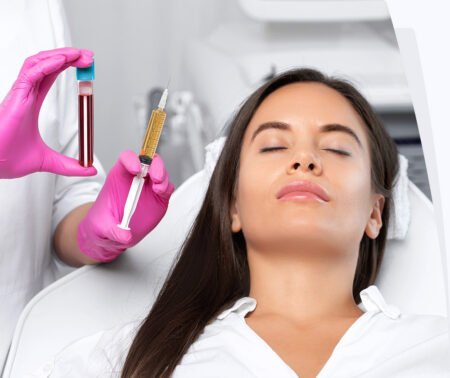
Treatment Overview
Exosome Therapy is an advanced regenerative treatment widely used in Korean dermatology clinics to improve acne scars, pigmentation, skin texture, and elasticity. Exosomes are tiny extracellular vesicles derived from stem cells, packed with growth factors, peptides, lipids, and signaling molecules that stimulate skin repair, collagen remodeling, and anti-inflammatory responses.
In Korea, exosome therapy is often performed via microneedling infusion, mesotherapy injections, or post-laser application. It is commonly paired with skin boosters like Juvelook (HA + PDLA hybrid) and Rejuran S (PN/PDRN-based booster) to accelerate healing, improve scar outcomes, and enhance overall skin rejuvenation.
Purpose & Benefits
- Scar Repair & Remodeling: Stimulates fibroblasts for collagen and elastin production, improving acne scars.
- Pigmentation Control: Fades post-inflammatory hyperpigmentation (PIH) and evens out skin tone.
- Texture Refinement: Smoothens rough skin, shrinks enlarged pores, and improves clarity.
- Anti-Inflammatory Action: Reduces redness and irritation after procedures.
- Barrier Strengthening: Improves resilience of sensitive and acne-prone skin.
- Synergy with Boosters: Enhances the effects of Juvelook and Rejuran S for scar correction and rejuvenation.
Ideal Candidates
Exosome Therapy in Korea is recommended for:
- Patients with atrophic acne scars (rolling, shallow boxcar, mild icepick).
- Individuals with post-acne pigmentation or uneven tone.
- Those undergoing scar treatments (laser, microneedling, boosters) who want faster healing and better results.
- Sensitive skin patients needing low-risk regenerative therapy.
- People seeking both scar improvement and anti-aging benefits.
Possible Risks & Complications
Exosome Therapy is generally safe, but mild effects may occur:
- Temporary redness, swelling, or pinpoint bruising.
- Mild dryness or flaking as skin renews.
- Rare allergic reaction or infection if not performed under sterile conditions.
- PIH risk is very low but still possible without strict sun protection.
Surgical Techniques Used
- Delivery Methods:
- Microneedling with exosome infusion.
- Mesotherapy-style dermal injections.
- Topical application after fractional lasers or RF microneedling.
- Combination Therapy: Often paired with Juvelook, Rejuran S, PRP, PDRN, subcision, or lasers for enhanced scar repair.
- Protocol: Typically 3–5 sessions, spaced 3–6 weeks apart, with maintenance every 6–12 months.
Recovery & Aftercare
- Immediately: Mild redness, warmth, or swelling.
- 1–3 Days: Calming effect, hydration improves.
- 1 Week: Texture looks smoother, tone more even.
- 1–3 Months: Progressive collagen remodeling reduces scar depth and pigmentation.
Aftercare Tips:
- Avoid makeup for 24 hours post-treatment.
- Keep skin moisturized with barrier creams.
- Avoid exfoliants, retinoids, and acids for 5–7 days.
- Use SPF 50+ sunscreen daily to protect healing skin.
- Avoid saunas, intense workouts, and heat exposure for 1–2 days.
Results & Longevity
- After 1 Session: Skin feels calmer, hydrated, and brighter.
- After 2–3 Sessions: Visible scar softening, pigmentation fading, smoother pores.
- After 4–5 Sessions: Long-term collagen remodeling, firmer skin, improved elasticity.
- Longevity: Results last 12–18 months, with yearly maintenance recommended.
Treatment Process in Korea
- Consultation & Skin Analysis
Dermatologist evaluates scar severity, pigmentation, and treatment history. - Preparation
Cleansing, topical numbing if injections or microneedling are used. - Exosome Therapy Session
- Step 1: Delivery via microneedling, meso-injection, or post-laser infusion.
- Step 2: Cooling therapy or LED light applied to enhance healing.
- Step 3: Optional Juvelook or Rejuran S boosters added for synergy.
Duration: 30–60 minutes.
Why Korea is a Top Destination
- Pioneers in Exosome Dermatology: Clinics use advanced, clinically tested formulations.
- Safe for Asian Skin: Protocols designed to minimize PIH and downtime.
- Integrated Programs: Multi-step treatments combining boosters, lasers, and RF.
- Regeneration Focus: Emphasis on natural healing and scar correction.
- Affordable Excellence: Premium regenerative care at lower cost than Western clinics.
Cost Range (Estimated)
- Single Exosome Session: USD 300 – 600
- Exosome + LED/Soothing Therapy: USD 400 – 800
- Comprehensive Scar Program (Exosome + Booster + Laser): USD 1,200 – 2,500 per session
Example Korean Packages:
- Standard Program (3 sessions): USD 900 – 1,500
- Advanced Program (5 sessions with Juvelook/Rejuran): USD 1,800 – 2,800
- Premium Program (5 sessions with exosomes + subcision/CO₂ laser): USD 3,000 – 4,500
Popular Clinics in Seoul
- Oracle Dermatology: Exosome + booster protocols for acne scars.
- Banobagi Dermatology: Multi-step scar programs combining exosomes with subcision.
- Renewme Skin Clinic: Exosome infusion with microneedling or lasers.
- View Dermatology: Acne scar repair using exosome + Juvelook/Rejuran boosters.
- Chaum Anti-Aging Center: Premium exosome therapy with regenerative boosters.


