
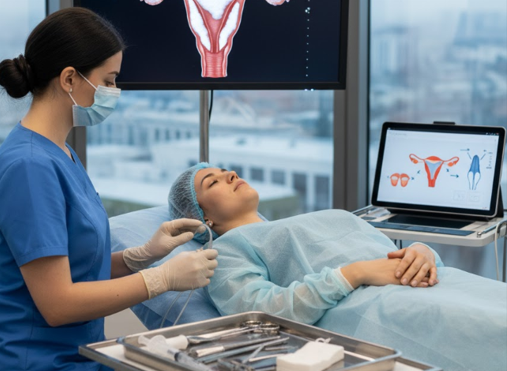
Treatment Overview
The Fallopian Tube Patency Test is a key fertility evaluation procedure that checks whether the fallopian tubes are open or blocked. The fallopian tubes play a crucial role in natural conception, allowing the egg to travel from the ovary to the uterus for fertilization. If either or both tubes are blocked, it can cause infertility or ectopic pregnancy.
In Korea, advanced fertility clinics perform this test using cutting-edge imaging and minimally invasive diagnostic methods such as Hysterosalpingography (HSG), Sonohysterography (SIS), or Hysterosalpingo-Contrast Sonography (HyCoSy). Korean OBGYN specialists combine these imaging tests with 3D ultrasound and high-resolution fluoroscopy for precise, comfortable, and accurate tubal evaluation — all within a patient-centered clinical environment.
Purpose & Benefits
The Fallopian Tube Patency Test helps determine whether the fallopian tubes are open, partially blocked, or fully obstructed — a critical factor in diagnosing and treating female infertility.
Key Benefits Include:
- Identifies blockages or scarring in the fallopian tubes
- Detects uterine or pelvic abnormalities affecting fertility
- Assesses tubal mobility and function
- Helps determine eligibility for natural conception or IVF treatment
- Provides insights for planning surgical or medical interventions
- Quick, accurate, and minimally invasive
Korean fertility clinics perform this test as part of a comprehensive fertility workup, often alongside hormonal profiling, ultrasound, and semen analysis for complete reproductive assessment.
Ideal Candidates
The Fallopian Tube Patency Test is recommended for women who:
- Have been trying to conceive for over 6–12 months without success
- Have a history of pelvic infections, endometriosis, or tubal surgery
- Experienced ectopic pregnancy or miscarriage
- Are preparing for IVF or IUI fertility treatment
- Have abnormal ultrasound findings or unexplained infertility
It is also performed for women who wish to confirm tubal health before fertility preservation or egg-freezing programs.
Possible Risks & Complications
The procedure is safe and well-tolerated, though minor temporary side effects may occur:
- Mild cramping or abdominal discomfort after the test
- Light vaginal spotting for 1–2 days
- Temporary dizziness or faintness
- Rare allergic reaction to contrast dye (for HSG procedures)
Korean fertility centers use low-dose, non-ionic contrast agents and sterile protocols, ensuring maximum safety and minimal discomfort for all patients.
Diagnostic Techniques Used
Korean fertility clinics utilize several high-precision methods to evaluate fallopian tube patency, choosing the most suitable technique based on each patient’s medical history and fertility goals.
Common Diagnostic Techniques in Korea:
- Hysterosalpingography (HSG):
A traditional X-ray procedure in which contrast dye is injected into the uterus and tubes. Real-time imaging confirms whether the tubes are open or blocked. - Hysterosalpingo-Contrast Sonography (HyCoSy):
A radiation-free ultrasound method that uses contrast microbubbles or foam to visualize tubal patency in real time. It’s painless and widely preferred in Korea. - Sonohysterography (SIS):
A saline infusion ultrasound technique that evaluates both uterine cavity and tubal patency simultaneously. - Laparoscopic Chromopertubation (for complex cases):
A minimally invasive surgical method used when additional pelvic conditions (like endometriosis) are suspected.
These diagnostic techniques are performed with state-of-the-art ultrasound and imaging systems, ensuring high accuracy and patient comfort.
Recovery & Aftercare
Recovery is typically fast, and most patients return to daily activities immediately.
Aftercare Recommendations:
- Mild cramping or spotting is normal for 1–2 days
- Avoid sexual intercourse, tampon use, or swimming for 48 hours
- Drink plenty of water to flush contrast materials (if used)
- Follow the clinic’s post-test instructions
- Contact your doctor if fever, severe pain, or unusual discharge occurs
Korean clinics provide clear aftercare guidance and follow-up consultations to discuss results and next fertility steps.
Results & Interpretation
The results of a Fallopian Tube Patency Test help determine the next course of fertility treatment.
Possible Outcomes:
- Both tubes open: Natural conception is likely possible
- One tube blocked: Pregnancy may still occur, but fertility may be reduced
- Both tubes blocked: IVF or tubal surgery may be recommended
- Hydrosalpinx (fluid in tubes): May require surgical treatment before IVF
Korean fertility specialists interpret the results alongside hormone tests, ultrasound findings, and medical history, offering a personalized treatment plan for optimal conception success.
Testing Process in Korea
Korea is recognized globally for its advanced reproductive imaging technology and high standards of women’s health care.
Typical Fallopian Tube Patency Testing Process:
- Initial fertility consultation with a board-certified OBGYN.
- Cycle scheduling: The test is performed between days 7–10 of the menstrual cycle (after bleeding stops, before ovulation).
- Procedure: Depending on the selected method (HSG, HyCoSy, or SIS), sterile instruments and contrast materials are used to visualize tubal flow.
- Imaging and analysis: Performed under real-time ultrasound or fluoroscopy.
- Results review and fertility counseling within the same or next day.
Why Korea is a Top Destination for Fertility Testing:
- Cutting-edge imaging systems with 3D and Doppler capabilities
- Highly experienced reproductive radiologists and OBGYN specialists
- Minimal pain and radiation exposure with Korean-developed HyCoSy methods
- Integrated fertility diagnostics combining hormonal and structural testing
- Patient-centered care, multilingual support, and international medical standards
Korea’s reproductive medicine centers are known for merging precision diagnostics with compassionate, individualized fertility care.
Cost Range
The cost of a Fallopian Tube Patency Test in Korea depends on the technique used and whether it’s part of a larger fertility evaluation package.
- HSG (X-ray contrast): USD $150 – $300
- HyCoSy (ultrasound-based): USD $200 – $400
- Comprehensive Fertility Assessment Package: USD $400 – $700 (includes hormonal profile, ultrasound, and AMH testing)
Korean clinics often offer discounted fertility evaluation packages for international patients or couples undergoing IVF treatment.
Popular Clinics in Korea for Fallopian Tube Patency Testing
CHA Fertility Center (Seoul): World-class fertility hospital offering HyCoSy and advanced tubal imaging systems.
MizMedi Women’s Hospital: Specializes in fertility diagnostics and ultrasound-based tubal patency assessments.
Maria Fertility Hospital: Renowned for HSG and HyCoSy testing integrated with full fertility workups.
Seoul National University Hospital – Fertility Center: Offers research-driven tubal and uterine evaluations using next-generation imaging.
ID Women’s Health Center: Provides non-invasive HyCoSy testing with real-time fertility counseling and imaging.


