
Treatment Overview
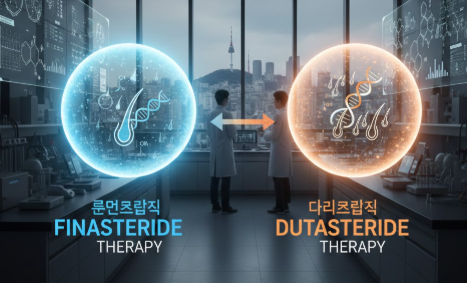
Finasteride and Dutasteride are both oral medications that inhibit 5-alpha-reductase, the enzyme responsible for converting testosterone into dihydrotestosterone (DHT), a key factor in hair loss. Finasteride selectively blocks type II 5-alpha-reductase, whereas Dutasteride inhibits both type I and type II, making it a more potent DHT blocker.
In Korea, dermatology clinics often evaluate hair loss patterns to determine whether Finasteride or Dutasteride is more suitable, sometimes combining them with supportive therapies like PRP, Minoxidil, or low-level laser therapy (LLLT).
Purpose & Benefits
Both medications aim to slow or reverse hair loss, but they differ slightly:
- Finasteride:
- Reduces DHT by ~70%
- Prevents hair miniaturization
- Strengthens existing hair
- Proven safety profile with long-term data
- Dutasteride:
- Reduces DHT by >90%
- More potent for advanced hair loss
- Promotes faster and potentially greater regrowth
- Often used when Finasteride is insufficient
Korean clinics tailor therapy based on patient needs, balancing potency with potential side effects.
Ideal Candidates
- Finasteride: Men with early-to-moderate androgenetic alopecia seeking a well-established, lower-risk treatment.
- Dutasteride: Patients with advanced hair loss, poor response to Finasteride, or receding hairlines requiring stronger DHT suppression.
- Both medications require assessment of medical history and hormone sensitivity.
Korean dermatologists evaluate the patient’s scalp condition, hair loss stage, and overall health before prescribing either therapy.
Possible Risks & Complications
Common risks are similar but vary in intensity:
- Finasteride:
- Reduced libido (rare)
- Mild erectile dysfunction
- Decreased semen volume
- Rare breast tenderness
- Dutasteride:
- Higher likelihood of sexual side effects
- Possible mood changes
- Rare gynecomastia or breast tenderness
Clinics in Korea carefully monitor side effects and may adjust dosage or switch to topical formulations for safety.
Techniques & Technology Used
- Digital scalp imaging for tracking hair density and progression
- AI-assisted trichoscopy for follicle monitoring
- Customized dosing protocols for oral or topical administration
- Combination therapy with PRP, LLLT, or Minoxidil to enhance results
- Telemedicine follow-ups for international patients
Korean clinics focus on precision and personalization to optimize outcomes.
Treatment Process in Korea
- Consultation: Evaluate hair loss pattern, scalp condition, and medical history.
- Diagnosis: Digital imaging and follicle mapping.
- Prescription: Finasteride or Dutasteride selected based on severity and patient profile.
- Combination Therapy Planning: Optional PRP, Minoxidil, or LLLT to enhance results.
- Monitoring: Regular check-ups every 1–3 months to track efficacy and side effects.
- Maintenance: Continued therapy to preserve hair and maximize regrowth.
Korean clinics educate patients on proper use, expected timelines, and potential side effects.
Recovery & After-Care
- Adherence to prescribed medication
- Gentle scalp care and hygiene
- Nutritional and lifestyle support
- Reporting any side effects promptly
- Attendance at follow-up visits, in-person or remote
Proper after-care ensures safety and optimal long-term results.
Results & Longevity
- Finasteride:
- 2–3 months: Reduced shedding
- 4–6 months: Strengthened hair and early regrowth
- 6–12 months: Noticeable density improvement
- 12+ months: Long-term hair preservation
- Dutasteride:
- 1–3 months: Faster DHT suppression and early stabilization
- 4–6 months: More rapid regrowth and thickening
- 6–12 months: Greater density increase in advanced hair loss
- 12+ months: Sustained results with continued therapy
Combination therapies often enhance outcomes for both medications.
Why Korea Is a Top Destination
- Highly experienced dermatologists in hair-loss treatment
- Advanced diagnostics and monitoring technology
- Personalized therapy protocols with either Finasteride or Dutasteride
- Integration with PRP, LLLT, and topical treatments for better results
- Transparent costs and medical tourism packages
- Multilingual support and professional patient care
Korean expertise ensures optimal efficacy while minimizing side effects.
Cost Range
- Finasteride: ₩15,000–₩80,000 per month
- Dutasteride: ₩40,000–₩120,000 per month
- Combination therapies (PRP, LLLT, Minoxidil): ₩300,000–₩1,000,000 per month
- Consultation & scalp analysis: ₩20,000–₩50,000 per visit
Costs vary depending on the clinic, therapy plan, and combination treatments.
Popular Clinics in Korea
- Motion Clinic
- Dr. For Hair Clinic
- Mojelim Hair Clinic
- Gwangnam Dermatology
- Girin Dermatology
- Dana Dermatology
- Regen Dermatology
These clinics are recognized for professional care, advanced diagnostics, and tailored hair-loss treatment plans.


