
Treatment Overview
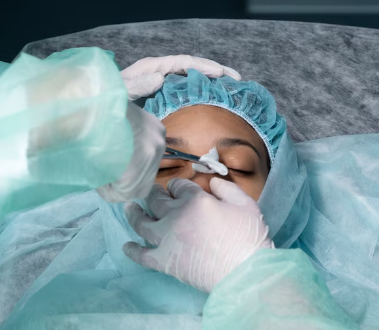
Flapless PRK Laser Surgery in Korea is a next-generation surface laser vision correction technique that offers precise and stable vision improvement without creating a corneal flap. As an advanced version of Photorefractive Keratectomy (PRK), this procedure uses AI-guided excimer laser technology and topography-based mapping to correct myopia, hyperopia, and astigmatism with micron-level precision.
Unlike LASIK, which involves cutting a flap, Flapless PRK gently removes the thin epithelial layer of the cornea before laser reshaping, preserving corneal strength and minimizing the risk of dry eyes. Korean ophthalmology centers lead globally in this field, utilizing cooling-controlled laser delivery, biologic regenerative therapy, and oxygen-accelerated healing for faster recovery and long-term visual stability.
This minimally invasive technique ensures crystal-clear vision, enhanced comfort, and outstanding safety — making it ideal for patients seeking a non-flap, tissue-conserving vision correction solution.
Purpose & Benefits
Purpose
- Correct refractive errors such as myopia, hyperopia, and astigmatism.
- Preserve corneal integrity by avoiding flap creation.
- Provide a safe, flap-free option for patients with thin corneas or dry eyes.
- Deliver rapid healing and high-definition vision using advanced laser technology.
Benefits
- Flap-Free Safety: No corneal flap means no flap-related complications or weakening.
- Dry-Eye Friendly: Protects corneal nerves and maintains natural tear function.
- Precise Vision Correction: AI-guided ablation ensures high-definition optical results.
- Quick Recovery: Biologic and oxygen-assisted therapy speeds epithelial healing.
- Long-Term Stability: Reduces regression and maintains consistent clarity.
- Comfort-Focused Procedure: Cooling-controlled laser minimizes irritation and discomfort.
Ideal Candidates
Flapless PRK Laser Surgery in Korea is ideal for:
- Adults aged 18 or older with a stable prescription for at least one year.
- Patients with thin or irregular corneas unsuitable for LASIK.
- Individuals with dry eyes or who prefer a non-flap surgical option.
- Those with mild to moderate refractive errors (myopia, hyperopia, astigmatism).
- Professionals and athletes seeking stable, impact-resistant visual correction.
Possible Risks & Complications
Although Flapless PRK Laser Surgery is highly safe, some mild and temporary effects may occur:
- Mild Light Sensitivity: Common during early recovery and subsides within days.
- Dryness or Irritation: Temporary and manageable with lubricating eye drops.
- Hazy Vision: Occasional during the epithelial healing process.
- Inflammation: Easily controlled with medicated eye drops.
- Under- or Over-Correction: Rare and adjustable with an enhancement procedure.
Korean specialists minimize risks using AI-calibrated excimer lasers, real-time tracking, and biologic healing systems, ensuring precision and comfort throughout recovery.
Techniques & Technology Used
Core Techniques
- AI-Guided Excimer Laser Ablation: Delivers customized corneal reshaping for each eye.
- Topography-Guided Laser Mapping: Corrects subtle irregularities for smoother vision.
- Wavefront-Guided Correction: Enhances image clarity by addressing higher-order aberrations.
- Cooling-Control Laser Delivery: Reduces heat buildup, ensuring comfort and accuracy.
- Biologic Regenerative Therapy: Promotes faster epithelial healing and moisture retention.
- Oxygen-Enhanced Recovery System: Speeds tissue regeneration and minimizes inflammation.
Korean ophthalmology clinics utilize state-of-the-art excimer platforms, AI-based diagnostics, and biologic recovery science to achieve superior clarity and healing outcomes.
Treatment Process in Korea
Step-by-Step Workflow
- Comprehensive Eye Evaluation:
Includes corneal topography, pachymetry, wavefront analysis, and tear-film testing. - Epithelium Preparation:
The outer epithelial layer is gently removed using a precision laser or alcohol-assisted method. - Laser Reshaping:
The excimer laser sculpts the cornea according to the personalized ablation map. - Surface Protection:
A soft, transparent contact lens is placed to protect the cornea and promote healing. - Regenerative Therapy:
Biologic and oxygen-based eye drops accelerate surface restoration and enhance comfort.
Procedure Duration: 10–15 minutes per eye
Recovery: Functional vision typically returns within 3–5 days; full clarity achieved in a few weeks.
Recovery & After-Care
After-Care Guidelines
- Use prescribed antibiotic, anti-inflammatory, and lubricating drops as directed.
- Avoid rubbing or touching the eyes for one week.
- Wear UV-blocking sunglasses outdoors.
- Refrain from swimming, saunas, or strenuous activity for two weeks.
- Attend scheduled follow-ups to ensure proper corneal healing.
Recovery Timeline
- Day 1–3: Mild discomfort or haze; healing begins.
- Week 1: Vision improves significantly; most activities can be resumed.
- Weeks 2–4: Enhanced clarity, contrast, and visual stability.
- 1–3 Months: Final vision optimization and complete epithelial recovery.
Results & Longevity
Expected Results
- Clear, sharp, and stable vision without the need for glasses or contacts.
- Reduced glare and halos, especially during nighttime.
- Smooth corneal surface for improved comfort and contrast sensitivity.
- Long-term stability and excellent visual precision.
Longevity
Flapless PRK Laser Surgery provides permanent vision correction lasting 15–20 years or more.
Korean clinical results report over 98% patient satisfaction, with durable clarity, minimal regression, and exceptional comfort maintained over time.
Why Korea Is a Top Destination
Korea is a global leader in flapless and regenerative laser eye surgery, offering a combination of innovation, precision, and patient-centered care.
- World-Class Laser Technology: AI-integrated excimer systems with wavefront guidance.
- Regenerative Recovery Protocols: Oxygen and biologic therapies for rapid healing.
- Expert Surgeons: Internationally recognized specialists in PRK and surface laser procedures.
- Flap-Free Precision: Safe for thin corneas and active lifestyles.
- Comprehensive International Care: Multilingual staff and personalized recovery plans.
- Affordable Excellence: Premium results with globally competitive pricing.
Unique Korean Methods & Technology
- AI-Calibrated Excimer Laser Systems
- Topography & Wavefront-Guided PRK
- Cooling-Control Laser Application
- Biologic & Oxygen Regenerative Therapy
- Smart Surface Healing Protocols
- Real-Time Eye Tracking & Alignment
- 3D Corneal Mapping for Customized Precision
These innovations make Flapless PRK Laser Surgery in Korea one of the safest, most comfortable, and most effective surface laser vision correction methods available worldwide.
Cost Range
| Treatment Package | Price (KRW) | Approx. USD | Inclusions |
|---|---|---|---|
| Standard PRK Surgery | ₩1,800,000 – ₩2,800,000 per eye | ~$1,300 – $2,000 | Basic PRK correction with essential follow-up care. |
| Flapless PRK Laser Surgery | ₩2,800,000 – ₩4,000,000 per eye | ~$2,000 – $2,900 | AI-guided flapless PRK with regenerative therapy and oxygen healing. |
| Premium Flapless PRK Package | ₩4,000,000 – ₩5,500,000+ per eye | ~$2,900 – $4,000+ | Includes biologic recovery, cooling laser system, and extended after-care. |
Prices vary based on clinic technology, surgeon experience, and after-care program.
Popular Clinics in Korea
- B&VIIT Eye Clinic (Gangnam): Pioneers in flapless PRK and AI-guided surface laser surgery.
- Dream Eye Center (Seoul): Known for fast-healing, biologic-assisted PRK treatments.
- BGN Eye Clinic (Busan & Seoul): Offers flapless PRK using advanced regenerative recovery systems.
- Glory Seoul Eye Clinic: Specializes in oxygen-regenerative surface PRK with precision laser technology.


