
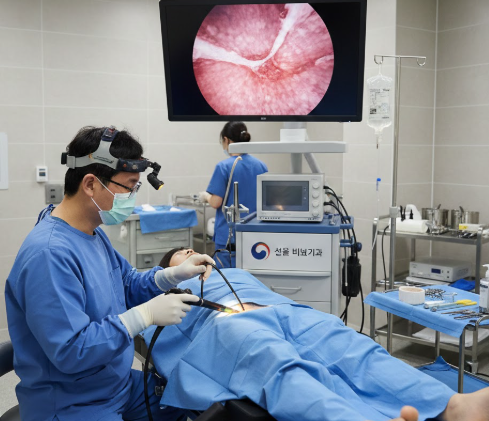
Treatment Overview
Flexible cystoscopy is a minimally invasive diagnostic procedure used to examine the bladder and urethra using a bendable, thin endoscope. Unlike rigid cystoscopy, flexible cystoscopes provide greater patient comfort, especially for outpatient and repeat procedures. In Korea, flexible cystoscopy is performed with high-definition imaging systems, allowing urologists to detect abnormalities such as bladder stones, tumors, inflammation, or structural defects with precision. The procedure is suitable for both local and international patients seeking advanced urological care.
Purpose & Benefits
The primary purpose of flexible cystoscopy is to provide accurate and comfortable bladder examination. Key benefits include:
- Early detection of bladder tumors, stones, and other abnormalities.
- Reduced discomfort and pain compared to rigid cystoscopy.
- Minimally invasive procedure suitable for outpatient settings.
- Quick recovery and minimal downtime.
- Ability to perform minor interventions such as biopsies or stone removal during the procedure.
- High accuracy with advanced imaging technology available in Korea.
Ideal Candidates
Flexible cystoscopy is recommended for patients who experience:
- Blood in urine (hematuria) without clear cause.
- Recurrent urinary tract infections.
- Chronic lower urinary tract symptoms, such as urgency or frequency.
- Abnormal results on imaging tests such as ultrasound, CT, or MRI.
- High-risk patients requiring regular bladder monitoring, such as those with prior bladder tumors.
Consultation with a Korean urologist is essential to determine whether flexible cystoscopy is the most suitable option.
Possible Risks & Complications
Flexible cystoscopy is generally safe, but potential risks include:
- Mild burning sensation or discomfort during urination after the procedure.
- Temporary blood in urine or minor bleeding at biopsy sites.
- Rare urinary tract infection, treatable with antibiotics.
- Rare urethral injury or bladder perforation.
Korean hospitals follow strict hygiene and safety protocols to minimize risks and ensure patient safety.
Techniques & Technology Used
Korea utilizes advanced equipment and techniques for flexible cystoscopy, including:
- High-Definition Flexible Cystoscopes: Thin and bendable, providing comfortable access to the bladder.
- High-Resolution Camera Systems: Real-time visualization of the bladder lining and urethra.
- Laser-Assisted Technology: Occasionally used for minor interventions or stone removal during the procedure.
- Narrow Band Imaging (NBI): Enhances visualization of abnormal vascular patterns, improving early detection of tumors.
These technologies ensure accurate diagnosis with minimal invasiveness and optimal patient comfort.
Treatment Process in Korea
The flexible cystoscopy procedure in Korea typically follows these steps:
- Pre-procedure Evaluation: Blood tests, urine tests, and imaging studies to assess patient condition.
- Preparation: Local anesthesia is usually applied; general anesthesia may be used for select cases.
- Procedure: The flexible cystoscope is gently inserted through the urethra to examine the bladder lining. Biopsies or minor interventions can be performed if abnormalities are detected.
- Post-procedure Monitoring: Patients are observed for a short period and usually discharged on the same day.
International patients receive additional support such as translators and hospital coordinators to ensure a smooth and comfortable experience.
Recovery & After-Care
Recovery after flexible cystoscopy is typically quick. Recommended after-care includes:
- Drinking plenty of water to flush the urinary tract.
- Avoiding strenuous physical activities for a few days.
- Monitoring for symptoms such as persistent bleeding, fever, or severe pain.
- Taking prescribed medications, including antibiotics if necessary.
Follow-up consultations are scheduled to review results and determine further care if needed.
Results & Longevity
Flexible cystoscopy provides immediate visualization of the bladder and urethra, allowing for accurate diagnosis of various urological conditions. When interventions such as biopsies or minor stone removals are performed, the results are long-lasting with minimal recurrence if proper follow-up care is maintained. High-risk patients may require periodic flexible cystoscopy to monitor bladder health over time.
Why Korea Is a Top Destination
Korea is a leading destination for flexible cystoscopy due to:
- Advanced Technology: High-definition flexible cystoscopes and laser-assisted procedures.
- Expert Specialists: Board-certified urologists with international experience.
- Efficient Healthcare System: Short waiting times and streamlined procedures.
- Medical Tourism Services: Comprehensive packages including hospital transfers, interpreters, and accommodation.
- Cost-Effective Care: Competitive pricing without compromising quality.
These factors make Korea an ideal choice for international patients seeking safe, effective, and comfortable bladder examination.
Cost Range
The cost of flexible cystoscopy in Korea varies depending on hospital and procedure type:
- Diagnostic Flexible Cystoscopy: $400 – $800 USD
- Flexible Cystoscopy with Biopsy or Minor Intervention: $800 – $1,500 USD
International patient packages often include hospital fees, interpreter services, and accommodation.
Popular Clinics in Korea
Top hospitals and clinics for flexible cystoscopy in Korea include:
- Severance Hospital, Seoul: Advanced urology department with international patient support.
- Asan Medical Center, Seoul: Offers high-tech diagnostic and therapeutic cystoscopy.
- Samsung Medical Center, Seoul: Specializes in minimally invasive bladder procedures.
- Bundang CHA Hospital, Seongnam: Outpatient flexible cystoscopy with patient-centered care.
- Hanyang University Hospital, Seoul: Comprehensive urology services for local and international patients.
These clinics combine high-quality medical care with exceptional patient support for medical tourists.


