
Treatment Overview
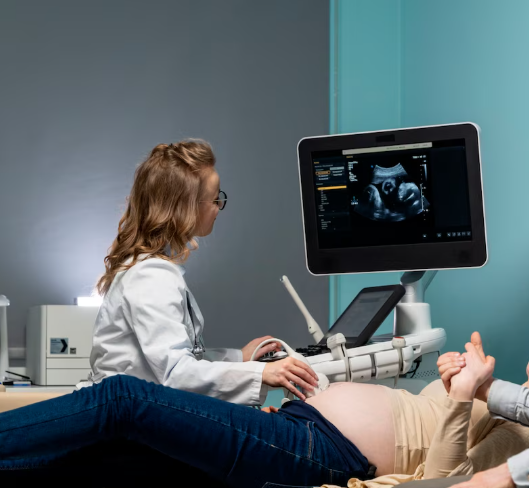
Focused Pelvic Ultrasound for Infertility in Korea is a highly specialized diagnostic imaging procedure designed to identify underlying causes of infertility and evaluate the reproductive organs in detail. This advanced ultrasound technique focuses specifically on the uterus, ovaries, fallopian tubes, and surrounding pelvic structures to assess factors that may be affecting conception.
In Korea, this procedure is performed using state-of-the-art 3D, 4D, and Doppler ultrasound technologies, allowing doctors to visualize minute reproductive abnormalities that might be missed with standard scans. With a combination of precision imaging and expert interpretation by fertility specialists, Korean medical centers offer some of the most accurate and comprehensive infertility assessments available in the world today.
This non-invasive, safe, and painless diagnostic tool plays a crucial role in identifying conditions such as ovarian cysts, uterine fibroids, endometrial polyps, tubal blockages, and hormonal irregularities — all of which can impact fertility.
Purpose & Benefits
The main goal of Focused Pelvic Ultrasound for Infertility is to identify structural and functional causes of infertility and provide doctors with crucial information to tailor treatment plans.
Key benefits include:
- Detailed evaluation of the uterus and endometrial lining to assess implantation readiness.
- Identification of ovarian conditions such as PCOS, cysts, or irregular follicular development.
- Assessment of fallopian tube health using sonographic imaging and fluid studies.
- Monitoring of ovulation and follicle growth during fertility treatment cycles.
- Detection of uterine abnormalities like fibroids, adhesions, or congenital malformations.
- Guidance for assisted reproductive procedures (IVF, IUI, or ovulation induction).
- Completely safe, non-invasive, and radiation-free diagnostic method.
Focused pelvic ultrasound provides both a diagnostic and monitoring advantage, ensuring that fertility treatment in Korea is accurate, evidence-based, and personalized for each woman.
Ideal Candidates
This specialized ultrasound is recommended for women who:
- Have been trying to conceive for more than six months to one year without success.
- Experience irregular or absent menstrual cycles.
- Have been diagnosed with PCOS or endometriosis.
- Have a history of recurrent miscarriage or implantation failure.
- Are undergoing fertility treatments such as IVF, IUI, or ovulation induction.
- Have a known history of uterine fibroids, cysts, or pelvic inflammatory disease (PID).
- Need a baseline fertility evaluation before starting reproductive therapy.
Korean fertility specialists often recommend this ultrasound as a first-line diagnostic tool before initiating advanced reproductive technologies.
Possible Risks & Complications
Focused Pelvic Ultrasound for Infertility is a very safe and non-invasive procedure with minimal risk. However, patients may experience minor, temporary discomfort during transvaginal imaging.
Possible mild effects include:
- Slight pelvic pressure or discomfort during the scan
- Rare spotting after a transvaginal procedure
- Temporary bloating due to mild probe insertion
There are no long-term risks, as the procedure does not use radiation or contrast materials.
Techniques Used
Korean fertility clinics integrate a variety of cutting-edge imaging techniques to achieve the highest diagnostic accuracy:
- Transvaginal Ultrasound: Provides high-resolution visualization of reproductive organs, including follicle count and uterine lining assessment.
- Transabdominal Ultrasound: Offers a broad overview of the pelvic region for uterine and ovarian positioning.
- 3D and 4D Ultrasound Imaging: Produces real-time and multi-dimensional images of the uterus, ovaries, and tubes, allowing for detailed analysis of abnormalities.
- Doppler Flow Ultrasound: Measures blood flow in ovarian and uterine vessels to assess endometrial receptivity and ovarian function.
- Sonohysterography (Saline Infusion Sonography): Involves a small amount of saline to better visualize the uterine cavity and detect polyps or fibroids.
- Follicular Monitoring Ultrasound: Tracks ovulation patterns and egg development during fertility treatment cycles.
Korea’s advanced medical infrastructure and adoption of AI-assisted imaging systems enhance diagnostic accuracy and improve fertility outcomes.
Recovery & Aftercare
There is no recovery time needed after a Focused Pelvic Ultrasound. Patients can resume normal activities immediately. Aftercare typically includes:
- A review of the ultrasound images and findings with the fertility specialist.
- Personalized recommendations for further testing, hormone analysis, or fertility treatment.
- Guidance on timing ovulation, managing reproductive health, or planning assisted reproductive procedures.
- Follow-up ultrasounds for ongoing fertility monitoring or treatment cycle tracking.
Korean clinics are known for their patient-centered aftercare, ensuring that results are discussed thoroughly and that women understand the next steps in their fertility journey.
Results & Longevity
The results of a Focused Pelvic Ultrasound are usually available immediately, and the doctor provides a detailed interpretation following the scan. The ultrasound report includes:
- Uterine shape and endometrial thickness measurements
- Follicular size and ovarian reserve assessment
- Presence or absence of cysts, fibroids, or abnormalities
- Blood flow data for reproductive organ function
- Guidance for next fertility treatment steps
The results form the foundation for long-term fertility management and treatment planning.
Treatment Process in Korea
Korea’s fertility diagnostic process combines precision imaging, compassionate care, and technological innovation.
A typical process includes:
- Initial Consultation: The fertility specialist reviews menstrual, medical, and reproductive history.
- Preparation: Depending on the scan type, the patient may need a full bladder or undergo the scan on a specific cycle day.
- Ultrasound Procedure: The sonographer performs transabdominal and/or transvaginal imaging using 3D or Doppler systems.
- Image Review: The fertility doctor analyzes images to assess reproductive organ health.
- Discussion: A personalized fertility plan is developed based on ultrasound findings, hormonal profiles, and patient goals.
Korea’s use of high-end ultrasound devices (Samsung Medison, GE Voluson, Philips Affiniti) combined with AI-supported imaging software makes it one of the most advanced countries for reproductive imaging diagnostics.
Cost Range
The cost of Focused Pelvic Ultrasound for Infertility in Korea ranges between ₩250,000 and ₩700,000 KRW (approximately $180–$550 USD).
Comprehensive fertility diagnostic packages, including hormone testing, ovarian reserve analysis, and sonohysterography, can range from ₩900,000 to ₩2,000,000 KRW ($650–$1,500 USD).
Korean clinics often offer bundled fertility programs that include ultrasound monitoring, hormone assessments, and treatment consultations for greater affordability and convenience.
Popular Clinics
- CHA Fertility Center Seoul – Globally recognized for advanced infertility diagnostics and reproductive imaging.
- Mirae Women’s Hospital – Specializes in fertility-focused pelvic ultrasound with precision follicular monitoring.
- Seoul National University Hospital (Fertility Unit) – Offers world-class ultrasound-based infertility evaluations.
- Banobagi Women’s Clinic – Integrates 3D and Doppler imaging for accurate uterine and ovarian assessment.
- Ewha Womans University Medical Center – Known for expert reproductive endocrinology and imaging excellence.
- Samsung Women’s Health Clinic – Provides complete infertility evaluations using AI-enhanced ultrasound systems.


