
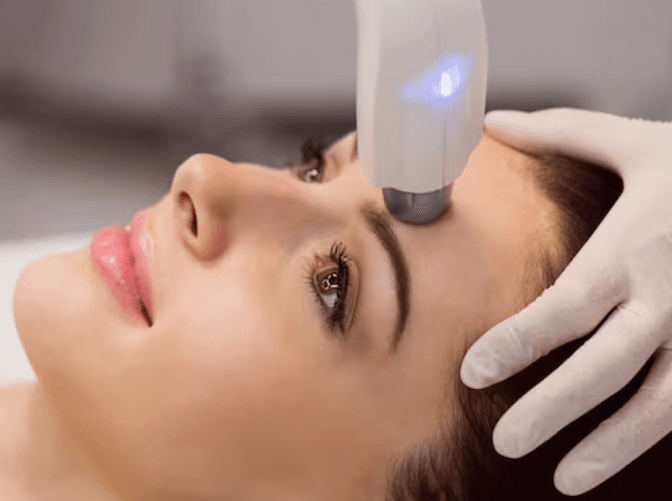
Treatment Overview
Fraxel Dual Laser is a fractional non-ablative resurfacing system that uses two wavelengths (1550 nm and 1927 nm) to treat pigmentation, scars, sun damage, and skin texture issues. While not the first-line gold standard for tattoo removal (like Pico or Q-Switched lasers), Fraxel Dual is sometimes used in Korea as a supportive or combination treatment for tattoo removal, especially for residual ink, shadowing, or post-tattoo pigmentation irregularities.
Unlike traditional tattoo lasers that directly shatter ink, Fraxel Dual works by creating controlled microthermal zones in the skin, which stimulate collagen remodeling and skin turnover. This can help the body gradually eliminate residual tattoo pigments and improve skin quality after tattoo clearance.
It belongs to the Skin Concerns: Pigmentation / Scarring / Texture family (Fraxel Dual, Pico Laser, Q-Switched Nd:YAG, Ruby Laser, Discovery Pico):
- Fraxel Dual: Best for residual pigment + texture repair after tattoo removal.
- Pico Lasers (Discovery / PicoSure / Enlighten): Best for multi-colored tattoos + faster clearance.
- Q-Switched Nd:YAG: Best for black/blue tattoos.
- Ruby Laser: Best for green/blue pigments.
- Alexandrite Laser: Best for lighter inks and pigmented lesions.
Purpose & Benefits
- Residual Pigment Clearance: Helps fade leftover tattoo ink after Pico/Q-Switched treatments.
- Skin Tone Smoothing: Improves blotchiness around tattoo removal areas.
- Texture Repair: Heals scarring or roughness from older tattoo or removal methods.
- Collagen Boost: Regenerates skin for healthier appearance post-removal.
- Dual Wavelengths:
- 1550 nm: Targets deeper dermal changes.
- 1927 nm: Focuses on pigmentation and superficial irregularities.
Ideal Candidates
Fraxel Dual Tattoo Removal Support in Korea is recommended for:
- Patients with residual tattoo pigment after multiple Pico or Q-Switched sessions.
- Individuals with scarring, rough texture, or pigmentation changes from tattoos.
- Adults who want skin repair alongside tattoo clearance.
- Men and women comparing treatments:
- Fraxel Dual: Best for residual pigment + texture repair.
- Pico Lasers: Best for primary tattoo removal (all colors).
- Q-Switched Nd:YAG: Best for dark inks (black, blue).
- Ruby Laser: Best for stubborn green/blue pigments.
- Alexandrite Laser: Best for light inks and pigmented lesions.
Possible Risks & Complications
Fraxel Dual is safe when performed by Korean dermatologists, but temporary effects may include:
- Redness & Swelling: Lasts 2–4 days.
- Dryness or Flaking: As skin renews.
- Bronzing Effect: Temporary darkening of treated skin before peeling.
- Rare Risks: Hyperpigmentation or scarring (rare with expert protocols).
Surgical Techniques Used
Fraxel Dual uses fractional non-ablative laser resurfacing:
- 1550 nm Wavelength: Treats deeper dermis, stimulating collagen for texture and scar improvement.
- 1927 nm Wavelength: Targets pigmentation and superficial irregularities.
- Fractional Delivery: Creates microscopic treatment zones while preserving surrounding tissue for fast recovery.
- Protocol: Often used after Pico/Q-Switched tattoo removal — 2–4 sessions spaced 4–6 weeks apart.
Recovery & Aftercare
- Immediately: Redness, warmth, mild swelling.
- 2–4 Days: Redness fades; mild peeling may occur.
- 1–2 Weeks: Skin tone evens, residual pigment starts fading.
Aftercare Tips:
- Apply SPF 50+ daily to prevent pigmentation rebound.
- Use gentle, hydrating skincare.
- Avoid retinoids, scrubs, or acids for 5–7 days.
- Avoid sun, hot baths, and saunas until fully healed.
Results & Longevity
- After First Session: Smoother texture, some fading of residual pigment.
- Short-Term (1–2 Months): Tattoo area looks more even and blended.
- Medium-Term (3–6 Months): Progressive improvement in pigmentation and texture.
- Long-Term: Lasting skin repair if combined with primary tattoo removal lasers.
Treatment Process in Korea
- Consultation & Assessment – Doctor reviews tattoo removal history and residual pigment.
- Preparation – Cleansing, numbing cream application.
- Fraxel Dual Session – Fractional laser applied over tattoo area.
- Post-Care: Cooling mask and healing serums.
- Follow-Up: Multiple sessions planned as part of tattoo clearance + skin repair program.
Why Korea is a Top Destination
- Korea specializes in multi-modal tattoo removal programs, often combining Pico + Q-Switched + Fraxel Dual.
- Dermatologists are skilled in treating residual pigmentation and scarring post-tattoo removal.
- Clinics use latest-generation Fraxel Dual devices with FDA/KFDA approval.
- Affordable compared to Western resurfacing add-on treatments.
- Seoul offers “Tattoo Eraser + Skin Repair” packages combining Pico + Fraxel.
Cost Range (Detailed Breakdown)
Pricing for Fraxel Dual Tattoo Removal Support in Korea:
- Small Area (per session): USD 150 – 300
- Medium Area (per session): USD 300 – 500
- Large Area (per session): USD 500 – 800
- Package (3–5 sessions): USD 1,000 – 3,000
Additional Costs in Korea:
- Consultation: USD 20 – 50
- Add-ons (Regenerative boosters, PN/Exosomes, Vitamin infusions): USD 100 – 400
💡 Fraxel Dual in tattoo removal is often referred to in Korea as “the finishing touch laser”, since it helps erase residual ink while also repairing skin texture and tone.
Popular Clinics
- Banobagi Dermatology (Seoul): Fraxel Dual + Pico for tattoo removal & skin repair.
- Oracle Dermatology (Seoul): Multi-color tattoo programs with Fraxel for residual pigment.
- Renewme Skin Clinic (Seoul): Fraxel Dual for post-tattoo scars + discoloration.
- View Plastic & Dermatology (Seoul): Fraxel Dual + regenerative boosters for skin repair.
- Chaum Anti-Aging Center (Seoul): Premium tattoo removal + Fraxel skin rejuvenation.


