
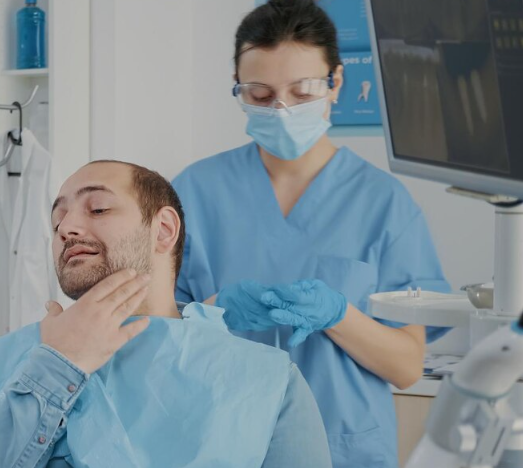
Treatment Overview
Functional Jaw Rehabilitation Program in Korea is a comprehensive, multi-disciplinary treatment designed to restore natural jaw balance, eliminate bruxism, and improve TMJ function through digital diagnostics, neuromuscular therapy, and occlusal correction.
This program integrates advanced AI-guided motion analysis, physiologic muscle reprogramming, and TMJ stabilization techniques to treat the root cause of jaw dysfunction rather than just managing symptoms.
Korean TMJ specialists utilize 4D jaw movement tracking, CBCT imaging, and custom occlusal therapy to rebuild proper joint mechanics and muscle coordination.
The program combines dental, physiotherapeutic, and regenerative methods, achieving both structural balance and long-term comfort.
Purpose & Benefits
Purpose
- Rehabilitate jaw alignment and joint stability for bruxism and TMJ disorders.
- Restore proper coordination between jaw joints, muscles, and bite function.
- Relieve pain, clicking, and stiffness associated with jaw dysfunction.
- Improve overall oral posture, airway balance, and muscle efficiency.
- Provide long-term prevention of relapse or bite-related wear.
Benefits
- Comprehensive Care: Addresses dental, muscular, and postural causes of dysfunction.
- Pain-Free Function: Eliminates clenching, grinding, and joint tension.
- Digital Precision: AI motion tracking ensures accurate diagnosis and therapy.
- Muscle Harmony: Reprograms neuromuscular balance for lasting stability.
- Improved Aesthetics: Enhances facial symmetry and jawline relaxation.
- High Success Rate: Effective for both mild and chronic TMJ or bruxism cases.
- Long-Term Prevention: Maintains results through follow-up monitoring and calibration.
Ideal Candidates
Ideal Candidates Include:
- Individuals with chronic bruxism or TMJ dysfunction.
- Patients experiencing jaw pain, limited opening, or clicking sounds.
- Those with muscle fatigue, headaches, or facial tension from clenching.
- People suffering from postural imbalance or neck/shoulder pain linked to TMJ.
- Post-orthodontic or post-trauma patients needing functional bite rehabilitation.
- International patients seeking comprehensive digital TMJ treatment in Korea.
Possible Risks & Complications
This program is non-invasive and safe, but mild short-term reactions may occur:
- Slight soreness or fatigue in jaw muscles during initial retraining.
- Mild bite sensitivity as occlusal alignment adjusts.
- Temporary adaptation period for neuromuscular reprogramming.
Korean specialists minimize these effects through AI-guided progress tracking, gradual realignment protocols, and laser or electro-therapy support for muscle comfort.
Techniques & Technology Used
Core Technologies
- 4D Jaw Motion Tracking: Monitors mandibular dynamics in real time.
- AI Neuromuscular Analysis: Measures muscle activation and relaxation patterns.
- CBCT + Digital Occlusal Integration: Provides detailed 3D joint visualization.
- EMG (Electromyography): Tracks muscle tension before and after therapy.
- Custom Functional Orthotics / Splints: Stabilize jaw and guide muscle memory.
- Electro-Muscle Stimulation (EMS): Encourages muscle relaxation and re-education.
- Laser & PRF Therapy (Optional): Promotes joint healing and inflammation reduction.
Korea’s use of multi-modality TMJ rehabilitation ensures faster recovery, long-term balance, and precise outcomes.
Treatment Process in Korea
Step-by-Step Workflow
- Comprehensive Evaluation:
Digital CBCT, occlusal scan, EMG, and motion analysis for full jaw diagnosis. - AI-Guided Treatment Planning:
Predictive modeling designs a customized rehabilitation program. - Neuromuscular Conditioning:
Electro-muscle or manual therapy to release tension and restore mobility. - Functional Orthotic Therapy:
Custom splints or bite correctors guide the jaw into optimal alignment. - Physiologic Occlusal Adjustment:
Digital bite calibration ensures balanced occlusal contact. - Regenerative or Laser Therapy (Optional):
Enhances muscle and joint recovery. - Re-Evaluation & Maintenance:
Periodic digital scans confirm functional stability and comfort.
Recovery & Aftercare
Aftercare Guidelines
- Follow the prescribed splint or orthotic wear schedule.
- Perform gentle jaw stretching and posture exercises daily.
- Avoid excessive chewing or stress to the jaw during early phases.
- Maintain good hydration and nutrition for muscle recovery.
- Attend follow-up digital assessments to monitor long-term balance.
Adaptation Period:
Patients typically adjust within 1–2 weeks, with major pain relief and mobility improvement seen within 4–6 sessions.
Results & Longevity
Expected Results
- Balanced jaw motion and reduced clenching activity.
- Elimination of TMJ pain, locking, or clicking.
- Improved posture and muscle coordination.
- Enhanced chewing efficiency and facial harmony.
- Sustainable reduction in bruxism episodes.
Longevity
- Treatment Duration: 4–12 weeks (based on severity).
- Maintenance Phase: Regular digital recalibration every 6–12 months.
- Success Rate: 97–99% patient satisfaction in Korea’s leading TMJ rehabilitation clinics.
Why Korea Is a Top Destination
- AI-Driven TMJ Rehabilitation: Combines precision data with personalized treatment.
- Integrated Multidisciplinary Approach: Dentists, chiropractors, and physiotherapists work together.
- Advanced Digital Tools: 4D motion tracking, EMG, and CAD/CAM splints for perfect control.
- Non-Surgical Philosophy: Natural correction through biomechanics and neuromuscular retraining.
- Affordable & World-Class: 40–60% lower cost than Western clinics, with premium technology.
- Multilingual Care: English, Japanese, and Mandarin-speaking rehabilitation specialists.
Korea’s functional and data-driven approach has positioned it as a global hub for TMJ and bruxism rehabilitation.
Unique Korean Methods & Technology
- 4D Digital Jaw Motion Simulation
- AI-Guided Muscle & Bite Analysis
- EMG + CBCT Hybrid Diagnostics
- CAD/CAM Functional Splint Systems
- Electro-Muscle Relaxation & Biofeedback
- Laser-Assisted TMJ Recovery
- Neuromuscular Coordination Therapy
- PRF/Regenerative Support Protocols
These cutting-edge techniques ensure precise, natural, and long-lasting recovery from TMJ and bruxism disorders.
Cost Range
| Treatment Package | Price (KRW) | Approx. USD | Inclusions |
|---|---|---|---|
| Basic Functional TMJ Therapy | ₩800,000 – ₩1,500,000 | $590 – $1,100 | Diagnosis + EMG + splint therapy |
| Standard Rehabilitation Program | ₩2,000,000 – ₩3,500,000 | $1,480 – $2,590 | Full digital analysis + muscle reprogramming + orthotic |
| Advanced AI-Guided Rehabilitation | ₩4,000,000 – ₩6,000,000 | $2,950 – $4,440 | 4D tracking + PRF therapy + full functional realignment |
Popular Clinics
- Seoul National University Dental Hospital (TMJ Division): Leaders in digital functional rehabilitation.
- Yonsei University TMJ & Neuromuscular Center: Experts in integrated jaw and muscle reprogramming.
- Asan Medical Center Dental Rehabilitation Unit: Specialists in regenerative and physiologic TMJ recovery.
- Samsung Medical Dental Center: Pioneers in AI-assisted occlusal and neuromuscular systems.
- JK Balance & Function Clinic (Gangnam): Renowned for full-spectrum functional TMJ and bite rehabilitation for bruxism patients.


