
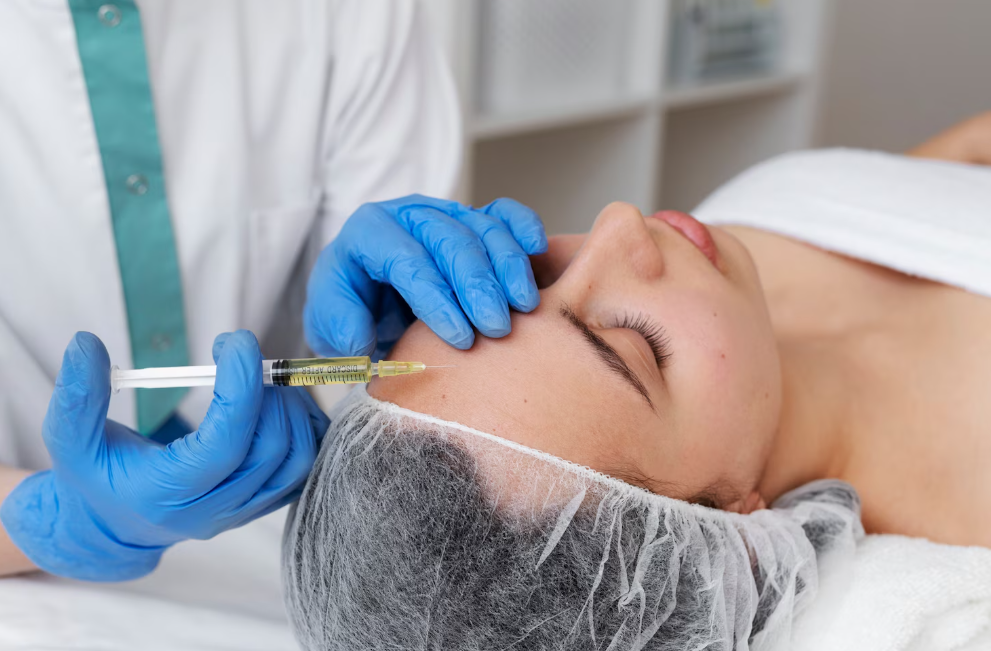
Treatment Overview
Glass Skin PRP Therapy is a premium regenerative treatment designed to deliver the ultimate K-beauty “glass skin” effect—skin that is smooth, radiant, poreless, and deeply hydrated. Using platelet-rich plasma (PRP) extracted from the patient’s own blood, this therapy harnesses natural growth factors to repair, rejuvenate, and hydrate the skin at a cellular level.
Unlike standard PRP, Glass Skin PRP Therapy in Korea focuses not just on repair but also on clarity, translucency, and luminosity, ensuring skin looks flawless and reflective, like glass. It is often combined with HA skin boosters, exosomes, or laser toning to maximize the radiant finish.
Purpose & Benefits
- Glass Skin Glow: Achieves the translucent, luminous complexion Korea is famous for.
- Collagen & Elastin Boost: Improves firmness and skin elasticity.
- Deep Hydration: Locks in moisture for a supple, plump texture.
- Fine Line Reduction: Smooths wrinkles caused by aging or dryness.
- Pore Minimization: Reduces enlarged pores for a refined look.
- Texture & Tone Improvement: Creates smooth, even, radiant skin.
- Long-Term Repair: Enhances skin health and regeneration from within.
Ideal Candidates
- Adults with dull, dehydrated, or uneven skin tone.
- Individuals wanting the K-beauty glass skin effect rather than filler volume.
- Patients with enlarged pores, fine lines, or rough texture.
- Men and women seeking a natural glow and poreless finish.
- Those open to multi-session treatments for optimal, long-lasting results.
Possible Risks & Complications
- Mild redness, swelling, or pinpoint bruises immediately after treatment.
- Temporary tenderness for 1–3 days.
- Minimal infection risk if aftercare is not followed.
- Very rare uneven absorption depending on skin type.
- Almost no allergy risk since PRP is derived from the patient’s own blood.
Techniques Used
- Glass Skin PRP Extraction: Advanced Korean centrifugation for ultra-clear, glow-focused plasma.
- Microinjection / Aqua Infusion Method: Even distribution across the dermis to ensure a reflective glow.
- Combination Therapy: Often paired with HA skin boosters, peptides, or exosomes for enhanced clarity.
- Microneedling + PRP Therapy: To stimulate collagen and refine skin texture.
- Custom Treatment Zones: Face, under-eyes, neck, and décolletage are most common.
Recovery & Aftercare
Day 1–2: Mild redness and swelling, similar to skin booster injections.
Day 3–5: Skin feels smoother, more hydrated, and softer.
Week 1–2: Glass skin radiance, improved elasticity, and pore refinement become visible.
Aftercare Guidelines:
- Avoid alcohol, saunas, and makeup for 24–48 hours.
- Use hydrating creams and soothing serums daily.
- Apply SPF consistently to protect renewed skin.
- Drink plenty of water to enhance results.
- Follow recommended maintenance treatments.
Results & Longevity
- Immediate hydration and freshness after treatment.
- Progressive glass skin radiance and clarity visible within 1–2 weeks.
- Results typically last 9–12 months, depending on skin type and lifestyle.
- Best maintained with 2–3 initial sessions spaced 3–4 weeks apart, followed by maintenance every 9–12 months.
Treatment Process in Korea
Korea is the global leader in glass skin aesthetics, making this PRP therapy one of the most popular treatments for international patients.
Consultation & Skin Analysis
Dermatologists use advanced 3D imaging and hydration scans to evaluate pores, elasticity, and tone. A tailored Glass Skin PRP plan is created.
Treatment Day
Blood is drawn and processed using glass-clear centrifugation technology. After cleansing and numbing cream, PRP is delivered via microinjections or Aqua infusion for even, all-over radiance. The session lasts 30–45 minutes.
Post-Treatment Care
Cooling masks, LED rejuvenation, or oxygen infusion may be applied. Most patients resume daily activities the same day.
Why Korea is a Top Destination
- Korea pioneered the glass skin concept and perfected PRP techniques to achieve it.
- Exclusive use of next-generation PRP refinement systems for unmatched clarity.
- Treatments emphasize subtle, natural glow, not artificial alterations.
- Costs are significantly more affordable than in Western countries with world-class quality.
- International-friendly clinics with English-speaking staff and luxury aftercare.
Cost Range
The price of Glass Skin PRP Therapy in Korea varies by clinic reputation, boosters, and package type:
- Single Session (basic PRP): ₩450,000 – ₩750,000 (~USD $340–$570).
- Full-Face Glass Skin PRP (2–3 syringes): ₩1,200,000 – ₩1,600,000 (~USD $920–$1,230).
- 3-Session Package: ₩2,800,000 – ₩4,000,000 (~USD $2,150–$3,070).
- Premium Package (PRP + Exosomes/HA/Peptides): ₩4,000,000 – ₩6,000,000 (~USD $3,070–$4,600).
Additional Costs:
- Consultation & Skin Imaging: ₩30,000 – ₩70,000 (~USD $20–$50).
- Aftercare skincare (SPF, hydrating serums, creams): ₩50,000 – ₩150,000 (~USD $40–$120).
Popular Clinics
- Banobagi Plastic Surgery (Seoul): Specialists in PRP-based glow therapies.
- ID Dermatology (Seoul): Known for custom glass skin PRP protocols.
- View Clinic (Seoul): Offers PRP with exosomes for ultimate radiance.
- JW Plastic Surgery (Seoul): Premium PRP refinement for long-term glass skin results.
- Oracle Skin Clinic (Nationwide): Affordable, international-friendly PRP glow services.


