
Treatment Overview
Glutathione Whitening Injections are a popular adjunctive dermatology treatment in Korea for sunspot removal, skin brightening, and pigmentation control.
Glutathione is a powerful antioxidant naturally found in the body. When administered via injection, it helps reduce melanin production, neutralize free radicals from UV exposure, and promote skin lightening. In Korean dermatology, it is often used alongside laser treatments (Alexandrite, Pico, Nd:YAG) or chemical peels to enhance pigment clearance and prevent new sunspots from forming.
Purpose & Benefits
- Sunspot Reduction: Suppresses melanin activity, preventing further darkening.
- Overall Skin Brightening: Promotes a lighter, clearer, and more radiant tone.
- Anti-Oxidant Effect: Protects skin from UV and environmental oxidative damage.
- Adjunctive Therapy: Boosts results when combined with lasers or peels.
- Safe for Asian Skin: Widely used with minimal risk when properly dosed.
Ideal Candidates
Glutathione Whitening Injections in Korea are recommended for:
- Patients with UV-induced pigmentation such as sunspots or solar lentigines.
- Individuals seeking full-face brightening and even skin tone.
- Patients undergoing laser or chemical peel programs who want enhanced results.
- Those looking for maintenance therapy to prevent recurrence of sunspots.
Possible Risks & Complications
Glutathione injections are generally safe, but may include:
- Mild Bruising or Redness: At the injection site.
- Temporary Dizziness or Headache: Rare, subsides quickly.
- Allergic Reaction (Very Rare): Requires medical supervision.
- Overuse Concerns: Excessive or unsupervised use may affect liver/kidney function.
Surgical Techniques Used
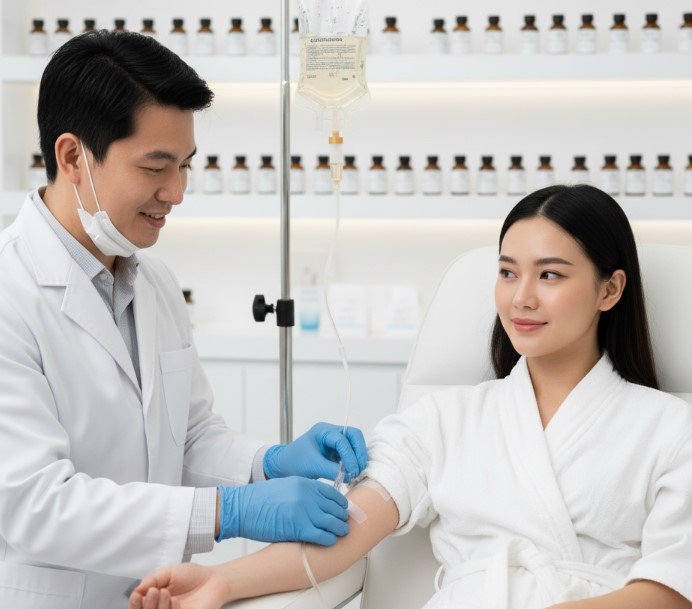
- IV (Intravenous) Infusion: Glutathione delivered via slow drip for systemic skin brightening.
- Direct Injection (IM or Subcutaneous): Used in smaller doses for local or systemic effect.
- Combination Programs: Often combined with Vitamin C or other antioxidants to maximize whitening and anti-aging benefits.
Protocol: Typically 1–2 sessions per week, for 4–10 weeks, depending on goals. Maintenance injections may be done monthly.
Recovery & Aftercare
Immediately: Mild redness or discomfort at injection site.
1–3 Days: Skin looks more refreshed and hydrated.
Weeks to Months: Gradual brightening and fading of sunspots.
Aftercare Tips:
- Maintain strict sun protection (SPF 50+).
- Hydrate well to optimize antioxidant function.
- Pair with topical brightening creams or serums for added effect.
- Avoid excessive dosing; follow dermatologist’s prescribed schedule.
Results & Longevity
- After 1 Session: Subtle improvement in skin brightness.
- After 4–6 Sessions: Noticeable lightening of sunspots and overall tone.
- After 8–10 Sessions: Significant improvement in pigmentation and skin clarity.
- Long-Term: Maintenance injections recommended every few months; results depend on UV exposure and lifestyle.
Treatment Process in Korea
Consultation & Assessment
- Dermatologist evaluates pigmentation severity and overall skin condition.
- Customized dosage and schedule planned.
Preparation
- Cleansing of injection site; IV line or syringe prepared.
Glutathione Injection Session
- Step 1: Glutathione administered via IV drip or direct injection.
- Step 2: Sometimes combined with Vitamin C or other antioxidants.
- Step 3: Hydrating serum or soothing cream applied post-treatment if localized injection used.
- Duration: 20–40 minutes (IV drip) or 5–10 minutes (injection).
Post-Treatment Care
- Normal activities can be resumed immediately.
- Emphasis on sun protection and hydration.
Follow-Up
- Weekly or bi-weekly sessions for initial phase, then monthly maintenance.
- Often combined with laser or peel therapies for optimal sunspot removal.
Unique Korean Advantages
- Combination Packages: Often paired with pigment lasers or chemical peels.
- Asian Skin Expertise: Protocols designed to reduce PIH risk.
- Affordable Multi-Sessions: Cost-effective compared to Western clinics.
- Clinic-Grade Serums: Korean dermatology centers often infuse glutathione with Vitamin C, collagen, or antioxidants for enhanced effect.
Cost Range (Estimated)
- Single Injection/Drip: USD 80 – 150
- 4–6 Session Package: USD 400 – 700
- 10-Session Premium Program: USD 900 – 1,200
Additional Costs:
- Consultation: USD 20 – 50
- Add-ons (Vitamin C, collagen, exosome boosters): USD 100 – 300
Example Korean Packages:
- Basic Whitening Program (5 sessions): USD 400–500
- Advanced Sunspot Care (Glutathione + Vitamin C): USD 700–900
- Premium Brightening Program (Glutathione + Laser/Peel + Boosters): USD 1,200–1,800
Popular Clinics in Seoul
- Oracle Dermatology: Glutathione drips with Alexandrite laser for sunspots.
- Banobagi Dermatology: Whitening injections combined with Pico programs.
- Renewme Skin Clinic: Glutathione + Vitamin C drip protocols for pigmentation.
- View Plastic & Dermatology: Brightening infusion + laser combo for sun damage.
- Chaum Anti-Aging Center: Premium whitening drips with regenerative boosters.


