
Treatment Overview
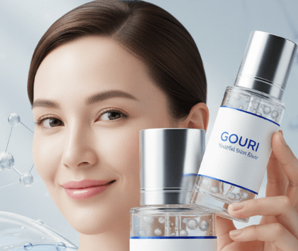
Gouri is a next-generation injectable skin booster available in Korean dermatology clinics, designed to treat acne scars, skin laxity, fine lines, and uneven texture. Unlike fillers that target localized volume, Gouri uses a fully liquid-type, stabilized Polycaprolactone (PCL) formulation that spreads naturally throughout the skin to stimulate collagen synthesis and dermal regeneration.
In acne scar protocols, Gouri is often combined with other boosters such as Juvelook (HA + PDLA) and Rejuran S (PN/PDRN) for comprehensive scar remodeling and skin rejuvenation. This synergy provides both immediate improvements in texture and long-term regenerative benefits.
Purpose & Benefits
- Collagen Biostimulation: PCL in Gouri activates fibroblasts for gradual scar remodeling.
- Skin Tightening & Elasticity: Improves laxity, giving firmer, more youthful skin.
- Scar Depth Reduction: Smoothens atrophic acne scars by rebuilding dermal structure.
- Texture Refinement: Reduces enlarged pores and uneven skin tone.
- Long-Lasting Results: Collagen synthesis continues for months after treatment.
- Synergistic Effect: Complements Juvelook’s hydration and Rejuran’s healing properties.
Ideal Candidates
Gouri in Korea is recommended for:
- Patients with atrophic acne scars (rolling, shallow boxcar).
- Individuals with loss of elasticity or early signs of aging along with scarring.
- Those who want natural collagen regeneration without heavy fillers.
- Patients seeking to combine scar treatment with skin tightening and rejuvenation.
- Individuals with sensitive or Asian skin requiring safe, biocompatible injectables.
Possible Risks & Complications
Gouri is considered safe, but some temporary side effects may occur:
- Redness, swelling, or bruising at injection sites.
- Mild tenderness or lumps, usually resolving as product disperses.
- Rare nodule formation if injection technique is poor.
- PIH risk is very low but possible without proper sun protection.
Surgical Techniques Used
- Injection Method: Microinjections across standardized facial points to allow even diffusion.
- Bio-Stimulation: Liquid PCL distributes uniformly, stimulating collagen production.
- Combination Therapy: Frequently paired with Juvelook, Rejuran S, RF microneedling, or subcision for enhanced acne scar repair.
- Protocol: Typically 2–3 sessions, spaced 4–6 weeks apart. Maintenance every 12–18 months.
Recovery & Aftercare
- Immediately: Mild redness, swelling, or injection marks.
- 1–3 Days: Most side effects subside; skin feels hydrated and plumper.
- 1–3 Months: Progressive collagen regeneration improves scars and elasticity.
- 6–12 Months: Continuous dermal remodeling with long-lasting results.
Aftercare Tips:
- Avoid makeup for 24 hours post-injection.
- Use soothing moisturizers and barrier creams.
- Avoid retinoids, acids, or harsh scrubs for 5–7 days.
- Apply SPF 50+ sunscreen daily.
- Avoid saunas, heavy workouts, or heat exposure for 1–2 days.
Results & Longevity
- After 1 Session: Skin looks plumper, smoother, and refreshed.
- After 2 Sessions: Noticeable scar softening, improved tone and elasticity.
- After 3 Sessions: Long-term collagen regeneration, firmer texture, reduced scar visibility.
- Longevity: Results typically last 12–18 months, with yearly maintenance suggested.
Treatment Process in Korea
- Consultation & Skin Analysis
Dermatologist evaluates scars, skin laxity, and treatment goals. - Preparation
Cleansing; numbing cream applied to minimize discomfort. - Gouri Injection Session
- Step 1: Gouri injected via micro-points across the face for even diffusion.
- Step 2: Cooling mask or LED therapy applied post-treatment.
- Step 3: Optional combination with Juvelook or Rejuran S for synergistic results.
Duration: 30–40 minutes.
Why Korea is a Top Destination
- Innovators in Biostimulatory Boosters: Korea is one of the first to offer Gouri with proven protocols.
- Safe for Asian Skin: Lower risk of PIH and complications compared to aggressive fillers or lasers.
- Comprehensive Programs: Often combined with Juvelook, Rejuran S, exosomes, or lasers.
- Focus on Natural Healing: Emphasizes collagen regeneration over artificial volume.
- Cost-Effective: High-quality treatments at more affordable prices than Western clinics.
Cost Range (Estimated)
- Single Gouri Session: USD 400 – 700
- Gouri + LED/Soothing Therapy: USD 500 – 800
- Comprehensive Scar Program (Gouri + Juvelook/Rejuran + Laser/Subcision): USD 1,500 – 2,800 per session
Example Korean Packages:
- Standard Program (2 sessions): USD 800 – 1,400
- Advanced Program (3 sessions with Juvelook or Rejuran): USD 1,800 – 2,500
- Premium Program (3 sessions with combination boosters + fractional laser): USD 3,000 – 4,200
Popular Clinics in Seoul
- Oracle Dermatology: Gouri injections combined with Juvelook for acne scar remodeling.
- Banobagi Dermatology: Comprehensive programs with Gouri + Rejuran S.
- Renewme Skin Clinic: Collagen-stimulating protocols with Gouri + microneedling.
- View Dermatology: Acne scar treatments combining Gouri with subcision and boosters.
- Chaum Anti-Aging Center: Premium rejuvenation packages featuring Gouri with exosomes and lasers.


