
Treatment Overview
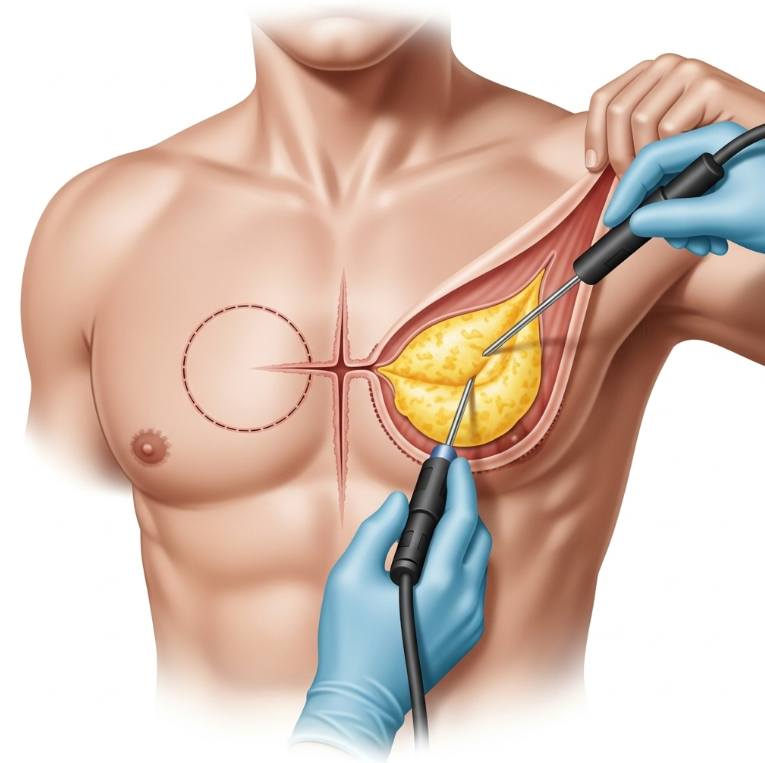
Gynecomastia Surgery in Korea is a corrective procedure designed to treat enlarged male breasts caused by excess glandular tissue, fat deposits, or hormonal imbalance. While primarily a male procedure, in the context of Breast Implant Removal, gynecomastia surgery may also be performed on patients (including women) who experience residual breast tissue irregularities or deformities after implant removal.
Korea is renowned for its precision in body contouring, minimal scarring techniques, and high patient satisfaction, making it one of the top destinations for gynecomastia correction and post-implant removal chest reshaping.
Purpose & Benefits
The goal of gynecomastia surgery after implant removal is to restore a flat, masculine, or balanced chest contour.
Key benefits include:
- Removal of excess glandular tissue and fat after implant removal
- Improved chest symmetry and natural contour
- Minimal scarring through advanced Korean surgical techniques
- Boost in confidence and body proportion
- Can be combined with skin tightening or fat grafting for enhanced results
Ideal Candidates
This surgery is recommended for:
- Men with gynecomastia (excess male breast tissue)
- Patients who underwent breast implant removal and are left with irregular chest contours
- Individuals with sagging or stretched skin after implant removal
- Healthy patients with realistic expectations
- Those seeking a masculine, natural chest appearance
Possible Risks & Complications
Though safe in Korean clinics, some risks include:
- Swelling, bruising, or mild discomfort in the chest
- Temporary loss of nipple sensation
- Small scars (usually hidden along natural lines)
- Minor asymmetry or contour irregularities
- Rare complications like hematoma or infection
Surgical Techniques Used
Korean surgeons use advanced, minimally invasive techniques for gynecomastia correction, especially after breast implant removal:
- Liposuction-Assisted Removal: For fat-dominant gynecomastia and post-implant irregularities
- Glandular Excision: Removal of dense glandular tissue for a flat contour
- Skin Tightening or Resection: For patients with sagging skin after implant removal
- Fat Grafting (if required): To smooth irregularities or balance chest shape
- Hidden Incision Placement: Minimal scarring through incisions along the areola or under the chest fold
Recovery & Aftercare
Recovery is usually quick, thanks to Korea’s refined surgical methods:
- Return to daily activities within 5–7 days
- Compression garment required for 3–6 weeks to support healing
- Swelling and bruising typically subside in 2–3 weeks
- Avoid strenuous exercise for 4–6 weeks
- Regular follow-up visits to monitor chest contour and healing
Results & Longevity
Results are long-lasting and noticeable within weeks:
- Permanent removal of glandular tissue and excess fat
- Improved chest contour with natural, masculine definition
- Results remain stable as long as weight and hormones are maintained
- Korean surgeons focus on flat yet natural chest appearance with minimal scarring
Treatment Process in Korea
Korea is one of the most sought-after destinations for gynecomastia correction, particularly for patients seeking revision after implant removal:
- Comprehensive Consultation: Surgeons analyze chest anatomy, skin elasticity, and post-implant removal changes
- Customized Surgery Plan: Combination of liposuction, excision, or skin tightening based on individual needs
- Advanced Technology: Use of ultrasonic-assisted liposuction and precision excision techniques
- Aesthetic Balance: Surgeons ensure natural contouring with symmetry and minimal scarring
- Medical Tourism Support: English-speaking coordinators, international patient services, and structured recovery plans
- Global Recognition: Korean surgeons are highly experienced in revision cases, especially following breast implant removal
Cost Range
The cost of gynecomastia surgery in Korea varies depending on severity, techniques used, and whether it is performed post-implant removal.
- Typical Price Range: ₩5,500,000 – ₩12,000,000 KRW
(Approx. $4,200 – $9,200 USD)
Factors Affecting Cost:
- Extent of glandular tissue removal
- Whether liposuction, excision, or both are required
- Additional procedures (skin tightening or fat grafting) after implant removal
- Surgeon’s expertise and clinic reputation
- Hospital and anesthesia fees
Additional Costs:
- Pre-operative consultations: ₩100,000 – ₩300,000 KRW ($75 – $230 USD)
- Compression garments: ₩150,000 – ₩250,000 KRW ($115 – $190 USD)
- Follow-up visits: ₩50,000 – ₩200,000 KRW ($40 – $150 USD)
Popular Clinics
Some of Korea’s leading clinics for gynecomastia correction and post-implant removal surgery include:
- Banobagi Plastic Surgery Clinic – specializes in male chest contouring and revision surgeries
- ID Hospital Seoul – renowned for body contouring and gynecomastia surgery
- View Plastic Surgery Hospital – advanced liposuction and glandular excision techniques
- JK Plastic Surgery Center – internationally accredited, popular among medical tourists
- Regen Plastic Surgery – focuses on natural aesthetics with minimal scarring


