
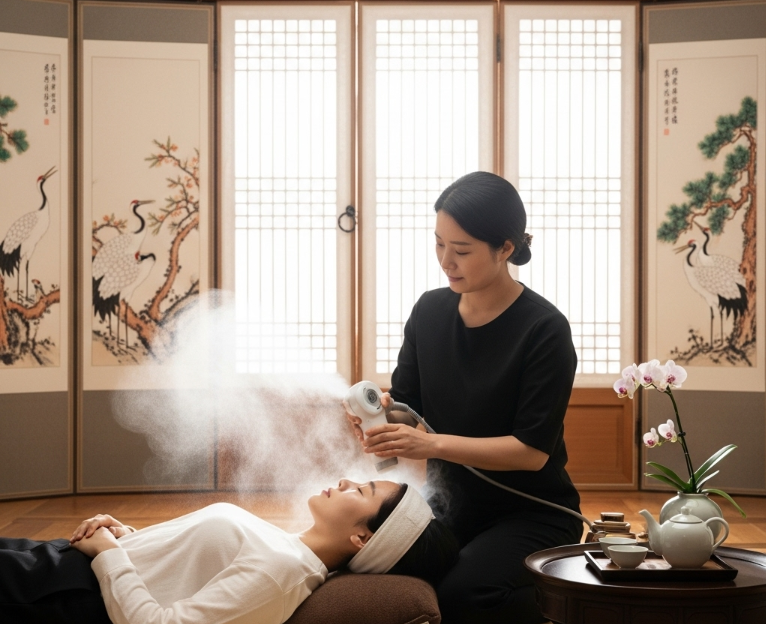
Treatment Overview
The Hanok Healing Cryo Facial uses sub-zero cryo technology to shrink pores, stimulate collagen, and improve circulation. During the session, customized herbal serums—often infused with ingredients like green tea, ginseng, or licorice root—are applied and sealed into the skin using cold therapy. The serene hanok setting enhances the experience, making it as much about healing the mind and body as it is about skin rejuvenation.
Purpose and Benefits
- Collagen Activation: Cold therapy boosts collagen and elastin for firmer skin.
- Pore Refinement: Tightens enlarged pores for a smoother finish.
- Anti-Aging: Reduces fine lines and improves elasticity.
- Brightening: Herbal serums lighten pigmentation and restore glow.
- Soothing Relief: Calms redness, irritation, and puffiness.
- Wellness Effect: Combines skincare with stress relief through hanok-inspired ambiance.
Ideal Candidates
- Adults with dull, uneven, or tired skin.
- Those with sensitive or reactive skin needing gentle, calming care.
- Patients looking for non-invasive anti-aging with no downtime.
- Individuals preparing for events or photoshoots who want an instant glow.
- Anyone drawn to treatments that combine heritage-inspired wellness with modern dermatology.
Possible Risks and Complications
- Very safe and gentle when done in professional clinics.
- Mild temporary redness or tightness may occur.
- Rare allergic reaction to specific herbal serums.
- No significant downtime or long-term risks.
Surgical Techniques Used
- Cryotherapy Application: Cold probes or air devices applied across the face to tighten and lift skin.
- Hanbang Serum Infusion: Herbal extracts such as ginseng or green tea infused during cooling.
- Cryo-Sealed Hydration: Cooling seals nutrients into the skin barrier for long-lasting results.
- Hanok-Inspired Massage: Acupressure or gentle facial massage improves circulation and relaxation.
- Cooling Mask Ritual: A hydrating mask completes the session, calming and nourishing the skin.
- Optional Enhancements: LED therapy, oxygen infusion, or exosome boosters may be added for deeper rejuvenation.
Recovery and Aftercare
- Immediately After: Skin looks refreshed, plump, and radiant.
- One to Three Days: Pore size remains refined, glow intensifies.
- Downtime: None—patients can return to daily life right away.
Aftercare Tips:
- Apply gentle hydrating creams and serums.
- Avoid heat exposure (saunas, hot baths) for 24 to 48 hours.
- Use sunscreen to protect and extend results.
- Drink water and rest to support holistic healing.
Results and Longevity
- Immediate: Smoother, tighter skin with visible glow.
- Short-Term (One to Two Weeks): Clearer tone, refined pores, reduced puffiness.
- Long-Term (Three to Five Sessions): Firmer, more youthful complexion with lasting resilience.
- Maintenance: Monthly sessions recommended for ongoing glow and anti-aging support.
Treatment Process in Korea
- Consultation and Skin Analysis
Dermatologists or spa specialists assess skin concerns and choose suitable serums. - Cleansing and Preparation
Double cleansing with herbal foam or oil cleanser to prepare skin. - Cryo Infusion and Cooling Ritual
Cryo probes applied while infusing customized herbal serums. - Hanok Healing Touch
Gentle massage and acupressure techniques inspired by traditional wellness practices. - Mask and Finishing Care
Herbal cooling mask applied, followed by moisturizer and SPF. - Follow-Up and Maintenance
Three to five sessions spaced over four to six weeks, then monthly upkeep.
Why Korea is a Top Destination:
- Clinics excel at merging traditional Hanok-inspired therapies with modern cryo technology.
- Emphasis on natural, subtle rejuvenation and wellness.
- Affordable compared to Western spas while maintaining high luxury standards.
- Internationally friendly clinics with cultural wellness ambiance.
Cost Range
- Single Session: USD 100 to 220
- Three to Five Session Package: USD 350 to 900
- Premium Hanok Cryo Program (with LED or oxygen infusion): USD 500 to 1200
- Luxury Hanok Wellness Packages: USD 1500 to 3000 including full-body herbal treatments and spa rituals
Additional costs:
- Consultation: USD 20 to 50
- Herbal aftercare products: USD 50 to 200
Popular Clinics in Korea
- Gangnam Hanbang Clinics – Blend herbal medicine with cryotherapy.
- Banobagi Dermatology Seoul – Premium cryo renewal facials with herbal boosters.
- Oracle Skin Clinic Nationwide – Affordable Hanok-inspired cryo facials.
- Luxury Hanok Spas in Seoul and Jeju – Offer healing ambiance and cultural spa experiences.
- Chaum Wellness Center Seoul – Integrates Hanbang cryotherapy with medical rejuvenation.


