
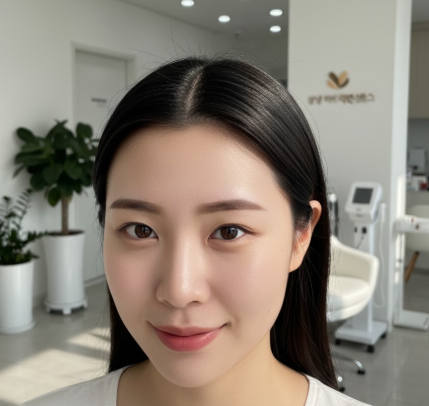
Treatment Overview
Heart-Shape Hairline Design in Korea is a cosmetic procedure that creates a soft, rounded hairline with a subtle widow’s peak, giving the forehead a heart-shaped appearance. This style is highly popular in Korean aesthetic clinics due to its youthful, feminine, and charming effect. Korean surgeons combine precise hairline lowering, temple refinement, and micro-grafting techniques to achieve a natural-looking heart-shaped hairline that complements facial proportions and enhances overall beauty.
Purpose & Benefits
The main purpose of Heart-Shape Hairline Design is to create a playful yet elegant hairline that enhances feminine facial aesthetics.
Key Benefits
- Achieves a soft, heart-shaped forehead contour
- Lowers high or uneven hairlines while maintaining natural density
- Refines temples and side-hairline for balanced facial proportions
- Camouflages incision lines for minimal visible scarring
- Creates a youthful, feminine, and aesthetically appealing look
- Boosts confidence with a distinctive and elegant hairline
Ideal Candidates
This procedure is suitable for women seeking a unique and attractive hairline design in line with Korean beauty trends.
Best-Suited Candidates
- Women with high, wide, or uneven hairlines
- Individuals desiring a heart-shaped hairline for a youthful look
- Patients seeking subtle temple and side-hairline adjustments
- Candidates prioritizing natural aesthetics with minimal visible scarring
- Women aiming for long-lasting, charming, and feminine facial balance
Even patients with minor previous hairline procedures can benefit from heart-shape refinement for a more harmonious and distinctive appearance.
Possible Risks & Complications
Heart-Shape Hairline Design is generally safe, but like all hairline surgeries, carries potential risks.
Potential Risks
- Mild swelling and tenderness along the hairline and temples
- Temporary numbness or altered sensation
- Minor redness, scabbing, or bruising along incision lines
- Temporary shock hair shedding in transplanted or lowered areas
- Slight asymmetry, usually correctable
- Rare infection or thickened scarring
Korean clinics minimize risks using micro-incision techniques, precise graft placement, and structured post-operative care.
Techniques & Technology Used
Korean aesthetic clinics combine surgical precision with advanced techniques to create the heart-shaped hairline.
Main Techniques
- Micro-incision hairline lowering for minimal tissue trauma
- High-density graft placement for natural hairline aesthetics
- Temple and side-hairline refinement to define heart-shape contour
- Soft and rounded hairline shaping for feminine appearance
- Layered closure to reduce visible scarring and optimize healing
Technology Highlights
- 3D facial mapping for accurate heart-shape hairline design
- Trichoscopy to evaluate donor hair quality and density
- Microscopic surgical instruments for delicate incision and graft placement
- Low-thermal devices to protect follicles during surgery
- LED therapy and cooling treatments for faster recovery
These techniques ensure a natural, soft, and aesthetically pleasing heart-shaped hairline.
Treatment Process in Korea
The procedure follows a structured, patient-friendly approach for local and international patients.
Step-by-Step Procedure
- Consultation and facial analysis to design the heart-shaped hairline
- Custom hairline marking considering forehead, temples, and face shape
- Local anesthesia or mild sedation for patient comfort
- Micro-incision hairline lowering with high-density graft placement
- Temple and side-hairline refinement for heart-shaped contour
- Layered closure for minimal visible scarring
- Post-operative care including medications, cooling, and follow-up checkups
- Optional telemedicine follow-up for international patients
International patients are supported with translation, accommodation, and transportation for a seamless experience.
Recovery & After-Care
Recovery is generally smooth due to minimally invasive techniques and careful design of the hairline.
Recovery Timeline
- Days 1–3: mild swelling and tenderness
- 1 week: sutures removed, early hair growth begins
- 2–3 weeks: redness and swelling decrease significantly
- 3–6 months: grafted hair blends naturally with existing hair
- 6–12 months: final soft, heart-shaped hairline with natural density
After-Care Tips
- Avoid pressure or friction on hairline and treated areas
- Follow prescribed medications and topical treatments
- Sleep with head elevated for the first few nights
- Avoid smoking, alcohol, and heat styling
- Attend follow-up appointments to monitor hair growth and healing
Optional PRP or growth-factor therapy may be recommended to enhance density and recovery.
Results & Longevity
Heart-Shape Hairline Design in Korea provides long-lasting and natural-looking results that enhance facial charm.
Expected Outcomes
- Soft, heart-shaped hairline with rounded widow’s peak
- Smooth temples and side-hairline for balanced proportion
- Camouflaged incision lines for minimal visible scarring
- Youthful, feminine, and aesthetically appealing appearance
- Long-lasting, refined hairline results
With proper care, results remain stable for many years, though natural aging may slightly affect hairline density.
Why Korea Is a Top Destination
Korea is a world leader in heart-shape and aesthetic hairline surgery due to advanced techniques, aesthetic expertise, and medical tourism infrastructure.
Key Advantages
- Surgeons specialized in heart-shaped female hairline design
- Micro-incision and high-density grafting for natural aesthetics
- Minimal visible scarring with soft, feminine outcomes
- Accredited clinics meeting international safety standards
- Comprehensive support for international patients including translation, accommodation, and transport
- Post-operative care and telemedicine follow-up programs
These factors make Korea the preferred destination for heart-shape hairline design.
Cost Range in Korea
The cost of Heart-Shape Hairline Design depends on clinic reputation and procedure complexity.
Estimated Cost
USD $6,500 – $12,500
This typically includes consultation, surgery, anesthesia, medications, post-operative care, and optional international patient support.
Popular Clinics in Korea
- ID Hospital
- Banobagi Plastic Surgery
- Motion Clinic
- View Plastic Surgery
- Dr. For Hair Clinic
- The LINE Plastic Surgery
These clinics are recognized for precise, feminine, and aesthetically harmonious heart-shaped hairline design.


