
Treatment Overview
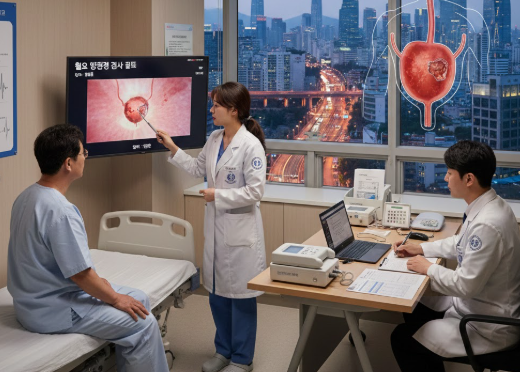
Hematuria, or blood in the urine, can be caused by a variety of conditions including infections, kidney stones, and urinary tract cancers. When initial lab tests and imaging cannot identify the source, cystoscopy is often the most effective diagnostic tool. Cystoscopy involves the insertion of a flexible or rigid scope through the urethra to directly examine the bladder lining for abnormalities.
Korea is renowned for advanced cystoscopy technology, including high-definition imaging, narrow band imaging (NBI), and blue light cystoscopy, which enhance detection of early-stage bladder tumors and other urinary abnormalities. These consultations combine expertise and technology for precise evaluation of hematuria.
Purpose & Benefits
The main purpose of cystoscopy for hematuria is to identify the source of bleeding that may not be detected through lab tests or imaging. Benefits of consulting in Korea include:
- Accurate visualization of the bladder lining for early detection of tumors or lesions
- Identification of structural issues such as polyps, stones, or inflammation
- Use of advanced imaging technologies for higher diagnostic precision
- Minimally invasive procedure with minimal discomfort
- Early intervention opportunities if abnormalities are detected
Korean hospitals ensure cystoscopy is performed safely and efficiently, making it a preferred option for both local and international patients.
Ideal Candidates
Cystoscopy for hematuria is recommended for patients who:
- Have persistent blood in urine not explained by lab tests
- Have recurrent urinary tract infections
- Have kidney stones or history of urinary obstruction
- Are over 40, with increased risk of bladder or kidney cancer
- Show abnormal imaging results such as suspicious bladder masses
- Require precise evaluation for unexplained hematuria
Medical tourists seeking fast, high-quality evaluation also benefit from Korea’s cystoscopy services.
Possible Risks & Complications
Cystoscopy is generally safe but carries minimal risks, including:
- Mild discomfort or burning during and after the procedure
- Temporary blood-tinged urine for 24–48 hours
- Rare urinary tract infection following the procedure
- Rare allergic reactions to local anesthesia or antiseptics
Untreated hematuria may indicate serious conditions, including bladder cancer or kidney disease, making early cystoscopic evaluation crucial. Korean hospitals follow stringent protocols to minimize risks and ensure patient safety.
Techniques & Technology Used
Korea employs the latest cystoscopy technologies for hematuria evaluation:
Flexible Digital Cystoscopy – Allows minimally invasive visualization of the bladder with high-resolution imaging.
Rigid Cystoscopy – Used when detailed examination or therapeutic procedures are required.
Narrow Band Imaging (NBI) – Enhances visualization of subtle lesions or early-stage tumors.
Blue Light Cystoscopy – Uses photosensitive dyes to detect malignant or precancerous cells not visible with standard light.
Biopsy Capability – Tissue samples can be collected during cystoscopy for histopathological examination.
Integrated Imaging Systems – Combine endoscopic and imaging data for precise diagnosis.
These technologies ensure that hematuria causes are accurately identified and monitored.
Treatment Process in Korea
The cystoscopy consultation process for hematuria in Korea is streamlined for accuracy and patient comfort:
- Initial Consultation
Urologists review symptoms, lab tests, and imaging results to determine the necessity of cystoscopy. - Pre-Procedure Preparation
Patients are advised on hydration, possible anesthesia, and procedural steps. - Cystoscopy Procedure
A flexible or rigid scope is gently inserted through the urethra to examine the bladder lining. Tissue biopsy may be performed if suspicious areas are found. - Post-Procedure Observation
Patients are monitored briefly for discomfort or complications. - Result Discussion
The doctor explains findings, biopsy results (if taken), and potential next steps. - Follow-Up Care
Follow-up consultations ensure monitoring, treatment of any identified issues, and preventive care.
The process is efficient and designed to provide detailed evaluation with minimal discomfort.
Recovery & After-Care
Recovery from cystoscopy is generally quick. Recommendations include:
- Drinking plenty of water to flush the urinary tract
- Monitoring urine for temporary pink-tinged discoloration
- Avoiding heavy exercise for 24 hours
- Taking prescribed antibiotics if indicated
Korean specialists provide clear instructions and follow-up schedules to ensure safe recovery.
Results & Longevity
Most cystoscopy findings are available immediately, while biopsy results may take 2–4 days. Long-term outcomes depend on underlying conditions:
- Bladder or kidney tumors benefit from early detection and treatment
- Stones or polyps can be removed or treated during the procedure
- Inflammatory conditions respond well to medical management
Regular follow-up cystoscopies are recommended for patients with a history of tumors or recurrent hematuria. Korea’s advanced diagnostic capabilities improve long-term outcomes and reduce the risk of recurrence.
Why Korea Is a Top Destination
Korea is a leading destination for cystoscopy consultations due to:
- Advanced endoscopic technology and imaging systems
- Highly trained urologists specializing in hematuria and bladder conditions
- Fast and efficient evaluation for international patients
- Minimal waiting time and quick access to biopsy and pathology services
- Comprehensive care and patient-focused services
- Transparent pricing and internationally accredited hospitals
These factors ensure accurate, safe, and timely evaluation of hematuria.
Cost Range
Estimated costs for hematuria cystoscopy consultation in Korea:
- Consultation: $20–$50
- Flexible Cystoscopy: $200–$400
- Rigid Cystoscopy: $250–$500
- Biopsy (If Performed): $400–$900
- Advanced NBI or Blue Light Cystoscopy: $400–$800
- Full Hematuria Cystoscopy Package: $450–$1,000
Costs vary depending on hospital, technology used, and complexity of the procedure.
Popular Clinics in Korea
Leading hospitals providing cystoscopy for hematuria include:
- Seoul National University Hospital
- Asan Medical Center
- Samsung Medical Center
- Severance Hospital (Yonsei University)
- CHA Bundang Medical Center
- Wooridul Urology Clinic
These facilities provide high-precision diagnostics, expert consultation, and international patient support.


