
Treatment Overview
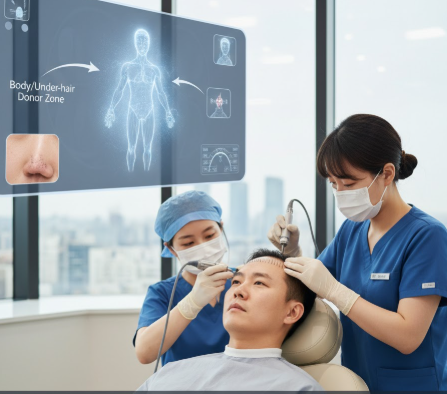
Hidden Donor Zone Hairline Lowering in Korea is an advanced cosmetic procedure that uses body or under-hair donor sources for hairline reconstruction. This technique is designed for patients who have insufficient scalp donor hair or want minimal visible scarring in the traditional donor zones. Korean surgeons carefully harvest hair from areas such as the nape, chest, or underarm, and transplant it to the hairline using micro-incisions. This approach ensures a natural-looking hairline with dense coverage and hidden scarring, making Korea a preferred destination for complex hairline procedures among international patients.
Purpose & Benefits
The primary goal of this procedure is to lower the forehead and reconstruct the hairline using alternative donor sources while keeping scars invisible.
Key Benefits
- Reduces forehead height while maintaining a natural hairline
- Uses hidden donor zones to avoid visible scalp scarring
- Creates a soft, dense, and natural hairline
- Enhances facial proportion and symmetry
- Minimally invasive with faster recovery
- Boosts confidence and overall aesthetic appearance
Ideal Candidates
This procedure is ideal for patients with limited scalp donor hair or previous hair transplant scars who still want natural hairline results.
Best-Suited Candidates
- Individuals with thin or depleted scalp donor zones
- Patients who have undergone prior hairline or scalp surgery
- People with high forehead and receding hairline
- Candidates seeking hidden donor grafts for minimal scarring
- Men and women desiring natural density and shape
Patients with insufficient body hair or poor donor quality may require a combination of scalp and body grafts for optimal results.
Possible Risks & Complications
Although generally safe, Hidden Donor Zone Hairline Lowering carries potential risks associated with body donor grafting and hairline surgery.
Potential Risks
- Swelling and tenderness in donor and hairline areas
- Temporary numbness or discomfort
- Shock hair shedding in transplanted or existing hair
- Mild scarring in donor zones, usually hidden by clothing or hair
- Slight asymmetry or uneven hair growth
- Rare follicle rejection or delayed growth in transplanted grafts
Korean surgeons reduce risks with precise micro-incision techniques, multi-layered sutures, and careful donor selection.
Techniques & Technology Used
Korean clinics use advanced methods to harvest and implant hair from body or under-hair donor zones, ensuring natural density and minimal scarring.
Main Techniques
- Micro-incision placement along hairline
- Hair graft extraction from hidden donor zones such as nape, chest, or underarm
- High-density implantation for natural, soft hairline
- Tension-free suturing to prevent visible scars
- Combination with forehead advancement for optimal lowering
Technology Highlights
- 3D facial mapping to design accurate hairline placement
- Trichoscopy to evaluate donor hair quality and growth potential
- Microscopic surgical tools for delicate incision and grafting
- Low-thermal devices to protect follicles
- LED therapy for accelerated healing and reduced swelling
These technologies ensure a smooth, dense, and natural hairline even when traditional scalp donor hair is limited.
Treatment Process in Korea
Korean clinics provide a structured and international patient-friendly approach for hidden donor zone hairline lowering.
Step-by-Step Procedure
- Consultation and evaluation of existing hairline and donor zones
- Customized hairline design with consideration of facial proportions
- Local anesthesia or mild sedation for patient comfort
- Micro-incisions along the hairline for implantation
- Hair graft harvesting from hidden body/under-hair donor zones
- Implantation of grafts with high-density arrangement for natural appearance
- Post-operative care including LED therapy, cooling, and follow-up
Medical tourists receive full support including translation, accommodation, and transport services.
Recovery & After-Care
Recovery is generally smooth due to minimally invasive techniques and careful surgical planning.
Recovery Timeline
- Days 1–3: mild swelling and tenderness in hairline and donor areas
- 1 week: sutures removed and early hair growth begins
- 2–3 weeks: most swelling subsides
- 3–6 months: transplanted grafts start blending with existing hair
- 6–12 months: final dense and natural hairline appearance
After-Care Tips
- Avoid pressure on hairline and donor zones
- Follow prescribed topical and oral medications
- Sleep with head elevated during initial recovery
- Avoid smoking, alcohol, and heat styling
- Attend follow-up visits to monitor growth and healing
Korean clinics may provide PRP therapy or hair-growth boosters for faster and denser results.
Results & Longevity
Hidden Donor Zone Hairline Lowering in Korea provides permanent, natural-looking results even for patients with limited scalp donor hair.
Expected Outcomes
- Lowered forehead with natural, dense hairline
- Seamless integration of body/under-hair grafts
- Camouflaged donor and incision sites
- Enhanced facial proportion and overall appearance
- Long-lasting results with proper aftercare
With careful maintenance, results remain stable for years, though natural aging may slightly affect density.
Why Korea Is a Top Destination
Korea is a global leader in hairline surgery, particularly advanced techniques involving hidden donor zones.
Key Advantages
- Experienced surgeons specialized in complex hairline reconstruction
- Advanced micro-incision and grafting technology
- Natural, high-density outcomes
- Accredited clinics with international safety standards
- Full medical tourism support including translation, transport, and accommodation
- Comprehensive post-operative care and follow-up
These factors make Korea the preferred choice for patients requiring alternative donor hair sources.
Cost Range in Korea
The cost of Hidden Donor Zone Hairline Lowering depends on donor complexity and clinic reputation.
Estimated Cost
USD $6,000 – $12,000
This generally includes consultation, surgery, anesthesia, medications, and follow-up care. Packages for international patients often include hotel, transport, and translation services.
Popular Clinics in Korea
- ID Hospital
- Banobagi Plastic Surgery
- Motion Clinic
- View Plastic Surgery
- Dr. For Hair Clinic
- The LINE Plastic Surgery
These clinics are known for advanced hairline procedures using hidden donor zones, natural outcomes, and full support for medical tourists.


