
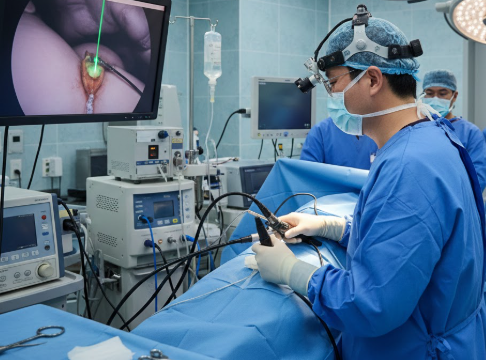
Treatment Overview
HoLEP (Holmium Laser Enucleation of the Prostate) is an advanced minimally invasive surgical procedure for treating Benign Prostatic Hyperplasia (BPH). The procedure uses a holmium laser to remove enlarged prostate tissue causing urinary obstruction. In Korea, HoLEP is performed at specialized urology centers equipped with cutting-edge laser technology, providing patients with a safe and effective solution for BPH with shorter recovery times compared to traditional surgery.
Purpose & Benefits
The main purpose of HoLEP is to relieve urinary symptoms caused by BPH by removing excess prostate tissue while minimizing damage to surrounding structures. Benefits include:
- Significant improvement in urinary flow and reduction of BPH symptoms
- Minimally invasive procedure with reduced bleeding compared to open surgery
- Short hospital stay and faster recovery
- Preservation of sexual function in most cases
- Long-term durable results, often eliminating the need for further surgery
Ideal Candidates
Ideal candidates for HoLEP include:
- Men with moderate to severe BPH symptoms, such as weak urine flow, frequent urination, or incomplete bladder emptying
- Patients with large prostate glands (over 80–100cc) where traditional procedures may be less effective
- Individuals who have not responded to medications for BPH
- Patients seeking a minimally invasive alternative to open prostatectomy
- Men concerned about long-term symptom relief and minimizing post-operative complications
Possible Risks & Complications
Although HoLEP is considered safe, potential risks may include:
- Temporary urinary discomfort or urgency
- Blood in urine, usually resolving within a few days
- Urinary tract infection
- Rare risk of temporary incontinence
- Temporary difficulty urinating due to swelling, which typically resolves within a few weeks
- Need for catheterization immediately after surgery (usually short-term)
Techniques & Technology Used
Korean clinics use high-powered holmium lasers and advanced endoscopic equipment for HoLEP. The technique involves:
- Using a laser fiber to enucleate the enlarged prostate tissue
- Endoscopic removal of the tissue fragments
- Real-time visualization to ensure precision and minimize bleeding
- Post-procedure monitoring to ensure optimal urinary flow
Treatment Process in Korea
The HoLEP process typically includes:
- Initial Consultation: Assessment of BPH symptoms, medical history, and prostate size
- Diagnostic Testing: PSA testing, urine analysis, ultrasound, and sometimes urodynamic studies
- Procedure Preparation: General or spinal anesthesia is administered
- HoLEP Procedure: Laser enucleation of prostate tissue followed by removal of tissue fragments
- Post-Procedure Monitoring: Short hospital stay (often 1–2 days) with catheter management and follow-up instructions
Recovery & After-Care
Recovery after HoLEP in Korea is generally straightforward:
- Catheter usually removed within 1–2 days after surgery
- Patients can resume normal activities in 1–2 weeks
- Mild urinary urgency or frequency may persist temporarily
- Regular follow-up visits to monitor recovery and urinary function
- Hydration and avoidance of strenuous activity during early recovery
Results & Longevity
HoLEP provides durable results for BPH management:
- Rapid improvement in urinary flow and reduction in symptoms
- Long-term symptom relief with low recurrence rates
- Preservation of sexual function in most patients
- Many patients remain medication-free after surgery for years
Why Korea Is a Top Destination
Korea is a preferred destination for HoLEP due to:
- Advanced laser technology and high-quality urology centers
- Experienced surgeons trained in minimally invasive procedures
- Affordable treatment costs compared to Western countries
- Comprehensive support for international patients, including travel assistance and translation services
- High standards of hygiene, safety, and patient care
Cost Range
The cost of HoLEP in Korea typically ranges from $6,000 to $12,000, depending on:
- Hospital and surgeon reputation
- Length of hospital stay
- Inclusion of diagnostic tests, anesthesia, and post-operative care
Popular Clinics in Korea
Some of the top clinics offering HoLEP in Korea include:
- Seoul Urology & Andrology Clinic
- JK Male Health Center, Seoul
- Korea Men’s Health Institute, Seoul
- VIP Male Clinic, Gangnam
- Dr. Kim’s Urology Clinic, Busan


