
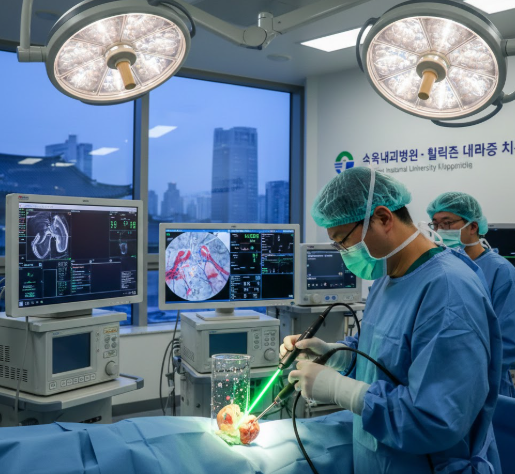
Treatment Overview
Holmium Laser Enucleation of the Prostate (HoLEP) is a modern minimally invasive procedure for treating Benign Prostatic Hyperplasia (BPH), or enlarged prostate. Using a high-powered holmium laser, the surgeon removes excess prostate tissue obstructing urine flow.
In Korea, HoLEP is widely used due to its precision, minimal bleeding, and rapid recovery. It is suitable for men with moderate to severe BPH, particularly when medication fails or the prostate is significantly enlarged.
Purpose & Benefits
The main goals of HoLEP include:
- Relieving urinary obstruction caused by enlarged prostate
- Improving urine flow and bladder emptying
- Reducing BPH-related symptoms such as urgency, frequency, and weak stream
- Minimizing bleeding and complications compared to traditional surgery
- Short hospital stay and quicker recovery
Benefits for patients in Korea include access to advanced laser equipment, experienced urologists, and structured post-operative care.
Ideal Candidates
HoLEP is ideal for men who:
- Have moderate to severe urinary symptoms despite medication
- Have a significantly enlarged prostate (typically >50 mL)
- Experience recurrent urinary retention or bladder stones
- Prefer minimally invasive surgery over open prostatectomy
- International patients seeking advanced BPH treatment in Korea
Possible Risks & Complications
While HoLEP is generally safe, potential risks include:
- Temporary urinary urgency or incontinence
- Blood in urine (hematuria) during the first few days
- Rare urethral strictures or bladder neck contracture
- Infection or need for temporary catheterization
Korean hospitals follow strict protocols to minimize these risks, ensuring safe and effective outcomes.
Techniques & Technology Used
- Holmium Laser: High-energy laser precisely enucleates prostate tissue
- Endoscopic Equipment: Thin scope inserted through urethra to access prostate
- Tissue Morcellation: Removed tissue is cut into small pieces for safe extraction
- Advanced Monitoring: Ultrasound and uroflowmetry to assess effectiveness
- Minimally Invasive Approach: No large incisions, reduced bleeding, shorter recovery
Treatment Process in Korea
- Initial Evaluation: Symptom assessment, ultrasound, PSA testing, and urine flow studies
- Pre-Operative Preparation: Anesthesia, catheter placement, and patient counseling
- HoLEP Procedure: Laser enucleation of enlarged tissue and morcellation for removal
- Hospital Stay: Typically 1–2 nights depending on recovery
- Follow-Up: Catheter removal, symptom monitoring, and post-operative check-ups
Recovery & After-Care
- Temporary urinary irritation and mild bleeding may occur
- Most patients resume normal activity within a few days
- Catheter usually removed within 24–48 hours
- Medications may be prescribed to prevent infection or manage inflammation
- Regular follow-ups ensure proper urinary function and detect any complications
Results & Longevity
- Significant improvement in urine flow and reduction in BPH symptoms
- Long-term durability, with many patients remaining symptom-free for 10+ years
- Reduced dependence on medication post-procedure
- High patient satisfaction due to quick recovery and effective symptom relief
Why Korea Is a Top Destination
- Experienced urologists with extensive HoLEP expertise
- Modern hospitals with advanced laser technology
- Structured care for international patients, including translation and travel support
- Competitive cost compared to Western countries
- Comprehensive post-operative monitoring and support
Cost Range
- Consultation & Diagnostics: USD 40–120
- HoLEP Procedure: USD 3,000–6,000 depending on hospital and complexity
- Follow-Up Visits: USD 50–150 per visit
- Costs may vary for international patients, hospital type, and any additional services
Popular Clinics in Korea
- Seoul National University Hospital
- Samsung Medical Center, Seoul
- Asan Medical Center, Seoul
- Severance Hospital (Yonsei University)
- St. Mary’s Hospital, Seoul
- Gangnam Urology Specialist Clinics
These centers provide expert HoLEP treatment for both domestic and international patients.


