
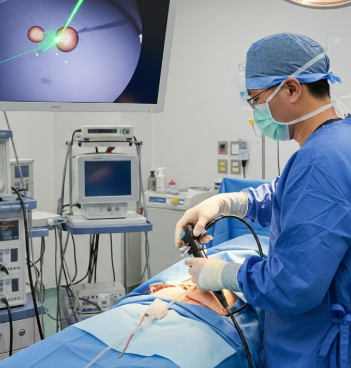
Treatment Overview
Holmium Laser High-Precision Stone Surgery is an advanced, minimally invasive procedure used to treat kidney and ureteral stones with exceptional accuracy. This technique utilizes a holmium:YAG laser to fragment stones into fine particles under direct visualization, minimizing trauma to surrounding tissues and preserving kidney function.
In Korea, high-precision holmium laser stone surgery is performed using flexible ureteroscopy or retrograde intrarenal surgery (RIRS). Leading urology centers combine state-of-the-art laser systems with high-definition digital endoscopes to ensure precise targeting of stones, even in challenging anatomical locations. This approach is highly effective for hard, recurrent, or complex stones.
Purpose & Benefits
The main purpose of high-precision holmium laser stone surgery is to achieve complete stone clearance while minimizing complications. By delivering laser energy with extreme accuracy, urologists can fragment stones efficiently without damaging the ureter or renal tissue.
Key benefits include:
- High stone-free rates
- Minimal invasiveness and tissue trauma
- Reduced postoperative pain and discomfort
- Shorter hospital stays
- Faster recovery and return to daily activities
- Effective treatment for hard, complex, or recurrent stones
This method is particularly advantageous for patients seeking safe, precise, and reliable treatment in Korea.
Ideal Candidates
Ideal candidates include patients with kidney or ureteral stones that are hard, complex, large, or recurrent. Individuals who have undergone previous unsuccessful treatments or have stones located in anatomically challenging regions are also suitable.
Medical tourists seeking high-quality, minimally invasive treatment with predictable outcomes are excellent candidates. Final eligibility is determined through imaging studies and consultation with a Korean urology specialist.
Possible Risks & Complications
While holmium laser high-precision stone surgery is very safe, potential risks may include:
- Temporary hematuria (blood in urine)
- Mild urinary discomfort
- Urinary tract infection
- Ureteral swelling or irritation
- Stent-related discomfort if a ureteral stent is placed
Serious complications such as ureteral injury are rare in Korea due to advanced equipment, meticulous surgical techniques, and strict procedural protocols.
Techniques & Technology Used
Korean hospitals use cutting-edge technology for high-precision stone surgery, including:
- Holmium:YAG laser systems with adjustable energy and pulse settings
- Dusting, fragmentation, and popcorning laser modes
- Flexible digital ureteroscopes with high-definition imaging
- Pressure-regulated irrigation systems
- Real-time fluoroscopic and endoscopic guidance
These technologies enable urologists to fragment stones with maximum precision while minimizing tissue damage.
Treatment Process in Korea
The treatment process begins with a comprehensive preoperative assessment, including imaging studies and laboratory tests. General or spinal anesthesia is administered to ensure patient comfort.
A flexible ureteroscope is introduced through the urinary tract to visualize the stone. The holmium laser is used to fragment stones into fine particles, which are either flushed out or removed endoscopically. A temporary ureteral stent may be placed if necessary. Most patients are discharged on the same day or within one to two days.
International patient departments facilitate scheduling, interpretation, and follow-up care.
Recovery & After-Care
Recovery after high-precision holmium laser stone surgery is typically smooth and quick. Patients may experience mild urinary discomfort or temporary blood in urine, which resolves within a few days.
After-care recommendations include adequate hydration, prescribed medications, avoiding strenuous activity temporarily, and attending follow-up imaging to confirm complete stone clearance. Stent removal is usually performed within one to two weeks if a stent is placed. Korean hospitals often provide remote follow-up for international patients.
Results & Longevity
Holmium laser high-precision stone surgery achieves excellent stone-free rates and durable results when performed by skilled urologists. Precise laser fragmentation reduces residual stone fragments, lowering the risk of recurrence.
Long-term outcomes depend on lifestyle modifications, hydration, and metabolic evaluation. Many Korean hospitals provide preventive programs to reduce stone recurrence.
Why Korea Is a Top Destination
Korea is a preferred destination for high-precision holmium laser stone surgery due to:
- Highly trained urologists with specialized expertise
- State-of-the-art laser and endoscopic technologies
- High success rates with minimal complications
- Transparent pricing and cost-effective treatment
- Comprehensive medical tourism support for international patients
These factors make Korea ideal for patients seeking safe, precise, and advanced stone treatment.
Cost Range
The cost of holmium laser high-precision stone surgery in Korea typically ranges from USD 4,000 to USD 8,500. Costs depend on stone size, complexity, hospital category, surgeon expertise, anesthesia requirements, and length of hospital stay.
This cost provides competitive value while maintaining high-quality care.
Popular Clinics in Korea
Korea has numerous reputable facilities for high-precision holmium laser stone surgery, including university-affiliated tertiary hospitals, specialized urology and stone centers, international patient-focused hospitals in Seoul and Gangnam, and multispecialty hospitals with advanced endourology units.
Patients should choose clinics based on surgeon experience, technology availability, and comprehensive patient support services.


