
Treatment Overview
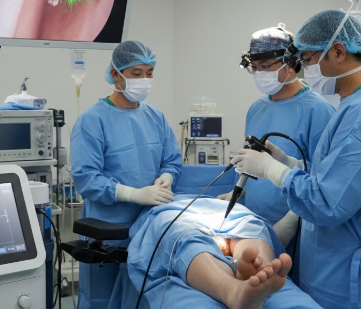
Holmium Laser Rigid Ureteroscopy is a modern, minimally invasive procedure used for the diagnosis and treatment of ureteral stones. In this technique, a rigid ureteroscope is inserted through the natural urinary pathway to access the ureter where the stone is located. The holmium laser is then used to break the stones into tiny fragments that can be removed or allowed to pass naturally.
This procedure is widely performed in Korea due to the country’s advanced urological technology, highly trained specialists, and superior patient care standards. It is particularly effective for stones lodged in the lower and mid-ureter, where rigid scopes offer the best access and control.
Purpose & Benefits
The main purpose of Holmium Laser Rigid Ureteroscopy is to safely and effectively remove ureteral stones without the need for open surgery. This method provides several benefits:
- High Success Rate: Korea reports exceptional stone-clearance rates with holmium laser treatments.
- Quick Recovery: No incisions are required, reducing downtime compared to traditional surgery.
- Precision Stone Fragmentation: The holmium laser can finely dust or fragment stones, reducing the risk of residual stone pieces.
- Suitable for Most Stone Types: Effective on hard stones like calcium oxalate monohydrate.
- Reduced Pain Levels: Minimally invasive design leads to less discomfort post-procedure.
- Lower Risk of Complications: Compared to shockwave therapy or open surgery, this method offers safer outcomes.
Ideal Candidates
Holmium Laser Rigid Ureteroscopy is ideal for medical tourists and local patients who:
- Have ureteral stones that are stuck or causing pain
- Need removal of stones that failed to pass naturally
- Have stones unsuitable for extracorporeal shock wave lithotripsy (ESWL)
- Require treatment for hard or larger stones
- Want a fast recovery option while traveling
- Prefer minimally invasive endoscopic procedures
- Experience symptoms like severe flank pain, blood in urine, or urinary blockage
This treatment is generally safe for most adults. However, patients with active UTIs, uncontrolled bleeding disorders, or pregnancy may require alternative approaches.
Possible Risks & Complications
While Holmium Laser Rigid Ureteroscopy is considered very safe, some potential risks exist:
- Mild ureteral injury or inflammation
- Temporary blood in urine
- Infection or fever
- Stent discomfort if a stent is placed
- Rare possibility of ureteral stricture
- Temporary urinary frequency or urgency
Korean hospitals minimize these risks through experienced urologists, advanced devices, and strict infection-control protocols.
Techniques & Technology Used
Korea is a global leader in laser-based urological treatments. Holmium Laser Rigid Ureteroscopy involves the following modern technologies:
- Holmium:YAG Laser Systems (20W–120W models with high-precision fiber delivery)
- High-Definition Rigid Ureteroscopes with strong visualization and maneuverability
- Ureteral Access Sheaths for safer instrument insertion
- Stone Basketing Devices for retrieving fragments
- Digital Video Monitoring Systems for enhanced surgeon accuracy
- Low-Trauma Balloon Dilators (if required)
- Post-Procedure Ureteral Stents to support healing
Korean clinics frequently upgrade their laser platforms, ensuring the most effective stone fragmentation with minimal thermal damage.
Treatment Process in Korea
Medical tourists appreciate Korea’s smooth and well-organized treatment flow. Here is the typical process:
- Initial Consultation & Diagnostics
Patients undergo CT scans or ultrasounds to determine stone size, location, and hardness. - Pre-Procedure Evaluation
Blood tests, urine tests, and health history screening ensure suitability for anesthesia. - Day of Procedure
The patient receives general or spinal anesthesia for comfort.
A rigid ureteroscope is inserted through the urethra into the ureter. - Laser Stone Fragmentation
The holmium laser breaks the stone into dust or small pieces.
Fragments are either removed with baskets or left to pass naturally. - Possible Stent Placement
A temporary stent may be inserted to prevent swelling and improve urine flow. - Recovery Period
Most patients go home the same day or require short hospitalization. - Follow-Up Appointment
The stent (if placed) is removed in 1–2 weeks.
A follow-up scan ensures complete stone clearance.
Recovery & After-Care
Recovery after Holmium Laser Rigid Ureteroscopy is generally quick and smooth:
- Patients can return to light activities within 24–48 hours.
- Mild discomfort during urination may occur for a few days.
- Adequate hydration helps flush any residual fragments.
- Pain medications and antibiotics may be prescribed to prevent infection.
- Avoid strenuous activity for one week.
- If a stent is placed, temporary urinary frequency or flank discomfort is normal.
Korean hospitals also offer multilingual support and telemedicine for international patients, ensuring seamless follow-up.
Results & Longevity
This procedure provides long-lasting results, with high satisfaction among patients:
- Immediate stone clearance in most cases
- Relief from pain and urinary obstruction
- Low recurrence risk if dietary and lifestyle advice is followed
- No residual scars or visible marks since it is fully endoscopic
The procedure’s results are durable, and Korean clinicians provide detailed prevention plans to minimize future stone formation.
Why Korea Is a Top Destination
Korea is one of the best countries for rigid ureteroscopy and laser stone removal due to:
- World-class urologists with extensive experience
- Highly advanced holmium laser platforms
- Efficient medical tourism support systems
- Global reputation for precision and safety
- Affordable compared to Western countries
- English-speaking coordinators and interpreters
- Fast appointment scheduling with minimal waiting times
International patients consistently choose Korea for successful, comfortable, and quick recovery experiences.
Cost Range
The cost of Holmium Laser Rigid Ureteroscopy in Korea typically ranges between:
- USD 2,500 – USD 6,000
(depending on stone complexity, anesthesia, hospital grade, and stent usage)
This price is significantly lower than in the US, Canada, or Europe, with higher technology standards and shorter waiting periods.
Popular Clinics in Korea
Some well-known and reputable clinics offering holmium laser rigid ureteroscopy include:
- Seoul National University Hospital (SNUH)
- Asan Medical Center
- Samsung Medical Center
- Severance Hospital – Yonsei University
- Seoul Urology Clinic
- JK Urology Center
- Wooridul Hospital
- Korea University Anam Hospital
These institutions are known for their excellent equipment, skilled urologists, and streamlined international patient services.


