
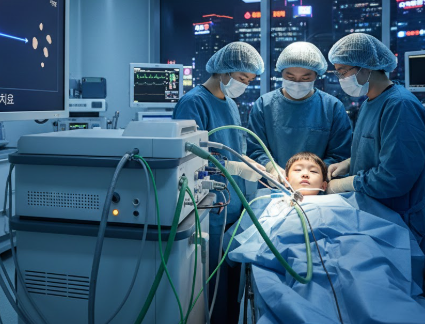
Treatment Overview
Holmium Laser Treatment for Pediatric Kidney Stones is a minimally invasive urological procedure designed specifically for children suffering from renal or ureteral stones. The procedure uses a holmium:YAG laser to fragment kidney stones into very fine particles that can pass naturally through the urinary tract, minimizing trauma to delicate pediatric anatomy.
In Korea, pediatric holmium laser stone treatment is performed in specialized hospitals with dedicated pediatric urology departments. The procedure is commonly carried out using pediatric-sized flexible ureteroscopes and advanced laser systems, ensuring high safety standards and excellent clinical outcomes for young patients. Korean centers emphasize child-friendly care, advanced anesthesia protocols, and family-centered treatment planning.
Purpose & Benefits
The primary purpose of holmium laser treatment in pediatric kidney stone cases is to safely remove stones while preserving kidney function and minimizing postoperative discomfort. This approach avoids open surgery and significantly reduces recovery time.
Key benefits include high stone clearance rates, minimal tissue damage, reduced postoperative pain, lower risk of complications compared to open surgery, short hospital stays, and rapid return to normal activities. The technique is effective for both soft and hard stones and is suitable for recurrent pediatric stone disease. For international families, Korea offers comprehensive care with advanced safety measures.
Ideal Candidates
Holmium laser treatment is suitable for children with kidney or ureteral stones that cannot be managed through conservative measures. Ideal candidates include pediatric patients with moderate to large stones, recurrent stone formation, stones resistant to shock wave lithotripsy, and anatomical conditions that make other treatments less effective.
Children with symptoms such as recurrent pain, urinary infection, or obstruction may also benefit. Final candidacy is determined after imaging studies and evaluation by a pediatric urologist in Korea.
Possible Risks & Complications
When performed in experienced pediatric centers, holmium laser treatment is highly safe. However, potential risks may include temporary blood in urine, mild discomfort during urination, urinary tract infection, temporary ureteral swelling, and stent-related discomfort if a stent is placed.
Serious complications are rare due to the use of pediatric-specific instruments, advanced imaging, and strict perioperative protocols followed by Korean hospitals.
Techniques & Technology Used
Korean pediatric urology centers employ advanced technology tailored for children. This includes holmium:YAG laser systems with precise energy control, pediatric-sized flexible ureteroscopes, low-pressure irrigation systems, digital endoscopic visualization, and real-time fluoroscopic guidance.
Surgeons in Korea are trained to use low-energy laser settings appropriate for pediatric patients, ensuring effective stone fragmentation while protecting the developing urinary tract.
Treatment Process in Korea
The treatment process begins with a thorough preoperative assessment, including imaging, laboratory tests, and pediatric anesthesia evaluation. The procedure is performed under general anesthesia to ensure the child’s comfort and safety.
A flexible ureteroscope is inserted through the natural urinary tract, and the holmium laser is used to dust or fragment the stones. A temporary ureteral stent may be placed if necessary. Most children are discharged within one to two days following the procedure.
Hospitals in Korea provide family accommodation assistance, translation services, and coordinated care for international patients.
Recovery & After-Care
Recovery after holmium laser treatment for pediatric kidney stones is generally smooth and quick. Most children experience minimal discomfort and can resume normal activities within a short period.
After-care includes ensuring adequate hydration, administering prescribed medications, monitoring urinary output, and attending follow-up visits. If a stent is placed, it is typically removed within one to two weeks. Korean hospitals offer structured follow-up plans and guidance for parents.
Results & Longevity
Holmium laser treatment achieves excellent stone-free rates in pediatric patients when performed by experienced urologists. The precise dusting technique reduces residual fragments and lowers the risk of future stone-related complications.
Long-term outcomes depend on dietary management, hydration habits, and metabolic evaluation. Many Korean centers provide preventive counseling and long-term monitoring programs to reduce recurrence in children.
Why Korea Is a Top Destination
Korea is a preferred destination for pediatric kidney stone treatment due to its advanced pediatric urology expertise, state-of-the-art laser technology, child-focused care environments, and high safety standards. Hospitals in Korea are known for their strict infection control, transparent treatment planning, and comprehensive international patient services.
Families benefit from high-quality care at competitive costs compared to Western countries, without compromising medical standards.
Cost Range
The cost of holmium laser treatment for pediatric kidney stones in Korea generally ranges from USD 3,500 to USD 7,000. Costs vary based on stone complexity, hospital type, surgeon expertise, anesthesia requirements, and length of hospital stay.
This cost typically includes hospitalization, procedure fees, and basic postoperative care, offering good value for international families.
Popular Clinics in Korea
Korea has several reputable hospitals offering pediatric holmium laser kidney stone treatment. These include large university-affiliated hospitals, specialized pediatric urology centers, tertiary care hospitals with international patient departments, and multispecialty hospitals in Seoul and other major cities.
Secondary Keywords
Pediatric ureteroscopy Korea
Minimally invasive kidney stone treatment for children
Best pediatric urology hospitals in Korea
Kidney stone surgery cost for children in Korea


