
Treatment Overview
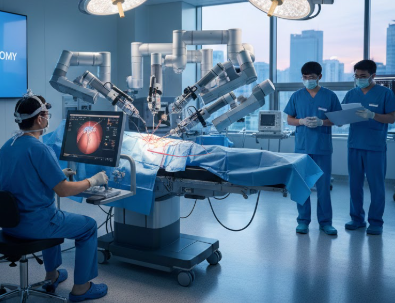
Hood-sparing robotic prostatectomy is an advanced minimally invasive surgical technique for localized prostate cancer that focuses on preserving the “prostatic hood” — a key structure around the prostate involved in urinary continence and sexual function. By maintaining this delicate tissue during robotic prostate removal, surgeons can significantly enhance postoperative recovery of urinary and sexual functions.
Korea is a global leader in hood-sparing procedures, combining expert robotic urologists, high-definition robotic systems, and precise surgical techniques. This method allows for effective cancer removal while minimizing side effects, shorter hospital stay, and faster return to daily activities.
Purpose & Benefits
The primary purpose of hood-sparing robotic prostatectomy is to remove prostate cancer while preserving urinary continence and sexual function.
Key benefits include:
• Minimally invasive surgery with small incisions
• Preservation of the prostatic hood for faster continence recovery
• Reduced risk of postoperative urinary incontinence and erectile dysfunction
• Lower blood loss and quicker recovery compared to open surgery
• Enhanced precision in tumor removal using robotic assistance
• Shorter hospital stay and faster return to normal activities
• Improved overall quality of life after surgery
Korean hospitals emphasize combining oncological safety with functional preservation to maximize patient satisfaction and recovery.
Ideal Candidates
Hood-sparing robotic prostatectomy is ideal for men with localized prostate cancer who want to minimize functional complications post-surgery.
Ideal candidates include:
• Men with low- to intermediate-risk localized prostate cancer
• Patients seeking minimally invasive surgery with improved continence and sexual outcomes
• Men in good general health suitable for anesthesia
• Patients wishing to preserve urinary and sexual function
• Candidates who prefer robotic-assisted precision surgery
Korean urologists perform thorough evaluations including PSA levels, MRI, biopsy results, and functional assessments to ensure suitability for hood-sparing surgery.
Possible Risks & Complications
Although generally safe, hood-sparing robotic prostatectomy carries potential risks:
• Infection at the incision or surgical site
• Bleeding or hematoma
• Temporary or persistent urinary leakage
• Erectile dysfunction if nerve preservation is incomplete
• Rare anesthesia-related complications
• Scar tissue formation or urethral stricture
Korean hospitals minimize these risks through robotic precision, careful surgical planning, and structured postoperative care protocols.
Techniques & Technology Used
Korea employs advanced techniques and technologies for hood-sparing robotic prostatectomy:
• Robotic-assisted minimally invasive surgery with 3D high-definition visualization
• Preservation of the prostatic hood and associated ligaments
• Nerve-sparing techniques to maintain sexual function
• Minimally invasive micro-incisions to reduce tissue trauma
• Intraoperative imaging and navigation for precise tumor localization
• Advanced suturing and reconstruction to optimize urinary continence
• Enhanced recovery protocols for quicker return to normal life
These technologies allow high-precision tumor removal while preserving key functional structures, reducing postoperative complications.
Treatment Process in Korea
The hood-sparing robotic prostatectomy process in Korea is structured for optimal outcomes:
- Pre-Arrival Consultation
Patients provide medical history, imaging, PSA levels, and biopsy reports. - In-Person Evaluation
MRI, lab tests, and functional assessments confirm candidacy for hood-sparing surgery. - Surgical Planning
Surgeons create a personalized plan including nerve-sparing strategy, hood preservation, and incision approach. - Surgery
The procedure typically lasts 2–4 hours under general anesthesia, using robotic-assisted minimally invasive techniques. - Hospital Recovery
Patients usually stay 1–2 days for monitoring, pain management, and early mobilization. - Postoperative Care
Catheter removal occurs 5–7 days after surgery. Follow-ups monitor urinary continence, PSA levels, and sexual function. - Long-Term Follow-Up
Regular checkups assess cancer control, functional recovery, and overall health.
Recovery & After-Care
Recovery is generally faster than conventional prostatectomy due to the minimally invasive and hood-preserving approach:
• Mild pain or discomfort for several days
• Early ambulation encouraged within 24 hours
• Gradual return to normal activities within 2–3 weeks
• Avoid heavy lifting or strenuous activity for 4–6 weeks
• Pelvic floor exercises to improve urinary continence
• Long-term PSA and functional monitoring
Korean hospitals provide structured after-care programs, patient education, and telemedicine support for international patients.
Results & Longevity
Hood-sparing robotic prostatectomy offers excellent outcomes:
• Faster recovery of urinary continence compared to conventional prostatectomy
• Effective tumor removal with low risk of recurrence
• Preservation of erectile and urinary function
• Short hospital stay and quicker return to normal life
• Long-term PSA monitoring ensures early detection of recurrence
Korea’s robotic expertise and advanced surgical systems ensure predictable and durable functional and oncological outcomes.
Why Korea Is a Top Destination
Korea is a leading destination for hood-sparing robotic prostatectomy due to:
• Experienced robotic urologic surgeons specializing in functional preservation
• Accredited hospitals with advanced robotic surgical systems
• Streamlined medical tourism services including interpreters and travel coordination
• Short waiting times and efficient scheduling
• Competitive costs compared to Western countries
• Comprehensive postoperative care and rehabilitation programs
These factors make Korea an ideal destination for men seeking minimally invasive prostate cancer surgery with optimal functional outcomes.
Cost Range
The cost of hood-sparing robotic prostatectomy in Korea typically ranges from USD 16,000 – 30,000, depending on:
• Hospital category (general vs. premium international center)
• Use of robotic surgical systems and surgical complexity
• Preoperative diagnostics and imaging
• Length of hospital stay and follow-up care
Many hospitals provide all-inclusive packages covering surgery, diagnostics, hospitalization, and postoperative care for international patients.
Popular Clinics in Korea
Top hospitals offering hood-sparing robotic prostatectomy in Korea include:
• Samsung Medical Center
• Asan Medical Center
• Seoul National University Hospital (SNUH)
• Severance Hospital (Yonsei University Health System)
• Korea University Anam Hospital
• W Hospital Urology Center
• BnU Urology Clinic
• Chung-Ang University Hospital
These institutions provide advanced robotic surgery, expert surgeons, and comprehensive international patient support.


