
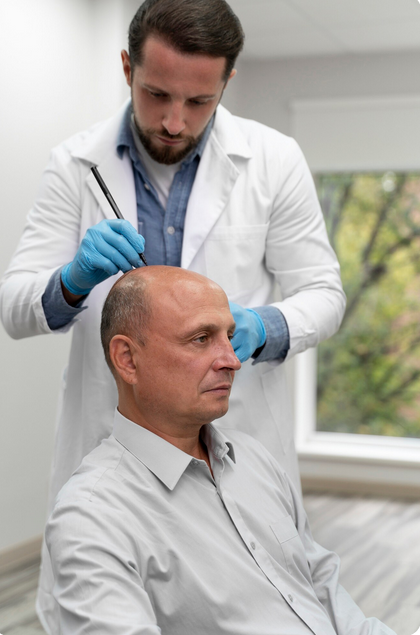
Korea has emerged as a global hub for advanced hair transplant procedures, offering state-of-the-art techniques, natural-looking results, and international patient care. If you’re considering restoring your hairline, beard, or thinning crown, understanding how a hair transplant works step-by-step—as performed in Korean clinics—will help you prepare confidently.
This guide walks you through the entire process of hair transplantation in Korea, from consultation to recovery, using expert insights and clinical practices that have made Korean hair restoration world-renowned.
🔍 What Is a Hair Transplant?
A hair transplant is a surgical procedure that moves healthy hair follicles from one part of the body (usually the back or sides of the scalp, known as the “donor area”) to thinning or bald areas (the “recipient area”). Once transplanted, these hairs continue to grow naturally for a lifetime.
Korean clinics typically offer two major techniques:
| Technique | Description |
|---|---|
| FUT (Follicular Unit Transplantation) | A strip of scalp is removed from the donor area and dissected into grafts |
| FUE (Follicular Unit Extraction) | Individual hair follicles are extracted directly from the scalp |
🩺 Step-by-Step: Hair Transplant in Korean Clinics
✅ Step 1: Pre-Consultation (Online or In-Person)
Before you arrive in Korea (or after arriving), most clinics provide:
- Online hair loss assessment (photos or video calls)
- Preliminary diagnosis: Androgenetic alopecia, traction alopecia, or others
- Estimated graft count and quote
📌 Medical tourists often receive English-language consultations with translators and travel support.
✅ Step 2: In-Clinic Consultation & Hair Analysis
Once at the clinic, a certified hair transplant surgeon will:
- Examine donor and recipient areas
- Use scalp imaging tools (e.g., trichoscopy or digital scalp camera)
- Determine:
- Graft density
- Hair caliber and texture
- Scalp health
- Finalize treatment plan: FUE, FUT, or combination
📋 Scalp health prep may include medicated shampoo, DHT blockers, or platelet-rich plasma (PRP) therapy in the weeks before surgery.
✅ Step 3: Designing the Hairline
Korean clinics are famous for their aesthetic hairline design, especially for:
- Forehead reduction and framing
- Natural temple curves
- Male and female patterns
- Beard or eyebrow transplants
The surgeon draws a customized hairline suited to:
- Face shape
- Ethnicity
- Age
- Gender
🎯 Goal: Create a soft, natural-looking density that mimics original growth patterns.
✅ Step 4: Anesthesia and Preparation
- Local anesthesia is administered to both donor and recipient areas
- Hair is trimmed (unless NS-FUE is used)
- Scalp is sterilized and marked
💤 Most procedures are pain-free and done under local anesthesia only, with patients fully awake and comfortable.
✅ Step 5: Graft Harvesting (FUE or FUT)
FUE Method (most common in Korea):
- Tiny punches (0.6–1.0 mm) extract individual follicular units
- Leaves no visible linear scar
- Ideal for short hairstyles and minimal downtime
FUT Method:
- A thin strip of scalp is removed and dissected under a microscope
- Usually offers a higher graft count per session
- Leaves a linear scar hidden under longer hair
🔬 Korean clinics often combine FUE + FUT for mega sessions (over 3,000 grafts).
✅ Step 6: Graft Sorting and Preservation
Technicians carefully:
- Sort follicles by graft type (single, double, triple hairs)
- Store them in hypothermosol or platelet-rich plasma to enhance survival
- Handle under magnification to avoid trauma
✅ Experienced Korean technicians are known for high graft survival rates (95%+).
✅ Step 7: Recipient Site Creation
The surgeon uses a micropunch or needle to create channels in the recipient area, paying attention to:
- Angle
- Direction
- Depth
- Density
This step determines how natural the result will look. Korean clinics excel here due to their artistry and training.
✅ Step 8: Implantation of Grafts
Technicians or the surgeon carefully insert the grafts one by one into the pre-made sites. Techniques include:
- DHI (Direct Hair Implantation) using Choi implanter pens
- Stick-and-place method for precision
- Dense packing for high hairline density
🕒 This step may take 4–8 hours depending on graft count.
✅ Step 9: Post-Op Recovery & Care
Immediately after surgery:
- Scalp is bandaged (for FUT) or left open to heal (FUE)
- Cooling masks or LED light therapy may be applied
- Detailed aftercare instructions provided
You’ll be advised to:
- Sleep with your head elevated
- Use gentle sprays or rinses
- Avoid sun, sweating, and hats for 7–10 days
- Refrain from alcohol, smoking, and exercise for 2 weeks
🧴 Most clinics provide:
- Healing spray
- Antibiotic cream
- Special shampoo
- Oral medications (anti-inflammatory, antibiotics, painkillers)
✅ Step 10: Follow-Up (In Clinic or Remote)
- In-person checkup (Day 3–7)
- Suture removal if FUT (Day 10–14)
- Online follow-ups at 1, 3, 6, and 12 months
- PRP sessions or medication (e.g., finasteride, minoxidil) may be recommended
🕒 Timeline of Hair Growth After Transplant
| Time Post-Surgery | What Happens |
|---|---|
| 1–2 Weeks | Crusts fall off, redness fades |
| 1 Month | “Shock loss” – transplanted hair sheds |
| 3–4 Months | New hairs start to grow |
| 6 Months | 50–60% visible density |
| 12–18 Months | Full, final results |
Most clinics offer:
- Free consultations
- Package pricing
- English-speaking coordinators
🧳 Is Hair Transplant a Good Choice for Medical Tourists?
Absolutely. Korea’s combination of:
- Experienced surgeons
- High-tech facilities
- Short downtime
- Affordable pricing
- Multilingual support
…makes it one of the best destinations globally for hair restoration.
You can enjoy minimal recovery, explore Seoul, and return home with new hair growing in a few months.
🔑 Final Thoughts
Hair transplantation in Korea is not only technically advanced, but also aesthetic and patient-focused. With detailed planning, artistic design, and a high survival rate, Korean clinics consistently deliver natural-looking results for patients from all over the world.
Whether you’re addressing early hair loss or undergoing a complete transformation, this step-by-step hair transplant process ensures you’re well-informed and confident about your journey.


