
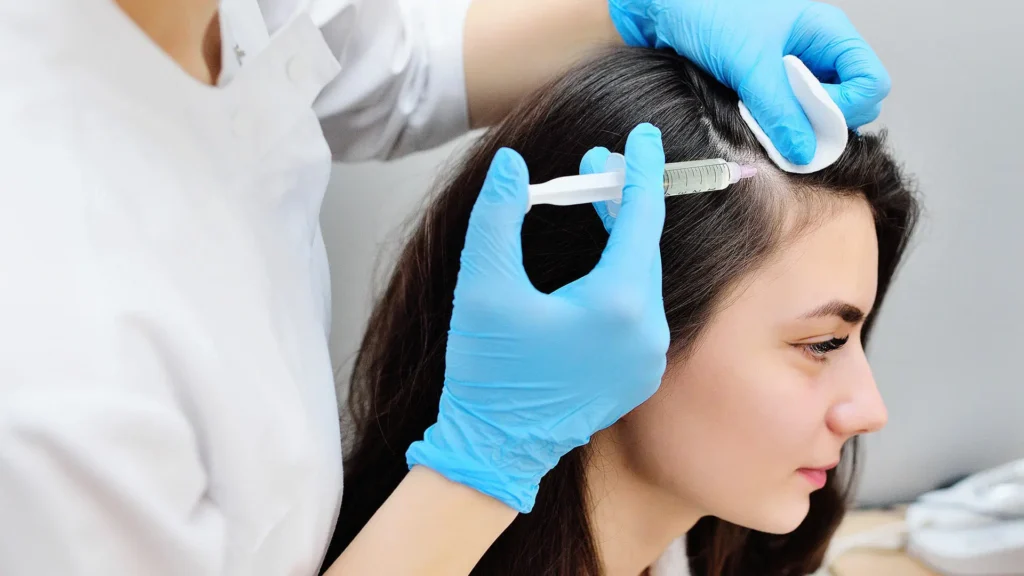
Platelet-Rich Plasma (PRP) therapy is an innovative, natural treatment that uses your own blood’s growth factors to stimulate hair regrowth. One of the most important questions patients ask before starting is:
“How many PRP sessions will I need, and how often should I repeat the treatments to get the best results?”
The answer depends on several factors, including the severity of hair loss, your individual response, and your long-term hair goals. Here’s a detailed breakdown to help you understand the ideal treatment frequency for PRP hair restoration.
Typical PRP Hair Treatment Schedule
1. Initial Treatment Phase — Building the Foundation
- Most providers recommend a series of 3 to 4 sessions spaced 4 to 6 weeks apart during the first 3 to 4 months.
- This schedule allows for repeated stimulation of hair follicles during their growth cycle.
- Early sessions kickstart the healing process, increase blood supply, and activate dormant follicles.
🩸 Think of these initial treatments as “priming the scalp” for sustained hair regrowth.
2. Maintenance Phase — Sustaining the Results
- After the initial series, maintenance treatments every 4 to 6 months are typically advised.
- Maintenance sessions help prolong hair growth, prevent further thinning, and keep follicles healthy.
- Some patients may require more frequent maintenance if they have aggressive or advanced hair loss.
Why Multiple Sessions Are Needed
- Hair grows in cycles (anagen, catagen, telogen), and PRP works best when repeated to influence multiple follicles at different stages.
- One PRP treatment is rarely enough to produce long-lasting or visible hair growth.
- Regular treatments ensure continuous delivery of growth factors to support follicle health over time.
Factors Influencing PRP Treatment Frequency
| Factor | How It Affects Frequency |
|---|---|
| Stage of Hair Loss | Early thinning may need fewer sessions; advanced loss may need more frequent treatments. |
| Age | Younger patients may respond faster and need less frequent maintenance. |
| Overall Health | Conditions like hormonal imbalance may require closer monitoring and adjusted schedules. |
| Lifestyle & Stress | High stress or poor nutrition can impact hair health and may necessitate more frequent treatments. |
| Response to PRP | Some individuals respond quicker or slower; your provider will tailor frequency based on results. |
Typical Patient Journey Example
| Month | Recommended Action | Expected Outcome |
|---|---|---|
| 0 | First PRP session | Initial follicle activation |
| 1 | Second session | Continued stimulation, early shedding reduction |
| 2 | Third session | Noticeable hair texture improvement |
| 3 | Fourth session | Visible hair density and thickness gains |
| 6 | Maintenance session | Sustained hair growth and follicle health |
| 12+ | Biannual maintenance | Long-term hair retention and vitality |
Signs You May Need More Frequent PRP Treatments
- Hair thinning resumes or accelerates
- Increased hair shedding despite maintenance
- Scalp feels less healthy or dry
- Lack of visible improvement after initial sessions
If you experience these, talk with your provider — they may recommend adjusting treatment frequency or combining PRP with other therapies like minoxidil or low-level laser therapy.
Can You Combine PRP With Other Treatments?
Yes! Many patients combine PRP with:
- Topical treatments like minoxidil
- Oral medications such as finasteride (for men)
- Microneedling to enhance PRP absorption
- Low-Level Laser Therapy (LLLT) for synergistic effects
Your provider can customize a treatment plan combining therapies for optimal, personalized results.
Final Thoughts
PRP hair therapy is a journey that requires patience and consistency. Sticking to the recommended treatment schedule maximizes your chances of seeing thicker, healthier hair that lasts. Always communicate openly with your provider about your progress and any concerns — they’ll tailor the timing to fit your unique needs.


