
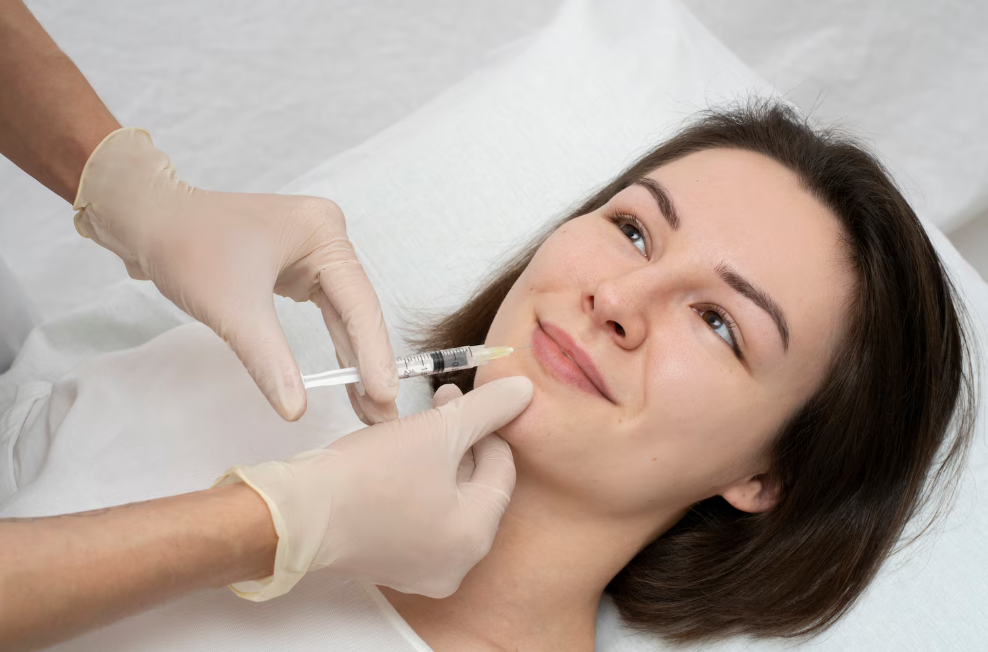
Treatment Overview
Hyaluronic Skin Booster MTS (Microneedle Therapy System) is a deeply hydrating and rejuvenating procedure that uses microneedling to deliver hyaluronic acid (HA) directly into the dermis. Microneedling creates controlled microchannels, allowing HA and other nourishing serums to penetrate deeply, replenishing lost moisture, restoring elasticity, and giving the skin a plump, radiant glow.
In Korea, Hyaluronic Skin Booster MTS is one of the most popular treatments for achieving the “glass skin” look. Dermatologists customize HA serums, often combining them with peptides, vitamins, or growth factors, and use advanced microneedling devices to ensure precise absorption with minimal discomfort.
Purpose & Benefits
- Deep Hydration: Restores skin’s moisture balance for a plump and supple appearance.
- Elasticity Enhancement: Improves firmness by stimulating collagen and elastin.
- Fine Line Reduction: Smooths early wrinkles caused by dehydration.
- Radiant Glow: Restores natural luminosity and “glass skin” effect.
- Pore Refinement: Helps minimize enlarged pores for smoother texture.
- Skin Repair: Supports recovery from dryness, sun damage, and early aging.
Ideal Candidates
- Adults with dry, dehydrated, or dull skin.
- Individuals showing early signs of aging such as fine lines or mild laxity.
- Patients wanting non-surgical rejuvenation and long-lasting hydration.
- Men and women aiming for natural, radiant glow without fillers.
- Those committed to consistent skincare and maintenance sessions.
Possible Risks & Complications
- Temporary redness, swelling, or pinpoint bleeding after microneedling.
- Mild tightness or dryness in the first few days.
- Small risk of post-inflammatory pigmentation without proper sun protection.
- Rare allergic reaction to serum additives.
- Minimal infection risk if aftercare is not followed.
Techniques Used
- Microneedling Device: Adjustable depth needles (0.25–1.5 mm) create microchannels.
- Hyaluronic Acid Infusion: Hydration delivered directly into dermis.
- Customized Boosters: Sometimes combined with peptides, vitamins, or PDRN for added benefits.
- Precision Delivery: Korean dermatologists use automated systems for even absorption.
- Combination Options: Can be paired with PRP, laser toning, or LED light therapy.
Recovery & Aftercare
- Day 1–2: Redness and slight swelling (similar to a sunburn).
- Day 3–5: Hydration boost and smoother texture noticeable.
- Week 1–2: Glow, elasticity, and firmness continue to improve.
Aftercare Guidelines:
- Avoid makeup, alcohol, and saunas for 24–48 hours.
- Use hydrating serums and soothing creams daily.
- Apply broad-spectrum sunscreen to protect results.
- Avoid exfoliation for at least 5–7 days.
- Attend follow-up sessions as recommended.
Results & Longevity
- Immediate plumpness and glow after treatment.
- Enhanced hydration and elasticity over 2–4 weeks.
- Results last 4–6 months, depending on skin condition.
- Best achieved with 3–5 sessions spaced 4–6 weeks apart.
- Maintenance sessions every 6 months prolong long-term benefits.
Treatment Process in Korea
1. Consultation & Skin Analysis
- Dermatologist assesses hydration, elasticity, and texture.
- Customized serum plan created based on patient’s goals.
2. Procedure Day
- Numbing cream applied for comfort.
- Microneedling performed with HA infusion.
- Session lasts 40–60 minutes.
3. Post-Treatment Care
- Cooling mask or LED therapy used to calm redness.
- Patients resume normal activities the same day.
4. Follow-Up & Maintenance
- Full treatment course: 3–5 sessions.
- Maintenance every 6 months recommended.
Why Korea is a Top Destination
- Korean dermatologists specialize in hydration-focused treatments that enhance natural glow.
- Clinics use state-of-the-art microneedling devices for precision and safety.
- Treatments are designed to achieve the coveted “glass skin” effect.
- Affordable compared to Western clinics while offering premium care.
- International-friendly clinics in Seoul with English-speaking staff and aftercare support.
Cost Range
Prices for Hyaluronic Skin Booster MTS in Korea vary depending on clinic, session type, and whether add-ons are included:
- Standard HA MTS Session: ₩150,000 – ₩300,000 (~USD $110–$220).
- RF Microneedling with HA Infusion: ₩300,000 – ₩600,000 (~USD $220–$430).
- Full Face + Neck: ₩400,000 – ₩800,000 (~USD $290–$570).
- 3-Session Packages: ₩900,000 – ₩1,800,000 (~USD $650–$1,300).
- Premium Packages (HA + PDRN, Exosomes, or Growth Factors): ₩1,200,000 – ₩2,500,000 for 3–5 sessions (~USD $900–$1,900).
Additional Costs:
- Consultation: ₩30,000 – ₩70,000 (~USD $20–$50).
- Aftercare skincare (SPF, serums): ₩50,000 – ₩150,000 (~USD $40–$120).
Popular Clinics
- Banobagi Plastic Surgery (Seoul): Experts in hydration and anti-aging boosters.
- ID Dermatology (Seoul): Known for personalized HA-based microneedling protocols.
- View Clinic (Seoul): Offers glow-focused treatments with HA + combination boosters.
- JW Plastic Surgery (Seoul): Premium skin rejuvenation with advanced devices.
- Oracle Skin Clinic (Nationwide): Affordable and accessible, with English support.


