
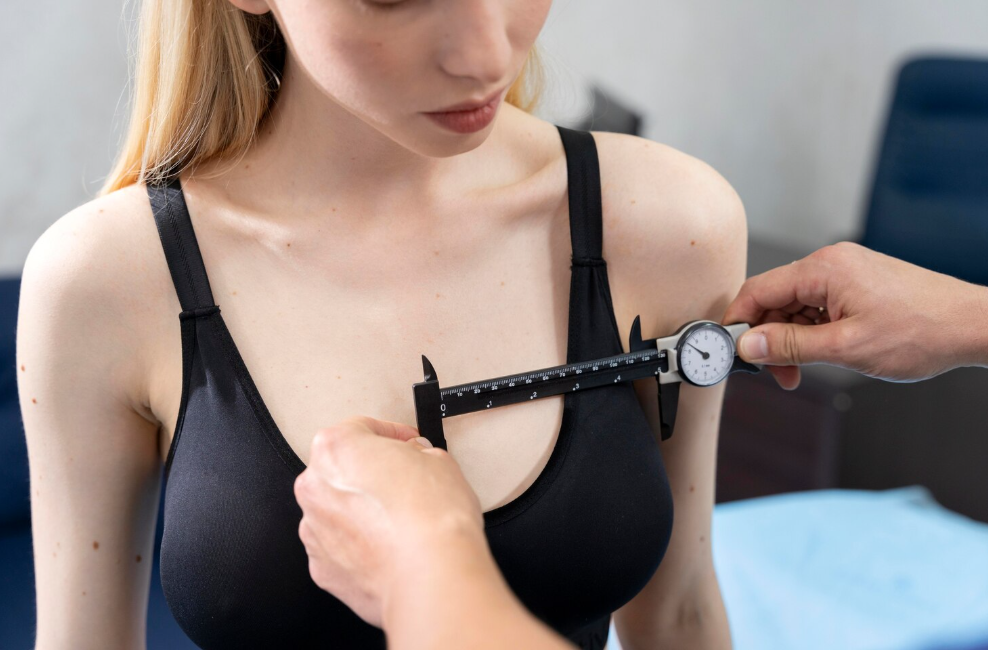
Treatment Overview
Hybrid Breast Augmentation in Korea is an advanced cosmetic procedure that combines breast implants with autologous fat grafting to achieve natural-looking volume, contour, and softness. Unlike traditional augmentation, hybrid techniques allow surgeons to fine-tune shape, correct asymmetry, and add a softer, more natural feel while minimizing implant-related complications.
Korea is a leading destination for hybrid breast augmentation due to its innovative surgical techniques, highly skilled surgeons, and emphasis on natural aesthetics.
Purpose & Benefits
The main purpose of hybrid breast augmentation is to enhance breast size and shape with a natural feel.
Key benefits include:
- Natural breast contour and softness
- Ability to correct minor asymmetry or contour irregularities
- Reduced risk of implant visibility or rippling
- Simultaneous body contouring through fat harvesting
- Minimally visible scars using advanced Korean techniques
- Long-lasting and aesthetically harmonious results
Ideal Candidates
Hybrid breast augmentation is suitable for individuals who:
- Desire larger breasts with a natural look and feel
- Have mild-to-moderate asymmetry or contour irregularities
- Prefer to combine implants with fat grafting for optimized aesthetics
- Have sufficient fat deposits for grafting
- Are in good health with realistic expectations
Possible Risks & Complications
Although hybrid augmentation is safe, potential risks include:
- Temporary swelling, bruising, or discomfort
- Fat absorption (20–30% may be reabsorbed)
- Infection or delayed healing
- Minor asymmetry or contour irregularities
- Rare implant-related complications (capsular contracture, displacement)
Surgical Techniques Used
Korean surgeons employ precise and advanced techniques for hybrid augmentation:
- Implant Placement: Implants are inserted under the breast tissue or muscle, depending on body type and aesthetic goals.
- Autologous Fat Grafting: Fat is harvested via liposuction from areas such as the abdomen, thighs, or flanks. The fat is purified and injected into the breast for natural contouring.
- Layered Fat Injection: Ensures even distribution and optimal fat survival.
- Combination with Lift: In cases of mild sagging, hybrid augmentation may be combined with a breast lift for improved results.
- Minimally Invasive Approach: Scars are strategically placed along the inframammary fold or around the areola for near-invisible results.
Recovery & Aftercare
Recovery is structured and monitored for optimal results:
- Light activities can resume within 3–5 days.
- Compression bras are worn for 4–6 weeks to support healing.
- Swelling and bruising usually subside within 2–3 weeks.
- Avoid strenuous chest activity for at least 4 weeks.
- Follow-up visits ensure fat survival, breast shape, and symmetry.
Results & Longevity
Results are visible immediately, with final breast shape appearing within 2–3 months as swelling resolves.
- Fat graft that survives is permanent; implants generally last 10–15 years.
- Hybrid technique provides a natural feel and contour that is difficult to achieve with implants alone.
- Korean surgeons emphasize symmetry, soft contour, and minimal scarring for long-lasting, natural results.
Treatment Process in Korea
Korea is considered a global hub for hybrid breast augmentation due to its advanced technology, surgeon expertise, and patient-centered care:
- Detailed Pre-Operative Planning: 3D imaging helps determine ideal implant size, fat grafting volume, and optimal breast shape.
- Customized Surgical Approach: Korean surgeons tailor the hybrid technique to the patient’s anatomy and aesthetic goals.
- Minimally Invasive Techniques: Gentle liposuction and micro-fat injections maximize fat survival and reduce trauma.
- Combination Procedures: Surgeons may combine the procedure with a lift or areola adjustment for optimal aesthetics.
- Medical Tourism Services: English-speaking coordinators, post-op accommodations, and comprehensive recovery support are provided.
- High Precision & Safety: Advanced suturing, endoscopic assistance, and scar-minimizing techniques ensure safe and natural outcomes.
Cost Range
Hybrid breast augmentation in Korea is moderately priced given its advanced technique:
- Typical Price Range: ₩7,500,000 – ₩15,000,000 KRW
(Approx. $5,600 – $11,500 USD)
Factors Affecting Cost:
- Implant type and size
- Volume of fat to be grafted
- Combination with lift or areola/nipple procedures
- Surgeon’s experience and clinic reputation
- Hospital or operating facility fees
Additional Costs:
- Pre-operative tests: ₩150,000 – ₩400,000 KRW ($115 – $300 USD)
- Compression garments: ₩150,000 – ₩300,000 KRW ($115 – $230 USD)
- Post-operative medications and follow-up care: ₩200,000 – ₩500,000 KRW ($150 – $380 USD)
Popular Clinics
Some of the most trusted clinics for hybrid breast augmentation in Korea include:
- Banobagi Plastic Surgery Clinic – expert in implant-fat combination procedures
- JK Plastic Surgery Center – internationally accredited, highly experienced in hybrid techniques
- View Plastic Surgery Hospital – utilizes 3D planning and precision fat grafting
- ID Hospital Seoul – specialized in complex breast procedures including hybrid augmentation
- Regen Plastic Surgery – focused on natural contour and symmetry with hybrid methods


