
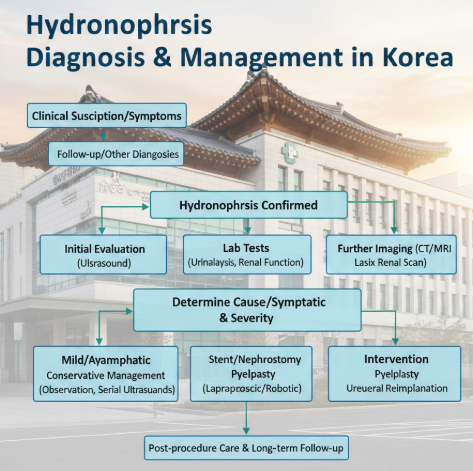
Treatment Overview
Hydronephrosis is the swelling of a kidney due to a build-up of urine, often caused by urinary obstruction, stones, strictures, or congenital anomalies. Early diagnosis and management are crucial to prevent kidney damage, infections, and long-term renal complications. In Korea, hospitals utilize advanced imaging, minimally invasive interventions, and comprehensive management strategies to accurately diagnose and effectively treat hydronephrosis, making it a preferred destination for international patients.
Purpose & Benefits
The main purposes of hydronephrosis diagnosis and management are to:
- Identify the underlying cause of kidney swelling
- Relieve obstruction and restore normal urine flow
- Prevent infections, kidney damage, or renal failure
- Monitor and maintain long-term kidney health
Benefits of receiving treatment in Korea include:
- Accurate diagnosis with advanced imaging technologies
- Personalized, minimally invasive management plans
- Rapid relief from pain and urinary obstruction
- Access to highly experienced urologists and nephrologists
- Comprehensive care for international patients including translation and coordination
Ideal Candidates
This treatment is suitable for patients who:
- Have symptoms of hydronephrosis such as flank pain, urinary obstruction, or recurrent infections
- Are diagnosed with kidney swelling via ultrasound, CT, or MRI
- Have hydronephrosis secondary to stones, strictures, tumors, or congenital anomalies
- Require urgent or elective intervention to preserve kidney function
- Seek advanced diagnostic and management care abroad
Hydronephrosis management can be tailored for both adult and pediatric patients depending on the cause and severity.
Possible Risks & Complications
Although generally safe, hydronephrosis diagnosis and management may involve certain risks:
- Discomfort or mild pain during diagnostic procedures
- Infection risk during invasive interventions
- Rare injury to the ureter or kidney during endoscopic or surgical procedures
- Incomplete resolution requiring additional procedures
- Temporary urinary urgency or hematuria post-intervention
Korean hospitals follow strict protocols to minimize complications.
Techniques & Technology Used
Korea utilizes cutting-edge technology for hydronephrosis diagnosis and management:
- Imaging modalities: Ultrasound, CT, MRI, and intravenous pyelography for accurate diagnosis
- Endoscopic procedures: Ureteroscopy to relieve obstruction
- Percutaneous nephrostomy: For immediate drainage in severe cases
- Ureteral stent placement: Maintains urine flow post-procedure
- Minimally invasive surgical interventions: For congenital or complex obstructions
- Targeted antibiotic therapy: If infection is present
These technologies allow precise assessment and effective treatment with minimal patient discomfort.
Treatment Process in Korea
The typical process for hydronephrosis diagnosis and management includes:
- Clinical evaluation: Assessing symptoms and medical history
- Imaging studies: Ultrasound, CT, or MRI to evaluate obstruction and kidney condition
- Laboratory tests: Blood and urine tests to assess kidney function and detect infection
- Intervention: Endoscopic procedures, stent placement, or minimally invasive surgery as needed
- Monitoring and follow-up: Regular imaging and lab tests to ensure resolution and prevent recurrence
International patients are supported with translation, accommodation, and coordinated care throughout the process.
Recovery & After-Care
Recovery depends on the type of intervention performed:
- Hospital stay: 1–4 days depending on procedure complexity
- Pain is managed with oral medications
- Normal activities can often resume within a few days for minor procedures
- Hydration and follow-up imaging are essential to monitor kidney health
- Stent or nephrostomy tube removal is scheduled as appropriate
Korean hospitals provide clear post-treatment instructions to ensure safe recovery.
Results & Longevity
With early and effective diagnosis and management, hydronephrosis treatment in Korea offers high success rates. Kidney function is preserved, obstruction is relieved, and long-term outcomes are excellent when combined with preventive strategies, dietary guidance, and regular follow-up.
Why Korea Is a Top Destination
Korea is a leading destination for hydronephrosis diagnosis and management due to:
- Advanced imaging and minimally invasive techniques
- Highly skilled urologists and nephrologists
- State-of-the-art hospitals adhering to global medical standards
- High success rates with minimal recovery time
- Cost-effective treatment compared to Western countries
- Comprehensive services for international patients including translation, accommodation, and follow-up care
Cost Range
The cost of hydronephrosis diagnosis and management in Korea typically ranges from $2,000 to $5,500 USD, depending on:
- Type and severity of obstruction
- Required diagnostic tests and interventions
- Hospital and surgeon reputation
- Length of hospital stay and supportive care
This cost is competitive internationally while ensuring high-quality care.
Popular Clinics in Korea
Top hospitals for hydronephrosis diagnosis and management for international patients include:
- Seoul National University Hospital – advanced urology and nephrology departments
- Asan Medical Center – specialized in minimally invasive obstruction relief
- Samsung Medical Center – state-of-the-art imaging and endoscopic technology
- Yonsei Severance Hospital – expertise in complex renal and ureteral conditions
- CMC Bundang Hospital – comprehensive care and medical tourism support
These hospitals provide full services including translation, accommodation, and post-treatment follow-up for international patients.


