
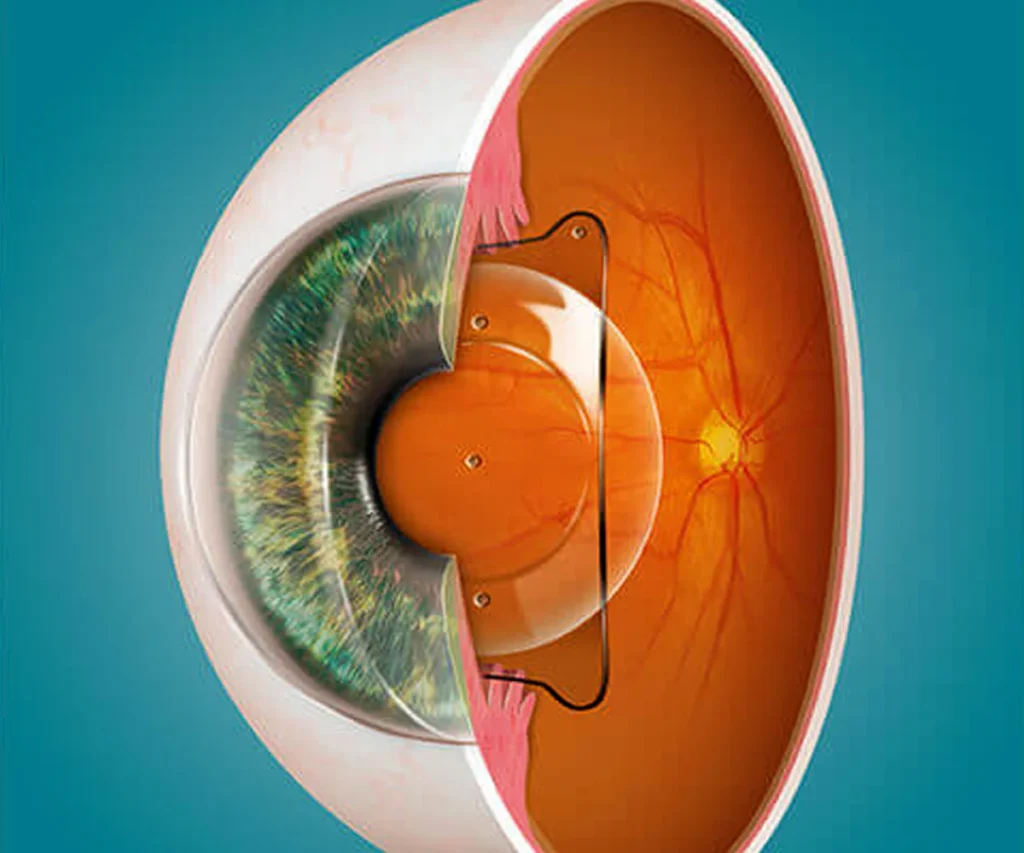
If you’ve been told you’re not a candidate for LASIK or PRK due to thin corneas, it’s easy to feel discouraged. But there’s good news: Implantable Collamer Lens (ICL) surgery offers a safe, effective vision correction solution that doesn’t rely on reshaping your cornea. For patients with thin or irregularly shaped corneas, ICL can be a life-changing alternative.
Why Thin Corneas Matter in Vision Correction
Laser eye surgeries like LASIK and PRK correct vision by removing corneal tissue to reshape the eye’s surface. However, this process requires a minimum corneal thickness to ensure the eye remains structurally sound after treatment.
If your cornea is too thin:
- You may be at risk of corneal instability or ectasia post-surgery
- You may not be able to achieve full correction of your refractive error
- You may be deemed ineligible for laser vision correction altogether
That’s where ICL surgery comes in.
What Is ICL Surgery?
ICL (Implantable Collamer Lens) surgery involves placing a soft, biocompatible lens between the iris and the natural lens of your eye. This lens corrects nearsightedness (and optionally astigmatism) from within the eye—without altering the cornea in any way.
Because ICL surgery does not involve removing tissue from the cornea, it is particularly well-suited for patients with thin corneas or other corneal irregularities.
Why ICL Is Ideal for Thin Corneas
✅ No Tissue Removal
Unlike LASIK or PRK, ICL doesn’t require cutting or vaporizing corneal tissue. Your natural corneal structure remains untouched, preserving its strength and integrity.
✅ Safe for High Prescriptions
Patients with thin corneas often also have high levels of myopia (nearsightedness). ICLs can correct up to -20.00 diopters, far beyond the safe range of laser surgeries.
✅ Excellent Visual Outcomes
ICL lenses deliver sharp, high-definition vision, often surpassing results achieved with glasses or contact lenses.
✅ Reversible and Removable
Unlike LASIK, ICL is reversible. The lens can be removed or replaced if necessary, providing peace of mind for patients concerned about long-term risks.
ICL vs. LASIK for Thin Corneas
| Feature | ICL for Thin Corneas | LASIK |
|---|---|---|
| Corneal Thickness Required | ❌ Not needed | ✔️ Minimum thickness required |
| Vision Correction Method | Internal lens implant | Laser reshaping of cornea |
| Suitability for Thin Corneas | ✔️ Excellent | ❌ Often not eligible |
| Reversibility | ✔️ Yes | ❌ No |
| Risk of Ectasia | Minimal | Increased in thin corneas |
Are You a Candidate for ICL?
You may be an ideal candidate for ICL surgery if you:
- Have moderate to severe myopia (typically -3.00 to -20.00 D)
- Have been told you’re ineligible for LASIK due to corneal thickness
- Are between 21 and 45 years old
- Have stable vision for at least 12 months
- Do not have cataracts or active eye disease
A thorough eye examination and corneal topography will determine your eligibility and ensure optimal results.
What to Expect from ICL Surgery
- Outpatient procedure: Takes around 15–30 minutes per eye
- Quick recovery: Most patients return to normal activities within 1–2 days
- Minimal discomfort: Mild sensitivity or blurry vision may occur briefly
- Long-term benefits: Clear, stable vision without the limitations of glasses or contacts
Real-World Impact
For patients with thin corneas, ICL surgery offers something rare: freedom from visual limitations without the risks associated with corneal reshaping. Whether you’re an athlete, professional, or someone who simply wants visual independence, ICL provides clarity and confidence.


