
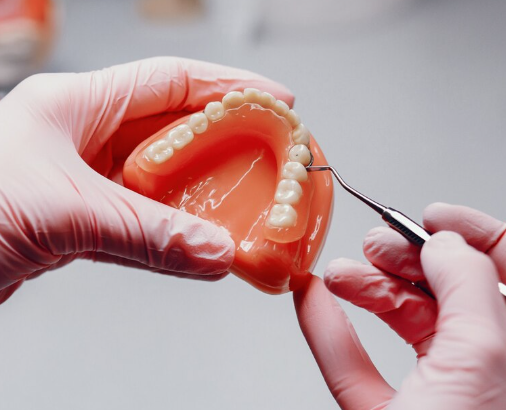
Treatment Overview
Implant-Assisted Jaw Surgery in Korea represents the next generation of orthognathic innovation — integrating dental implants with jaw realignment procedures to restore perfect facial symmetry, bite function, and long-term stability.
Unlike traditional orthognathic surgery, which focuses primarily on skeletal repositioning, implant-assisted techniques use titanium dental implants as anchorage or prosthetic supports, ensuring optimal jaw stabilization and occlusal harmony.
Korean specialists employ AI-guided 3D simulation, CBCT imaging, and CAD/CAM implant mapping to achieve precision down to fractions of a millimeter. This technology-driven approach allows for simultaneous bone reconstruction, jaw correction, and implant placement, minimizing surgical sessions and enhancing post-treatment comfort.
By merging orthodontics, implantology, and orthognathic surgery, Korea sets the global benchmark in functional facial restoration and digital surgical excellence.
Purpose & Benefits
The Implant-Assisted Jaw Surgery System in Korea is designed to restore full oral functionality, structural stability, and aesthetic facial balance through integrated implant and jaw correction.
Purpose
- Correct upper and lower jaw misalignment with digital precision.
- Replace missing teeth during or after orthognathic surgery for functional restoration.
- Provide fixed anchorage for orthodontic and skeletal correction.
- Enhance occlusal balance, chewing efficiency, and smile aesthetics.
- Offer long-term stability and structural reinforcement.
Benefits
- AI-Guided 3D Planning: Perfect synchronization between implants and jaw realignment.
- Immediate Functionality: Implants can act as surgical anchors during treatment.
- Facial and Dental Harmony: Enhances overall symmetry and bite function.
- Digital Accuracy: CAD/CAM design ensures flawless implant positioning.
- Reduced Treatment Time: Dual correction minimizes surgical stages.
- Long-Term Stability: Implants prevent post-surgical relapse.
- Aesthetic Restoration: Natural smile with improved jaw proportions.
Ideal Candidates
Implant-Assisted Jaw Surgery is ideal for patients who require both jaw realignment and implant-supported dental restoration for a fully functional and aesthetic result.
Ideal Candidates Include
- Patients with missing teeth requiring implants during or after jaw surgery.
- Individuals with severe bite issues or jaw misalignment.
- Those with asymmetrical or recessed jaws needing skeletal correction.
- Orthodontic patients requiring implant anchorage for movement control.
- International patients seeking comprehensive surgical-orthodontic care in Korea.
Possible Risks & Complications
While Implant-Assisted Jaw Surgery in Korea is highly safe, minor temporary effects may occur during the recovery phase:
- Mild swelling or bruising for 1–2 weeks.
- Temporary soreness or tightness around the surgical site.
- Minor gum irritation near implant placement.
- Rare implant integration delay (minimized by Korean biologic protocols).
Korean surgeons use AI-guided accuracy, PRF regenerative healing, and biocompatible implant systems to minimize complications and enhance healing success.
Surgical Techniques Used
Korea’s Implant-Assisted Jaw Surgery System merges AI digital navigation, implantology, and orthognathic precision for flawless, functional, and aesthetic outcomes.
Common Techniques Include
- 3D CBCT Bone Mapping:
Comprehensive visualization of bone structure, nerve location, and sinus anatomy. - AI-Guided Surgical Simulation:
Virtual modeling predicts implant position and jaw movement. - CAD/CAM Surgical Guide Fabrication:
Custom 3D-printed splints guide both implant and bone repositioning with exact precision. - Orthognathic Osteotomy (Le Fort I, BSSO):
Corrects jaw alignment before implant placement. - Immediate Implant Placement:
Implants inserted during jaw surgery for reduced overall treatment time. - PRF Regenerative Healing:
Accelerates bone fusion and soft tissue integration around implants. - Digital Orthodontic Integration:
Coordinates with braces or Invisalign to finalize occlusion and alignment.
This multi-disciplinary, high-tech approach defines Korea’s global reputation for precision-driven, biologically sound jaw and implant surgery.
Recovery & Aftercare
Recovery after Implant-Assisted Jaw Surgery in Korea is streamlined, supported by regenerative therapies and digital monitoring.
Aftercare Guidelines
- Follow a soft food diet for 1–2 weeks post-surgery.
- Maintain gentle oral hygiene and use antiseptic mouthwash daily.
- Avoid smoking or alcohol for 3 weeks to aid osseointegration.
- Use cold compresses to minimize swelling.
- Attend regular follow-ups for digital healing scans.
- Continue orthodontic treatment if included in the care plan.
Most patients resume daily activity within 7–10 days, with full healing and implant integration typically achieved in 3–4 months.
Results & Longevity
Expected Results
- Correctly aligned upper and lower jaws.
- Restored bite function and improved chewing efficiency.
- Balanced, symmetrical facial profile.
- Enhanced smile aesthetics and jawline definition.
- Stable, fixed dental restoration integrated into skeletal correction.
Longevity
- Implant Lifespan: 25–30+ years with proper care.
- Surgical Stability: Permanent skeletal correction.
- Success Rate: 98–99% in Korea’s top surgical implant centers.
- Functional Durability: Long-term comfort and aesthetic harmony.
Implant-Assisted Jaw Surgery in Korea delivers lifelong correction and structural strength through digital design and biologic engineering.
Treatment Process in Korea
Korea’s Implant-Assisted Jaw Surgery Workflow integrates advanced technology, aesthetic design, and orthodontic collaboration for a flawless patient journey.
Step-by-Step Process
- Consultation & 3D Digital Imaging:
CBCT scan evaluates jaw structure, bone density, and nerve placement. - AI Surgical Planning:
Virtual simulation maps implant placement and bone repositioning. - CAD/CAM Surgical Guide Production:
3D-printed templates ensure precision implant and osteotomy execution. - Surgical Procedure (2–4 hours):
Jaw alignment and implant placement performed under general anesthesia. - PRF & Laser Regenerative Therapy:
Promotes bone healing and tissue recovery. - Digital Post-Surgical Verification:
Confirms implant stability and skeletal symmetry. - Orthodontic Adjustment:
Braces or Invisalign refine bite and occlusal alignment. - Final Prosthesis Restoration:
Permanent crowns or bridges fitted for full aesthetic and functional results.
This digital workflow ensures maximum precision, safety, and beauty — defining Korea’s standard of next-generation orthognathic and implant surgery.
Why Korea Is a Top Destination
Korea leads the global field in digital implant-orthognathic integration, combining medical precision with facial aesthetics and affordability.
- AI-Guided Surgical Planning: Real-time accuracy with predictive outcomes.
- 3D CBCT & CAD/CAM Technology: Precise mapping and surgical execution.
- Orthodontic & Implant Collaboration: Total bite and jaw correction synergy.
- PRF Biologic Healing: Natural tissue recovery and implant success.
- Digital Post-Operative Monitoring: Ensures stable long-term results.
- Global Cost Advantage: 40–60% lower than Western treatment fees.
- Multilingual Teams: English, Japanese, and Chinese-speaking specialists.
Korea’s integration of implant science, digital navigation, and orthognathic surgery makes it the #1 global destination for implant-assisted jaw correction.
Unique Korean Methods & Technology
- AI-Guided 3D Surgical Navigation
- CBCT Bone Density & Nerve Mapping
- Virtual Implant & Jaw Simulation (VSS)
- CAD/CAM Splint Fabrication
- PRF Regenerative Therapy
- Digital Occlusal Integration
- Laser-Assisted Recovery
- Orthodontic-Implant Synergy System
These innovations ensure Implant-Assisted Jaw Surgery in Korea achieves the world’s highest standard in precision, stability, and aesthetics.
Cost Range
The cost of Implant-Assisted Jaw Surgery in Korea varies based on the number of implants, jaw complexity, and digital integration.
- Single Jaw Implant-Assisted Correction: ₩15,000,000 – ₩20,000,000 KRW (≈ $11,100 – $14,800 USD)
- Double Jaw + Implant Integration: ₩20,000,000 – ₩25,000,000 KRW (≈ $14,800 – $18,500 USD)
- Full Digital AI-Guided Surgery + Implants: ₩25,000,000 – ₩30,000,000 KRW (≈ $18,500 – $22,200 USD)
- Premium All-in-One Implant + Orthodontic Package: ₩30,000,000 – ₩38,000,000 KRW (≈ $22,200 – $28,100 USD)
Packages typically include consultation, 3D imaging, digital simulation, surgery, implants, PRF therapy, orthodontic adjustment, and follow-up care.
Korean clinics offer luxury-level surgical precision and global affordability.
Popular Clinics
- Seoul National University Dental Hospital: Pioneers in AI-guided implant-orthognathic integration.
- Yonsei University Dental Hospital: Specialists in 3D digital jaw and implant planning.
- Asan Medical Center Maxillofacial Unit: Experts in full-mouth implant and jaw reconstruction.
- Samsung Medical Dental Center: Innovators in CAD/CAM implant mapping and digital occlusion systems.
- JK Implant & Orthognathic Center (Gangnam): Global destination for luxury-level implant-assisted jaw correction and aesthetic restoration.


