
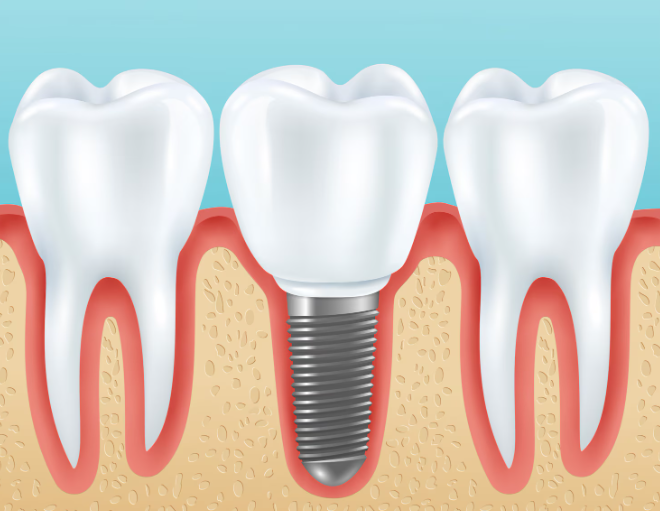
Treatment Overview
Implant-Supported Jaw Reconstruction in Korea is an advanced orthognathic and restorative surgery that rebuilds and stabilizes the jaw using dental implants, 3D bone grafting, and digital surgical planning.
This technique combines jaw realignment (orthognathic surgery) with implant-based bone support to restore full jaw function, bite stability, and aesthetic facial balance — especially for patients who have experienced bone loss, trauma, or congenital jaw deformities.
Korea’s oral and maxillofacial surgeons use 3D CBCT imaging, AI-guided virtual surgical planning (VSP), and CAD/CAM-designed surgical templates to ensure precise bone reconstruction and implant placement.
With titanium or zirconia implants, regenerative bone grafting, and PRF healing technology, Korea offers one of the world’s most reliable and aesthetic solutions for complete jaw restoration, symmetry, and oral function recovery.
Purpose & Benefits
Purpose
- Reconstruct and stabilize the jaw structure using implant-supported systems.
- Replace missing bone and teeth following trauma, deformity, or extraction.
- Realign the upper and lower jaws for improved bite and facial symmetry.
- Provide long-term functional and aesthetic restoration.
- Support full-mouth rehabilitation through stable implant anchorage.
Benefits
- 3D Digital Precision: AI-guided jaw reconstruction ensures anatomical accuracy.
- Implant Stability: Titanium implants restore strong, natural jaw support.
- Aesthetic Enhancement: Improves facial contour and symmetry.
- Functional Restoration: Restores chewing, speech, and bite performance.
- Minimally Invasive Reconstruction: Ultrasonic and regenerative techniques minimize trauma.
- Permanent, Natural-Looking Results: Achieves both functional and cosmetic excellence.
Ideal Candidates
Implant-Supported Jaw Reconstruction is ideal for patients requiring complete jaw rehabilitation, combining functional restoration and aesthetic correction.
Ideal Candidates Include:
- Individuals with severe bone loss or jaw damage due to trauma or disease.
- Patients with missing teeth and jaw atrophy requiring implant support.
- Those undergoing orthognathic surgery and needing implant stabilization.
- Individuals with congenital facial or jaw deformities.
- International patients seeking comprehensive digital jaw reconstruction in Korea.
Possible Risks & Complications
While Korea’s digital and implant-supported techniques ensure excellent safety, minor temporary effects may occur:
- Mild swelling or bruising for 1–2 weeks.
- Temporary numbness around the lips or chin.
- Slight jaw stiffness during recovery.
- Rare implant rejection (extremely uncommon with modern biocompatible materials).
Korean clinics minimize risks with AI-guided implant positioning, sterile surgical environments, and precision PRF healing therapy, ensuring maximum safety and success rates above 98–99%.
Surgical Techniques Used
Korea’s Implant-Supported Jaw Reconstruction System integrates digital surgical planning, implant engineering, and regenerative medicine for superior accuracy and long-term durability.
Key Techniques Include:
- 3D CBCT Imaging: Maps bone volume, nerve pathways, and facial symmetry.
- AI Surgical Simulation (VSP): Virtual modeling of implant and bone reconstruction.
- CAD/CAM Surgical Guide Fabrication: 3D templates ensure exact implant placement.
- Ultrasonic Bone Surgery (Piezosurgery): Minimally invasive bone manipulation.
- Implant Anchorage Systems: Titanium or zirconia implants provide strong jaw support.
- Bone Grafting / Regeneration: Uses autogenous, synthetic, or alloplastic grafts for volume restoration.
- PRF (Platelet-Rich Fibrin) Healing Therapy: Promotes fast bone and tissue regeneration.
- Laser Soft-Tissue Recovery: Reduces inflammation and accelerates healing.
Recovery & Aftercare
Recovery from implant-supported jaw reconstruction in Korea is smooth, predictable, and supported by comprehensive post-surgical care.
- Swelling and mild discomfort typically subside within 7–10 days.
- A soft diet is recommended for the first 2–3 weeks.
- Maintain proper oral hygiene using antiseptic mouth rinses.
- Avoid smoking and strenuous activity during initial healing.
- Attend digital follow-up imaging for bone and implant integration monitoring.
Typical Recovery Time:
- 2–4 weeks for soft tissue healing.
- 3–6 months for complete implant osseointegration and jaw stability.
Results & Longevity
Expected Results
- Fully reconstructed, stable, and symmetrical jaw structure.
- Enhanced bite function and speech performance.
- Natural-looking facial balance and aesthetics.
- Improved confidence and long-term oral health.
Longevity
- Permanent implants and bone integration with proper care.
- Long-term facial symmetry and stable bite function.
- Lifelong improvement in comfort and appearance.
Treatment Process in Korea
Korea’s Digital Implant-Supported Jaw Reconstruction Workflow ensures seamless coordination between orthognathic, implant, and regenerative procedures, offering a world-class treatment experience.
Step-by-Step Process:
- Comprehensive Consultation & 3D CBCT Scan: Assess bone volume and jaw structure.
- AI Surgical Planning (VSP): Virtual modeling of implant and jaw reconstruction.
- Pre-Surgical Preparation: Bone grafting or orthodontic adjustments if required.
- Surgery & Implant Placement: Performed with ultrasonic and navigational precision.
- PRF & Laser Healing Therapy: Stimulates bone and soft-tissue regeneration.
- Postoperative Follow-Up: 3D imaging confirms implant stability and bone healing.
- Final Restoration: Customized prosthetics or full-arch restoration for final aesthetics.
Why Korea Is a Top Destination
- World Leaders in Digital Oral & Maxillofacial Surgery: Korea integrates implants, AI, and 3D modeling flawlessly.
- High Implant Success Rate: Over 98–99% due to precision digital planning.
- Functional + Aesthetic Harmony: Restores both bite performance and facial contour.
- Minimally Invasive Regenerative Techniques: Reduce trauma and accelerate recovery.
- Affordable Excellence: 40–60% more cost-effective than Western clinics.
- Multilingual Global Care: English, Japanese, and Chinese-speaking specialists available.
Korea’s Implant-Supported Jaw Reconstruction combines orthognathic precision, digital innovation, and regenerative medicine, redefining modern jaw surgery with world-class safety and aesthetics.
Unique Korean Methods & Technology
- 3D CBCT Imaging & AI Surgical Simulation
- CAD/CAM Surgical Guide Systems
- Ultrasonic Piezosurgery Technology
- Advanced Titanium & Zirconia Implants
- PRF Regenerative Bone Healing
- Laser-Assisted Tissue Recovery
- Digital Navigation & Post-Surgical Monitoring
These innovations position Korea as a global leader in implant-supported digital jaw reconstruction surgery.
Cost Range
- Standard Implant-Supported Jaw Reconstruction: ₩10,000,000 – ₩14,000,000 KRW (≈ $7,400 – $10,300 USD)
- AI-Guided Digital Reconstruction Package: ₩14,000,000 – ₩18,000,000 KRW (≈ $10,300 – $13,200 USD)
- Premium Full-Arch Regenerative Package: ₩18,000,000 – ₩25,000,000 KRW (≈ $13,200 – $18,400 USD)
Packages include 3D imaging, AI planning, anesthesia, implant placement, bone grafting (if required), PRF therapy, and follow-up care.
Top Clinics in Korea
- Seoul National University Dental Hospital: Leaders in implant-based jaw reconstruction and digital orthognathic surgery.
- Yonsei University Dental Hospital: Specialists in AI-guided bone regeneration and full-arch implant systems.
- Asan Medical Center Oral & Maxillofacial Surgery: Renowned for complex implant-supported reconstructions.
- JK Advanced Implant Center (Gangnam): Premium digital facility for full-mouth and jaw reconstruction.
- K-Digital Implant Surgery Lab (Busan): Experts in AI and regenerative bone implant technologies.


