
Treatment Overview
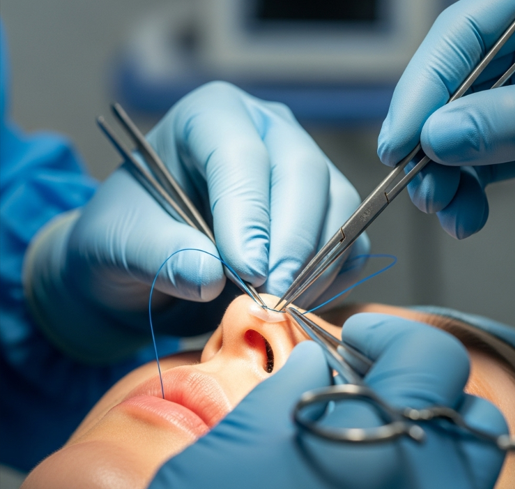
The Interdomal Suture Technique is a rhinoplasty method used to refine and stabilize the nasal tip by bringing the two domes (the highest points of the lower lateral cartilages) closer together. By carefully placing sutures between the medial portions of the tip cartilages, surgeons can create a narrower, more defined, and symmetrical nasal tip without excessive cartilage removal. In Korea, this technique is widely used as part of advanced tip plasty procedures, offering natural, elegant, and long-lasting improvements in nasal aesthetics.
Purpose & Benefits
The Interdomal Suture Technique is performed to enhance nasal tip definition and balance. Benefits include:
- Narrows a wide or bulbous nasal tip.
- Improves nasal symmetry and tip projection.
- Creates a more refined and elegant nasal contour.
- Preserves cartilage strength for long-term stability.
- Provides natural results without aggressive trimming.
- Can be combined with other methods (dome binding, columellar strut grafts) for comprehensive reshaping.
Ideal Candidates
This procedure is suitable for individuals who:
- Have a bulbous, round, or wide nasal tip.
- Desire tip refinement while preserving cartilage integrity.
- Seek subtle but permanent improvements in tip shape.
- Have sufficient nasal cartilage to allow reshaping by suturing.
- Are in good overall health and maintain realistic expectations.
Possible Risks & Complications
Although considered a safe and conservative technique, potential risks include:
- Temporary swelling and bruising around the nasal tip.
- Mild asymmetry during healing.
- Rare visibility of sutures under very thin nasal skin.
- Infection or loosening of sutures (very rare in Korea’s advanced clinics).
- Temporary stiffness of the nasal tip.
Surgical Techniques Used
Korean surgeons are renowned for precision in nasal tip refinement, and the Interdomal Suture is a cornerstone of their approach. Techniques include:
- Precise Suture Placement: Bringing the domes closer together for a sharper tip.
- Symmetry Adjustment: Balancing both sides of the tip for harmony.
- Cartilage-Sparing Approach: No excessive trimming, ensuring long-term stability.
- Combination with Other Sutures: Often paired with transdomal or dome-binding sutures for optimal contour.
- Integration with Grafts: Can be supported with columellar strut grafts for added tip projection.
Recovery & Aftercare
- Swelling and bruising typically resolve within 1–2 weeks.
- Stitches (if external) are removed after 5–7 days.
- Most patients can resume work or school in 7–10 days.
- Final refinement of the nasal tip becomes visible in 2–3 months.
- Korean clinics provide advanced aftercare, such as LED light therapy, anti-swelling injections, and scar management programs.
Results & Longevity
The Interdomal Suture Technique delivers permanent results, with a refined and naturally balanced nasal tip. Unlike aggressive cartilage removal, this method maintains structural integrity while achieving long-lasting definition. In Korea, surgeons focus on producing natural results that enhance facial harmony, avoiding an artificial or “pinched” appearance.
Treatment Process in Korea
Korea is internationally known for its mastery in cartilage-preserving rhinoplasty. The treatment process generally includes:
1. Consultation:
- Detailed facial and nasal structure analysis.
- Use of 3D imaging to simulate expected outcomes.
2. Pre-Surgery Care:
- Health evaluations and personalized surgical planning.
- Pre-operative instructions for medication and recovery preparation.
3. Surgery:
- Usually performed under local anesthesia with sedation or general anesthesia.
- Procedure lasts 1–1.5 hours depending on complexity.
- Interdomal sutures are placed precisely to refine the nasal tip, sometimes combined with other refinement techniques.
4. Immediate Aftercare:
- Ice packs, anti-swelling treatments, and medication for comfort.
- Patients monitored for several hours before discharge.
5. Follow-Up Care:
- Stitch removal after about a week.
- Scheduled follow-ups during the healing process.
- LED therapy, ultrasound treatments, and ointments to speed recovery.
6. Medical Tourism Support:
- Many Seoul clinics provide translator services, airport pickup, and hotel arrangements.
- International patients benefit from concierge-style medical tourism packages.
Cost Range
The cost of the Interdomal Suture Technique in Korea varies by clinic, surgeon expertise, and whether it is part of a standalone tip-plasty or full rhinoplasty.
- General Price Range: ₩3,000,000 – ₩6,500,000 KRW (approx. $2,300 – $5,000 USD).
- Basic Package Includes: Consultation, anesthesia, interdomal suture surgery, and routine aftercare.
- Standard Package Includes: Follow-up visits, scar management, anti-swelling therapy, and skincare support.
- Premium Package Includes: VIP recovery suites, private translators, LED therapy sessions, airport transfers, hotel bookings, and full medical tourism coordination.
Compared to Western countries, Korea offers competitive pricing and world-class refinement, making it one of the most trusted destinations for advanced nasal tip surgery.
Popular Clinics
- Banobagi Plastic Surgery Clinic (Seoul): Specializes in natural and balanced nasal tip reshaping.
- ID Hospital (Seoul): Recognized for innovative suture techniques and international patient services.
- JW Plastic Surgery Clinic: Known for precision-based tip surgery using interdomal sutures.
- View Plastic Surgery Clinic: Focuses on scar-minimizing, cartilage-preserving methods.
- MINE Plastic Surgery Clinic: Offers tailored tip refinement with strong support for overseas patients.


