
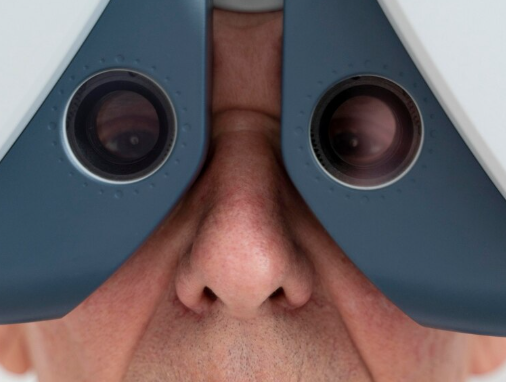
Treatment Overview
Iridotomy in Korea—often performed as Laser Peripheral Iridotomy (LPI)—is a minimally invasive procedure that creates a small opening in the peripheral iris to improve aqueous humor flow and prevent or treat angle-closure glaucoma. The laser opening allows fluid to pass freely from the posterior to the anterior chamber, relieving pupillary block and widening the drainage angle.
Korean ophthalmology centers are leaders in precision laser eye care, using high-resolution anterior chamber imaging, AI-assisted treatment planning, and optimized Nd:YAG and argon laser systems to ensure safe, effective, and long-lasting outcomes.
Purpose & Benefits
Purpose
- Prevent acute angle-closure attacks by relieving pupillary block.
- Treat narrow-angle glaucoma and mixed-mechanism glaucoma.
- Improve aqueous humor movement and widen drainage angles.
- Reduce intraocular pressure in angle-closure conditions.
- Provide prophylactic treatment in high-risk eyes.
Benefits
- Quick, Non-Invasive Treatment: No incisions or major trauma.
- Immediate Pressure Relief: Fluid flow normalizes rapidly.
- Prevents Severe Glaucoma Attacks: Key for narrow-angle patients.
- High Safety Profile: One of the safest glaucoma laser procedures.
- Fast Recovery: Minimal downtime and near-instant vision recovery.
- Long-Term Angle Stability: Particularly when combined with imaging-guided planning.
Ideal Candidates
Iridotomy in Korea is ideal for:
- Individuals with narrow-angle or primary angle-closure suspect (PACS).
- Patients with acute or sub-acute angle-closure glaucoma.
- Individuals with plateau iris (often combined with iridoplasty).
- Patients with mixed-mechanism glaucoma.
- Individuals at high risk of pupillary block due to anatomy.
- Adults preparing for cataract or MIGS surgery needing angle access.
Possible Risks & Complications
Laser iridotomy is extremely safe, but may involve:
- Transient light sensitivity
- Mild inflammation
- Small IOP spikes (usually managed with eye drops)
- Temporary blurred vision
- Minor bleeding at laser site (rare and self-limiting)
- Halos or glare (typically temporary)
Korean clinics minimize these risks using OCT-guided targeting, AI-calibrated energy levels, and post-laser IOP stabilization protocols.
Types of Iridotomy in Korea
Nd:YAG Laser Iridotomy
Creates a small hole using a burst of focused YAG energy.
Argon Laser Iridotomy
Uses thermal laser to thin the iris before creating the opening.
Combined Argon–YAG Iridotomy
Dual-step technique used for thick or dark irises for optimal precision.
Prophylactic Iridotomy
Prevents angle-closure in at-risk individuals.
Surgical Techniques
OCT and UBM Imaging
Used to map iris thickness and angle configuration before treatment.
Goniolens-Assisted Precision
Allows accurate visualization of peripheral iris during laser delivery.
AI-Guided Energy Calibration
Ensures the correct pulse settings for a clean, safe perforation.
Peripheral Iris Targeting
Laser creates a tiny, near-invisible opening behind the upper eyelid.
Post-Laser Pressure Control
Medication used to prevent short-term IOP spikes.
Treatment Process in Korea
Step 1 – Comprehensive Eye Evaluation
Includes IOP measurement, gonioscopy, OCT imaging, and angle width assessment.
Step 2 – Procedure Planning
Surgeon selects laser type (YAG, argon, or combined) and iris location.
Step 3 – Iridotomy Procedure
Laser creates a small drainage opening in the peripheral iris.
Step 4 – Immediate Postoperative Care
Anti-inflammatory and IOP-lowering drops applied.
Step 5 – Follow-Up Examinations
Angle confirmed to be open; IOP regulated over the next few weeks.
Treatment Duration: 5–10 minutes
Setting: Outpatient laser suite
Recovery & After-Care
After-Care Guidelines
- Use anti-inflammatory drops for 2–5 days.
- Avoid rubbing the eyes.
- Use sunglasses if light sensitivity occurs.
- Resume normal activities almost immediately.
- Attend all follow-up appointments for angle and IOP checks.
Recovery Timeline
- Day 1: Slight redness or discomfort; vision normalizes quickly.
- Week 1: IOP stabilizes; opening remains patent.
- Weeks 2–4: Angle widening becomes more stable on imaging.
- Months 1–6: Long-term angle correction maintained.
Results & Longevity
Expected Results
- Immediate normalization of fluid flow between chambers.
- Reduced risk of acute angle-closure glaucoma.
- Improved drainage angle and IOP control.
- Effective treatment for pupillary block.
- Greater angle stability when combined with iridoplasty or cataract surgery.
Longevity
- Iridotomy effects are typically permanent.
- In rare cases, repeat treatment may be required if closure occurs.
- Korean imaging-guided techniques improve long-term patency.
Why Korea Is a Top Destination
- Experts in angle-closure and mixed-mechanism glaucoma care.
- Advanced laser platforms (Nd:YAG + argon) with high precision.
- AI-based treatment planning for optimal safety and outcomes.
- High-resolution anterior segment imaging for accurate targeting.
- Low complication rates with excellent postoperative care.
Unique Korean Innovations
- AI-assisted iris thickness analysis.
- Combination argon–YAG protocols for enhanced safety.
- Thermal-controlled laser delivery.
- Iris-opening placement for minimal glare or cosmetic impact.
- Predictive modeling for long-term angle behavior.
Cost Range (Indicative Estimate)
| Treatment Package | Price (KRW) | Approx. USD | Inclusions |
|---|---|---|---|
| Standard Nd:YAG Iridotomy | ₩300,000 – ₩500,000 | ~$230 – $380 | Single-eye procedure + follow-up care |
| Combined Argon–YAG Iridotomy | ₩500,000 – ₩800,000 | ~$380 – $600 | Dual-step laser treatment + imaging |
| Prophylactic Bilateral Iridotomy | ₩700,000 – ₩1,200,000 | ~$530 – $900 | Both eyes + extended monitoring |
Popular Clinics in Korea
- B&VIIT Eye Center (Seoul) – Specialists in advanced iridotomy and angle-closure prevention.
- Dream Eye Center (Seoul) – Experts in YAG and combined iridotomy procedures.
- BGN Eye Clinic (Busan & Seoul) – Leaders in angle imaging and laser glaucoma therapy.
- Glory Seoul Eye Clinic – Known for precision OCT-guided iridotomy.
- K-Cure Vision Center (Gangnam) – Innovators in AI-assisted narrow-angle treatment.


