
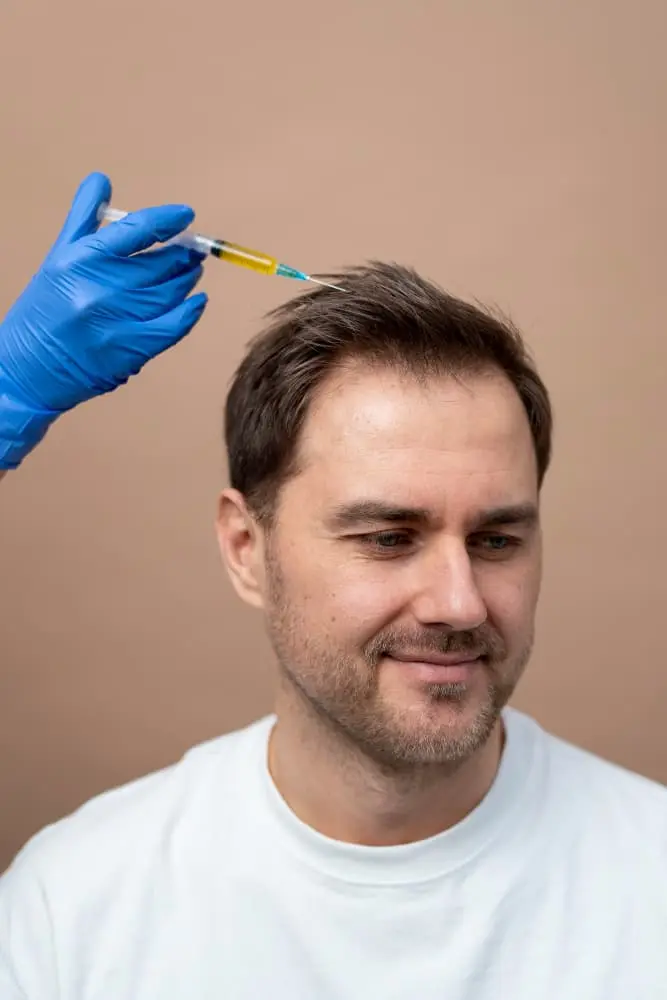
Hair loss treatments in Korea are known for their advanced technology and holistic care. Among them, Platelet-Rich Plasma (PRP) therapy has gained massive popularity among both local and international patients seeking non-surgical hair restoration.
However, many patients—especially those who frequently dye or heat-style their hair—ask:
“When can I safely return to coloring or styling my hair after PRP?”
Korean clinics emphasize protecting the scalp and follicles after PRP, and the guidance is clear: timing and technique are key to preserving results.
🧬 Why Post-PRP Care Matters
PRP involves injecting growth factor-rich plasma into the scalp to rejuvenate dormant follicles. The scalp undergoes a healing process after each session, and any harsh chemicals or styling tools applied too early can:
- Cause scalp irritation or inflammation
- Slow down follicular healing and growth activation
- Reverse the regenerative effect of the PRP treatment
According to Korean dermatologists, the first 7–10 days post-treatment are the most critical.
⏱️ When Can You Color Your Hair After PRP?
✅ Minimum Waiting Time: 7–14 Days
Korean hair transplant and dermatology clinics commonly advise:
| Procedure Type | Minimum Wait Time |
|---|---|
| Semi-permanent dye | 7–10 days |
| Permanent dye | 10–14 days |
| Bleaching | 2–3 weeks |
| Perming | 2–3 weeks |
🔥 Korean Tip: Many clinics recommend air drying or towel blotting instead of hot tools for the first week to avoid drying out the scalp.
🧴 Korean Clinic-Approved Post-PRP Hair Products
Korean clinics focus on scalp-first products. After PRP, your routine should be gentle and nourishing.
Recommended:
- Mild pH-balanced shampoo (sulfate- & paraben-free)
- Scalp serums with panthenol, niacinamide, or biotin
- Leave-in sprays for hydration and follicle support
Popular Korean brands:
- Dr. For Hair – Scalp-focused care
- Ryo Scalp Shampoo – Herbal formulations
- Aestura Atobarrier – Sensitive scalp formulas
🚫 What to Avoid After PRP
Korean dermatologists strongly discourage the following within 2 weeks post-treatment:
- Bleach or lightening agents
- Strong perming or straightening chemicals
- Head dye kits applied directly to the scalp
- Hot saunas, steam rooms (interfere with PRP absorption)
- Harsh scalp scrubs or clarifying shampoos
- Tight hairstyles that pull at follicles
👩🔬 What Korean Clinics Suggest If You Need to Color Hair Urgently
If you have a special occasion or photoshoot, Korean doctors may:
- Recommend hair fibers or powders as a temporary solution
- Refer you to scalp-safe salons that follow medical aftercare standards
- Offer post-treatment LED scalp sessions to speed healing before coloring
🧘♀️ Post-PRP Styling Tips from Korean Trichologists
- Use a silk pillowcase to minimize breakage
- Massage the scalp daily (starting 5 days after treatment) to increase blood flow
- Avoid wet hairstyles or tying up wet hair
- Use wide-tooth combs to reduce pulling on follicles
📝 Summary
| Activity | Safe After PRP? | Korean Recommendation |
|---|---|---|
| Hair dyeing | After 10–14 days | Use ammonia-free, avoid scalp contact |
| Heat styling | After 3–5 days | Use low heat and protectants |
| Hair bleaching | After 2–3 weeks | Avoid if possible |
| Hair products | Yes, if gentle | Use mild, pH-balanced, scalp-safe items |
| Saunas/Steam rooms | No, for 1–2 weeks | May interfere with healing |
Final Thoughts
Korean clinics offer some of the world’s most advanced and holistic hair loss care. After PRP therapy, their emphasis is clear: protect the scalp, support follicular healing, and delay styling chemicals as long as possible.
If you follow their post-treatment guidance, you can safely return to coloring and styling your hair without compromising results—and enjoy thicker, healthier hair in the months ahead.


